What is RAO? Future Optimization in the Age of AI
Introduction to the RAO topic – what is Retrieval-Augmented Optimization?
In the era of dynamic artificial intelligence development, it becomes increasingly important not only to create content by AI models but also to optimize their performance. Here comes the concept of Retrieval-Augmented Optimization (RAO), which is optimization supported by search and data retrieval mechanisms. Although the term RAO is still relatively new and less widespread, its foundations are based on the well-known and appreciated Retrieval-Augmented Generation (RAG) technique.
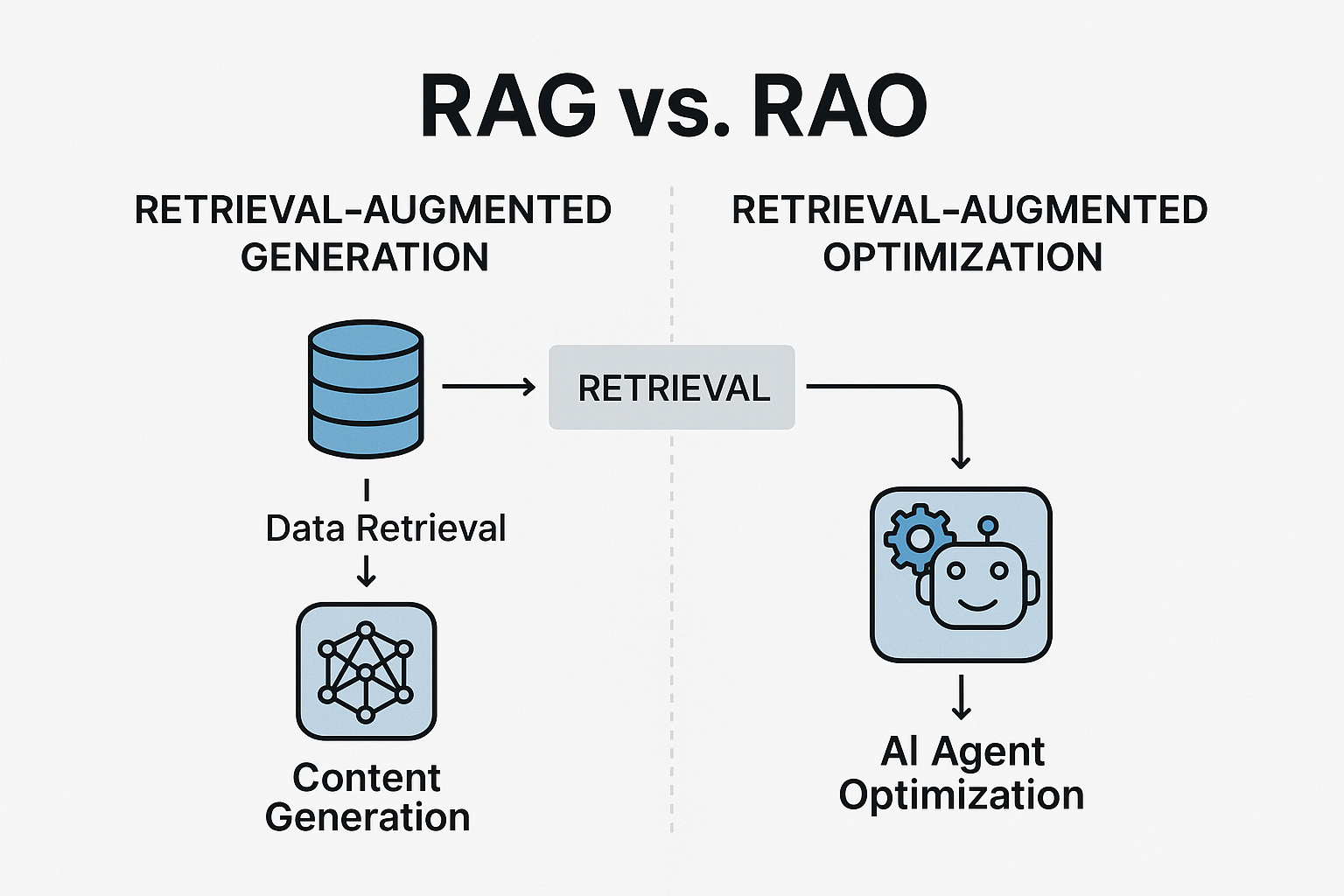
Unlike RAG, which focuses on improving the quality of AI-generated texts through integration with current external sources of information, RAO goes one step further. It focuses on the overall optimization of AI agents' operations – including decisions, data retrieval, interactions, and task execution – using similar mechanisms of retrieval and knowledge supplementation.
Why is it so important? Modern AI models, although powerful, have their limitations – their knowledge often relies on static datasets that can quickly become outdated. RAO allows AI agents to dynamically retrieve and use current, specialized, or confidential information, thus increasing the accuracy of their actions and reducing errors. It is more than just text generation – it is intelligent adaptation of choices and decisions to context, making AI work more effectively and reliably.
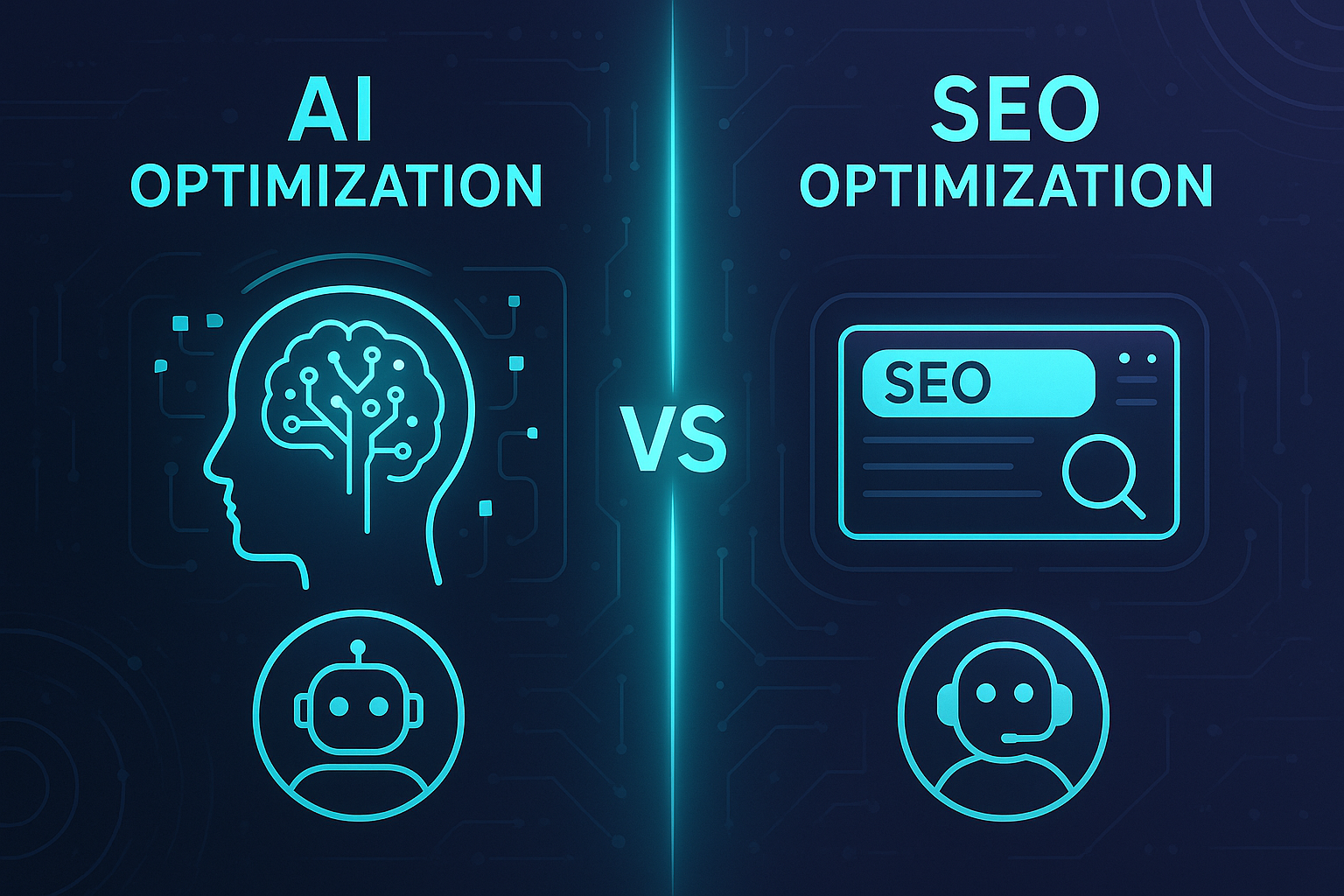
Imagine RAO as an analogy to SEO (Search Engine Optimization), but not for internet search engines, rather for AI agents. While SEO helps your website appear in search results, RAO optimizes the performance and relevance of your AI systems' actions by using search and information filtering mechanisms.
In summary, RAO is an innovative approach that will be a key element in enhancing the quality and efficiency of automated solutions in the upcoming era of artificial intelligence. For companies and teams like yours that want to fully utilize the potential of AI, understanding and implementing RAO opens new opportunities for saving time, increasing reliability, and improving process effectiveness.
Retrieval-Augmented Generation (RAG) – how it works and what problems it solves?
Retrieval-Augmented Generation, more commonly known as RAG, is an advanced artificial intelligence technique that combines the generative capabilities of language models with a mechanism for searching external and current sources of information. Thanks to this, the model does not rely solely on the built-in knowledge from training but on live data, which significantly improves the quality and reliability of the generated responses.
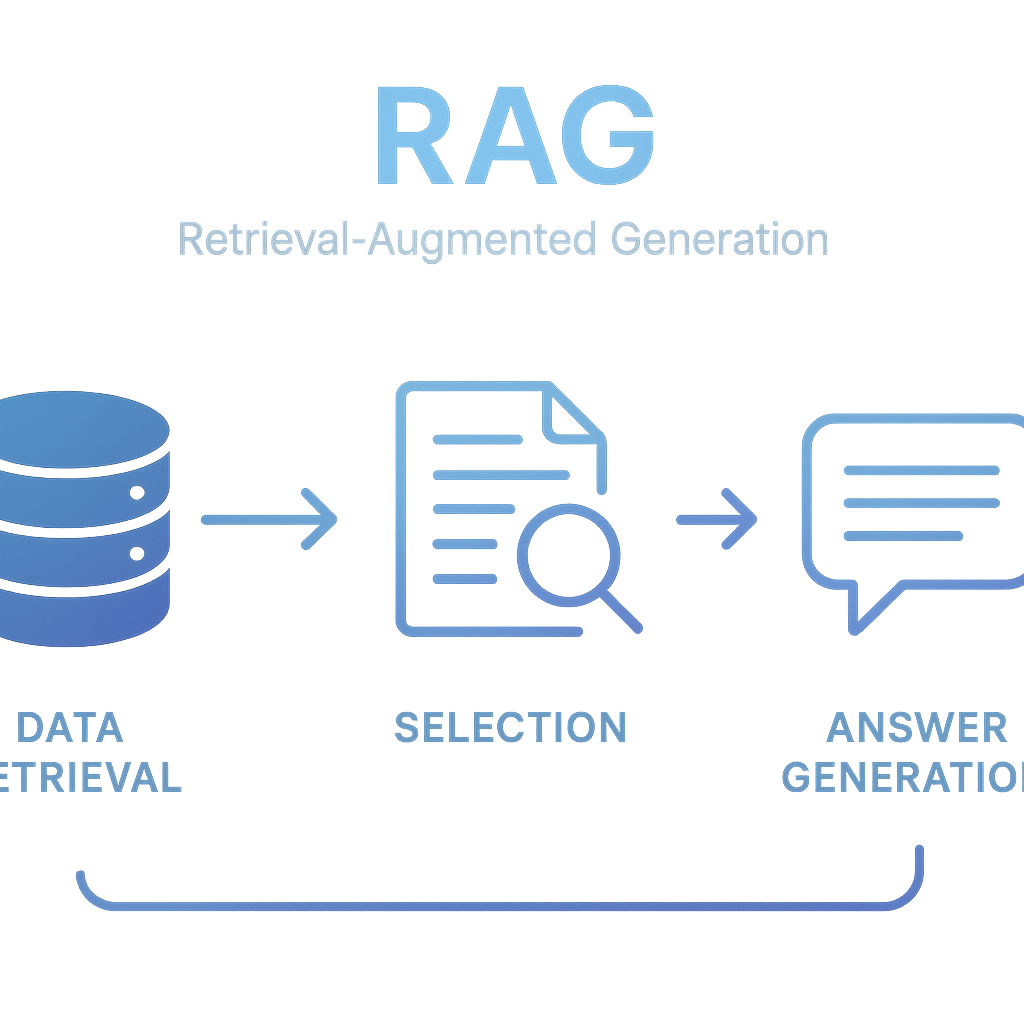
The RAG process consists of four key stages:
- Data ingestion – at this stage, the system retrieves and indexes large sets of documents, articles, reports, or databases. This prepares the model for later rapid searching of the most relevant information.
- Searching – when the user asks a question or enters a query, the search mechanism scans the indexed data, selecting the fragments that best meet the needs, e.g., pieces of text that can complement the generated answer.
- Augmentation – the found information is combined with the input query, giving the model a context richer than the question text alone. This expanded context is used to prepare the material on which the model will base the final answer.
- Generation – thanks to the received support, the model generates content that is not only coherent and natural but also current and based on reliable sources.
This approach allows RAG to solve several important problems that are challenging for traditional large language models. Firstly, it minimizes the effects of so-called hallucinations, situations in which the model "invents" false information. Secondly, it eliminates the limitation caused by outdated training data – the system can draw from the freshest resources. This is crucial, for example, in rapidly changing industries like finance, medicine, or law.
For example, a company can use RAG to automatically create reports based on the latest research and market data without manually gathering information. Another application is an intelligent chatbot that answers customer questions based on current company documents, ensuring precision and consistency in communication.
More information about Retrieval-Augmented Generation can be found on sites such as Acorn.io, Pinecone, or the official Wikipedia. It is also worth checking the NVIDIA blog, which explains the RAG architecture using real-world applications: NVIDIA Blog.
RAO and SEO – how AI agent optimization is changing business
If SEO (Search Engine Optimization) is associated with activities aimed at increasing the visibility of your website on Google, it is worth looking at RAO (Retrieval-Augmented Optimization) as a similar mechanism, only this time for artificial intelligence. While SEO optimizes website content for search engine bots, RAO focuses on making AI agents work more efficiently, use up-to-date information, and make better decisions.
In practice, RAO means that AI does not operate solely based on static, previously learned data. Instead, it dynamically accesses external information sources, enriches them, and thus can respond more precisely to business needs. It's like giving an AI agent a map of the latest data instead of relying only on old notes.
Just as SEO allows companies to attract more customers through better positioning, RAO offers concrete benefits, such as:
- Higher quality AI decisions – thanks to access to current and verified information, AI makes better, more accurate decisions, which is crucial in business.
- Access to up-to-date data – AI synchronizes its actions with the latest trends and facts, eliminating the risk of errors caused by outdated knowledge.
- Greater efficiency – optimizing AI processes allows automation and acceleration of tasks, saving company time and resources.
For entrepreneurs and teams, this is a concrete qualitative change – instead of manually tracking data or wasting hours on repetitive tasks, with RAO you can be sure your AI system works intelligently and in real time. At Lumi Zone, we understand these challenges and offer solutions that implement RAO in practice, so you can focus on business growth, not on a tight schedule and complicated processes.
Want to see how optimizing AI agents can impact your company? Contact us – we will help implement solutions using low-code and no-code tools that utilize RAO for marketing automation, campaign management, or customer service improvement.
Key elements of RAO – how it works and what distinguishes it from RAG
RAO, or Retrieval-Augmented Optimization, is an extension of the concept well known in the artificial intelligence world as Retrieval-Augmented Generation (RAG). While RAG focuses mainly on improving text generation through intelligent retrieval and data enrichment, RAO goes a step further, focusing on the optimization of broadly understood AI activities – not only creating responses but also making decisions and streamlining entire processes.
The basis of both methods consists of similar stages, which can be compared to four steps:
- Data ingestion – collecting and importing current, reliable information from various, often authoritative sources, providing the knowledge base necessary for further AI work.
- Information retrieval – precisely finding among large data sets those elements that are most relevant to the given problem or query.
- Data augmentation – combining retrieved information with user data or task context, allowing AI to operate based on a consolidated, enriched perspective.
- AI process optimization – this is the hallmark of RAO, where the output is not limited to text or a single response, but to optimizing decisions, actions, and entire processes performed by the AI system.
In other words, while RAG helps create more accurate and reliable content, RAO enables AI algorithms to better manage their tasks and improve operational efficiency in real time.
Practical applications of RAO are broad and rapidly evolving. Here are a few examples worth keeping in mind:
- Intelligent assistants – not only generating answers to questions, but capable of analyzing situations, optimizing schedules, or making decisions that facilitate the user's work.
- Automated decision-making systems – used in industry, finance, or services, where AI selects the best action options or recommendations based on current data and patterns.
- Corporate search engines – which thanks to RAO not only find information but can organize it, interpret it, and suggest next steps or analyses.
By implementing RAO, companies can expect real operational improvements and increased competitive advantage. Lumi Zone specializes in implementing such intelligent solutions that maximize AI utilization in everyday business processes through low-code and no-code tools.
If you want to learn more about how RAO can optimize your company's operations, we invite you to contact Lumi Zone experts who will help choose the best solutions tailored to your needs.
Summary and the future of RAO – how Retrieval-Augmented Optimization will change business
We see that RAO – Retrieval-Augmented Optimization – is not just another technical term, but a real revolution in the world of artificial intelligence. Thanks to its ability to combine advanced optimization with access to current, specialized data, RAO opens up entirely new possibilities for companies in terms of efficiency and making better decisions.
The foundation of RAO is the mechanisms known from Retrieval-Augmented Generation (RAG), which already prove today how significant it is to enrich artificial intelligence with reliable sources of information. RAO develops this idea, taking a step further in optimizing processes, automation, and decision-making at the AI level, which increasingly impacts industries such as marketing, sales, finance, and customer service.
The prospects for RAO development are promising. We anticipate that systems equipped with this technology will be even more flexible, precise, and secure. Companies that decide to integrate these solutions now will gain a competitive advantage through:
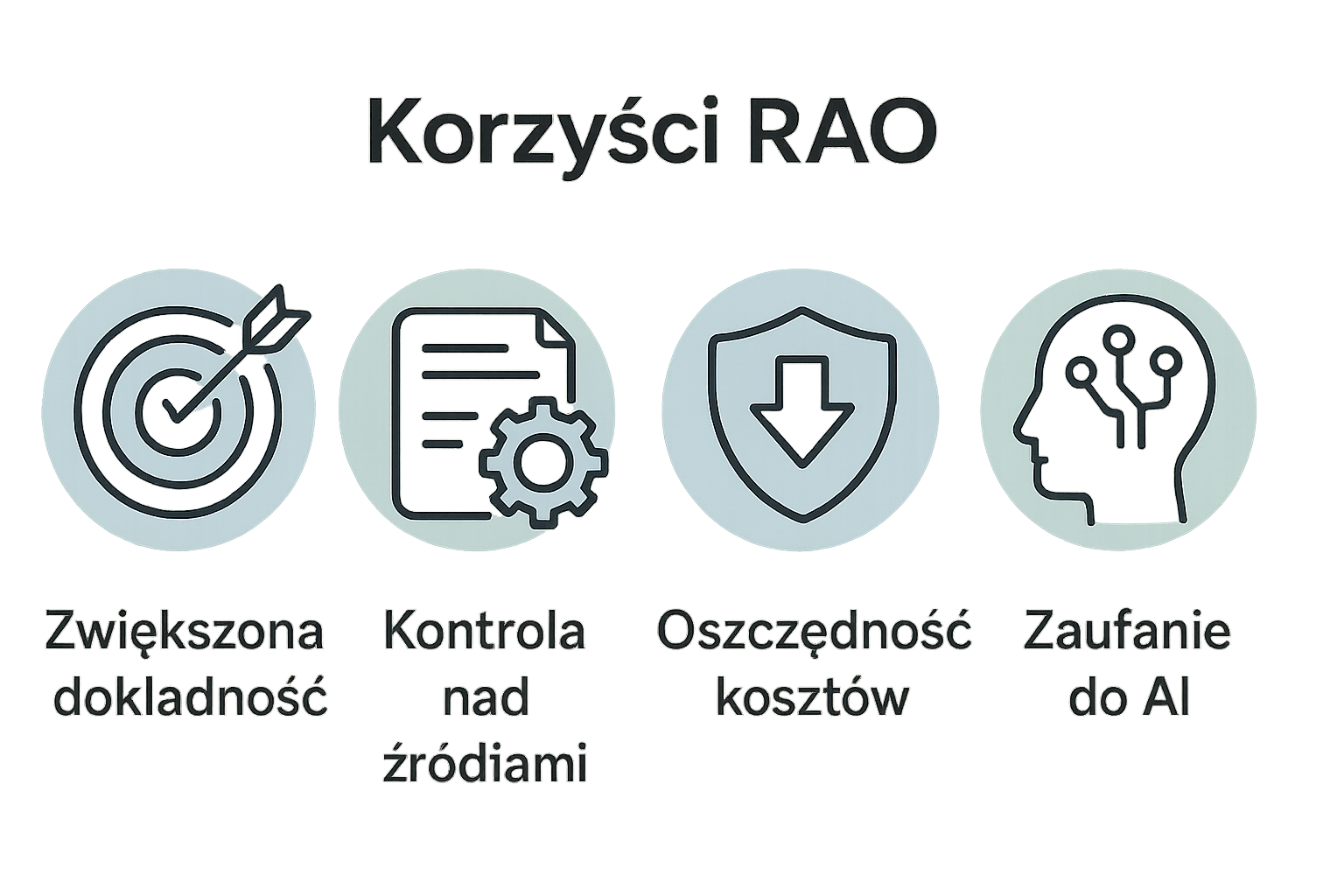
- Time savings thanks to the automation of complex processes
- Increased accuracy of decisions based on current and verified data
- Greater transparency of system operations thanks to the ability to monitor data sources
- Flexible scaling of the optimization process without costly retraining of AI models
At Lumi Zone, we specialize in implementing intelligent low-code and no-code solutions that harness the potential of mechanisms such as RAO to streamline the daily activities and marketing of our clients. We encourage you to follow the development of these technologies and consider applying them today, so as not only to keep up with the market but actively shape it.
The AI world is changing rapidly, and Retrieval-Augmented Optimization could become a key tool that allows your company to operate more effectively and wisely. If you want to learn more about how to use RAO and similar innovations in practice, we warmly invite you to contact the Lumi Zone team – together we will build the future of your business.