Shadow Automation — the invisible power of AI in your business

Introduction: what is "Shadow Automation" and why should you care
Many SaaS applications today perform "behind-the-scenes" automations — from simple rules to data-trained models — often without a formal AI deployment in the company. This is what we call Shadow Automation: processes that operate behind the scenes and decide what reaches customers, which campaigns are launched, and which tickets we prioritize, and you may not know about it.
In short: an algorithm is a set of clear rules performing a specific task, whereas AI is a group of advanced algorithms that learn from data and make "intelligent" decisions — sometimes in ways that are difficult to fully understand[1][3]. This distinction matters for risk: the more of a "black box" it is, the greater the likelihood of errors and unforeseen consequences.
Example: a CRM system automatically tags leads and sends follow-ups based on conversion probability — but the company doesn't know that the rules prioritize customers from one market, causing other segments to lose opportunities.
In this article we'll show real examples of Shadow Automation, possible business consequences, and practical steps: audit, oversight and conscious implementation of automation. Lumi Zone helps identify hidden processes, remove risks and implement controlled, scalable low‑code/no‑code solutions. Further reading: Dlaczego AI popełnia błędy, AI a media społecznościowe.
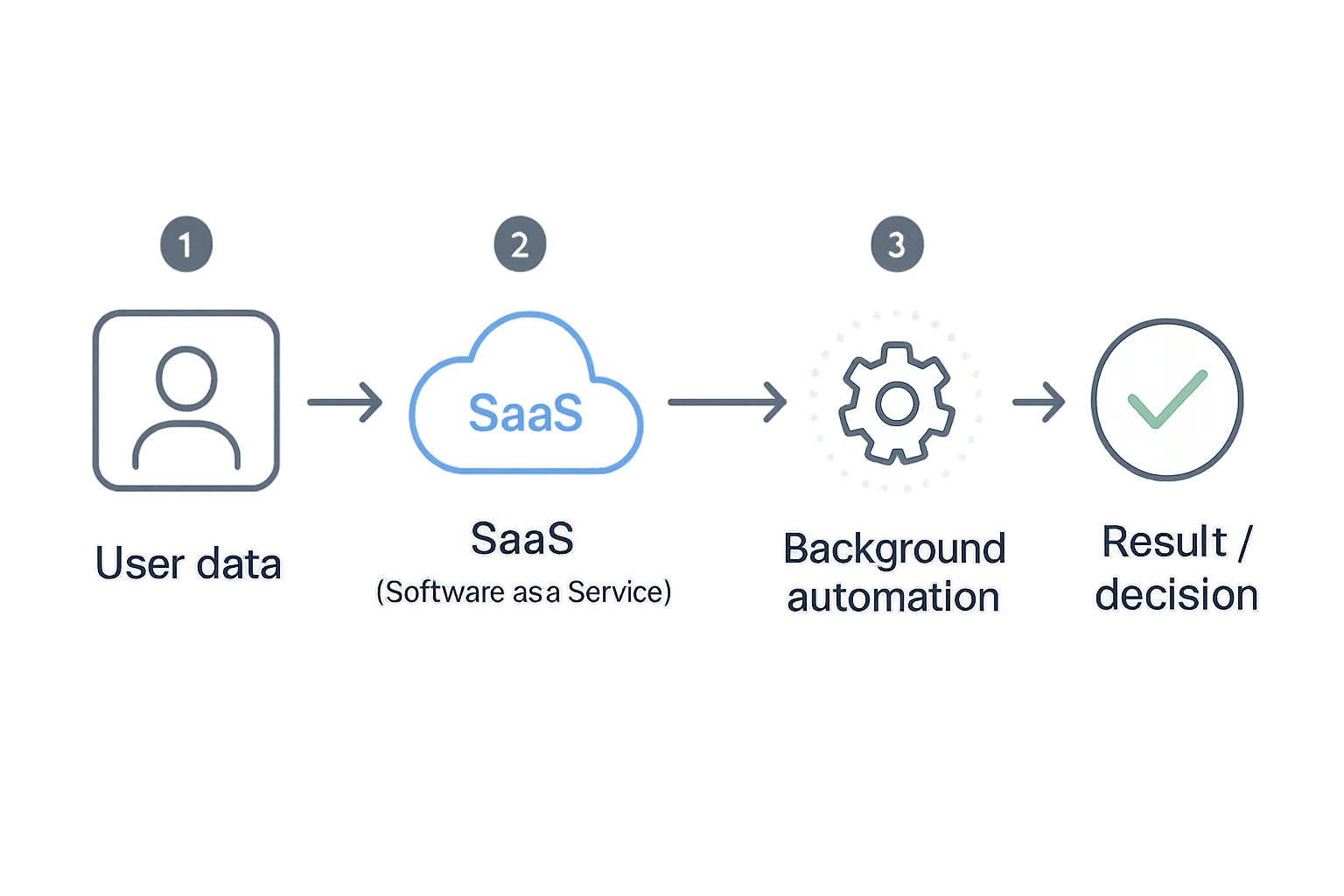
3. Deeper explanation of mechanisms: how algorithms and AI end up in SaaS products
Before we move to concrete examples, a short reminder: an algorithm is a sequence of rules and instructions performing a specific task (e.g., sorting or filtering). AI is a broader approach based on complex algorithms that learn from data — it can recognize patterns and make decisions adaptively, but often operates like a "black box". This distinction and its related challenges (transparency, accountability, risk of bias) are well described in available studies, e.g., in analyses concerning AI in social media and critical voices about AI limitations (Monika Kołodziejczyk, Dymek).
In practice, SaaS "shadow automation" takes several recurring forms:
- Business rules: hard-coded conditions (if-then) that determine statuses, notifications, or escalations.
- Data transformation scripts: normalization, cleansing, and merging of sources before analysis or integration.
- Automatic routing: assignment of leads or tickets based on rules or a scoring model.
- Recommendation models: suggestions of products, content, or contacts personalized based on user history.
- Content and publishing optimization: scheduling, automatic A/B tests, and message adjustment.
- Moderation and filtering: detecting spam, hate speech, and inappropriate content without human involvement.
- Auto-tagging and message parsing: field extraction from emails, automatic categorization, and CRM enrichment.
- Auto-generated summaries and suggestions: short summaries of conversations and suggested actions in the interface.
A short set of "from the field" scenarios: a marketing platform automatically publishes posts at the optimal time and modifies copy based on A/B results; the CRM routes leads to the sales department according to scoring, and incorrectly categorized contacts fall into limbo; an analytics tool gives budget recommendations that, when a flawed model is replicated, multiply losses.
Scale matters: a single error or bias in a model can be immediately copied into hundreds of thousands of interactions — therefore supervision and auditing of automation are crucial. At Lumi Zone we help identify these "hidden" mechanisms, implement transparent rules and secure low-code/no-code models so that automation delivers real gains instead of unexpected problems.
The next section contains practical case studies showing the mechanisms described in action.
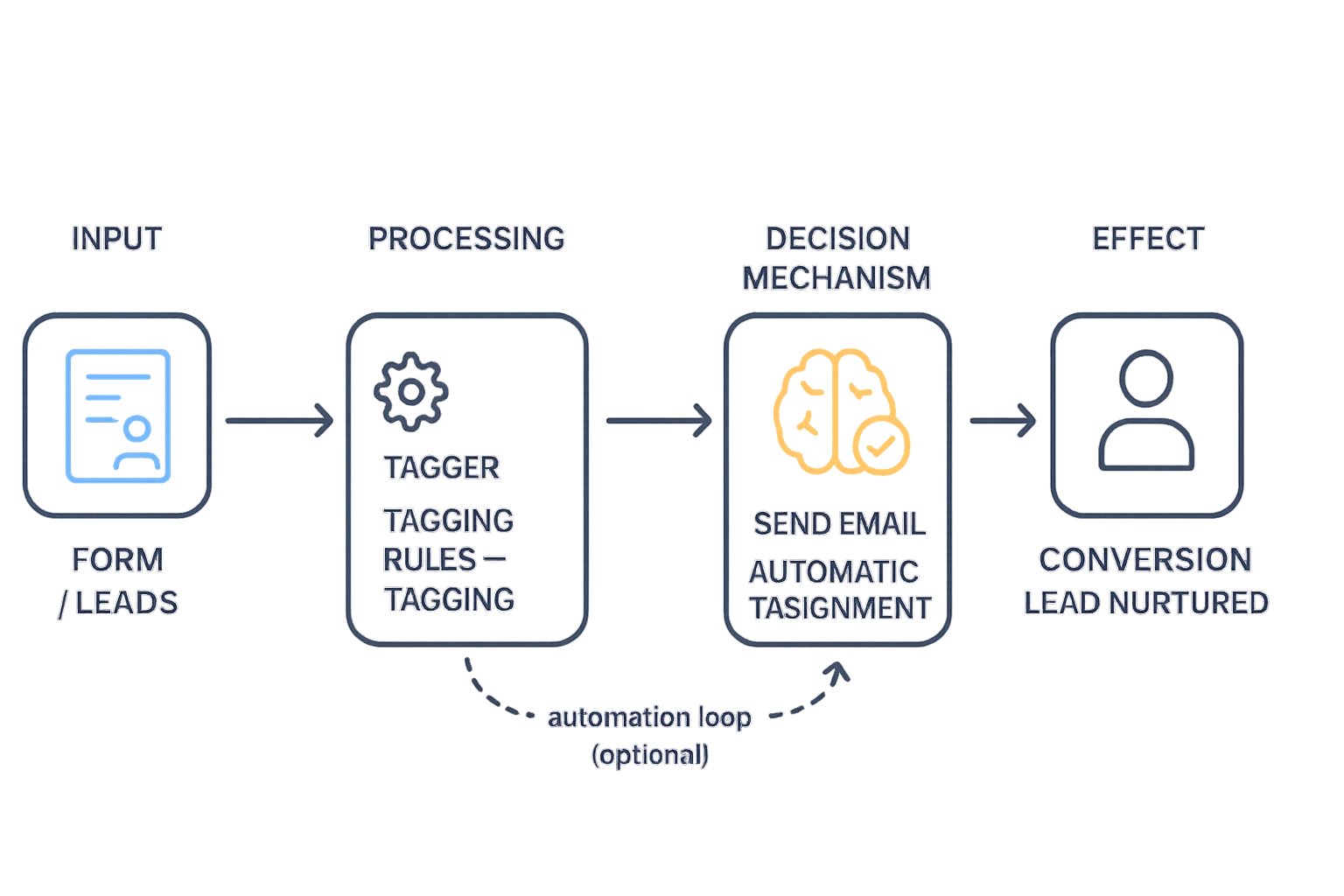
5. Case studies and real business impact
Below you will find 5 short shadow automation scenarios — concrete AI deployments that operate "behind the scenes". For each I provide estimated KPI benefits and typical risks so you can quickly assess cost-effectiveness and risks.
1. Automatic lead tagging
What it does: the system automatically assigns tags and priorities to leads based on form content and behavior. Benefits: reducing response time by 40–60%, increasing lead→opportunity conversion by 8–20% thanks to faster handling.
Risks: incorrect qualification (5–15% of cases) may send valuable leads down the wrong paths. Therefore we recommend supervisory rules and random sampling checks by the sales team.
2. Automatic content suggestions in social media tools
What it does: the tool suggests post templates, headlines and images based on engagement analysis. Benefits: saves the team's time by 50–70% when planning the calendar and increases reach by 10–25% thanks to better publishing times/ideas.
Risks: loss of brand consistency and a “sense of tone” — risk of language drift 10–30%. Solution: human-in-the-loop (editor approving proposals) and a set of brand rules.
3. Automatic comment moderation
What it does: AI filters spam, hate speech and harassment in real time. Benefits: moderation scale can grow up to 10x, response time is immediate, which protects reputation and reduces escalations.
Risks: false positives — blocking neutral comments (2–8%) and the risk of over-censorship. We recommend an appeals policy and regular retraining of the model on local data.
4. Product recommendations in e‑commerce
What it does: the system dynamically suggests cross-sell and upsell products. Benefits: increase in Average Order Value (AOV) by 5–25% and an increase in cart conversion by 3–12% with well-tuned rules.
Risks: creating a product “bubble” — customers see fewer diverse offers, which can limit long-term discovery. Rotating recommendations and mixing recommendation rules minimizes this threat.
5. Automatic advertising campaign optimizations
What it does: AI tests creatives and budgets, automatically shifting funds to better-performing variants. Benefits: shortens testing time by 30–60% and increases campaign efficiency (CPL lower by 10–25%).
Risks: less control over micro-budgets and potential budget burn in short periods (5–12%). Necessary: budget limits, safety rules and alerts for marketers.
Privacy, compliance and the algorithmic “black box”
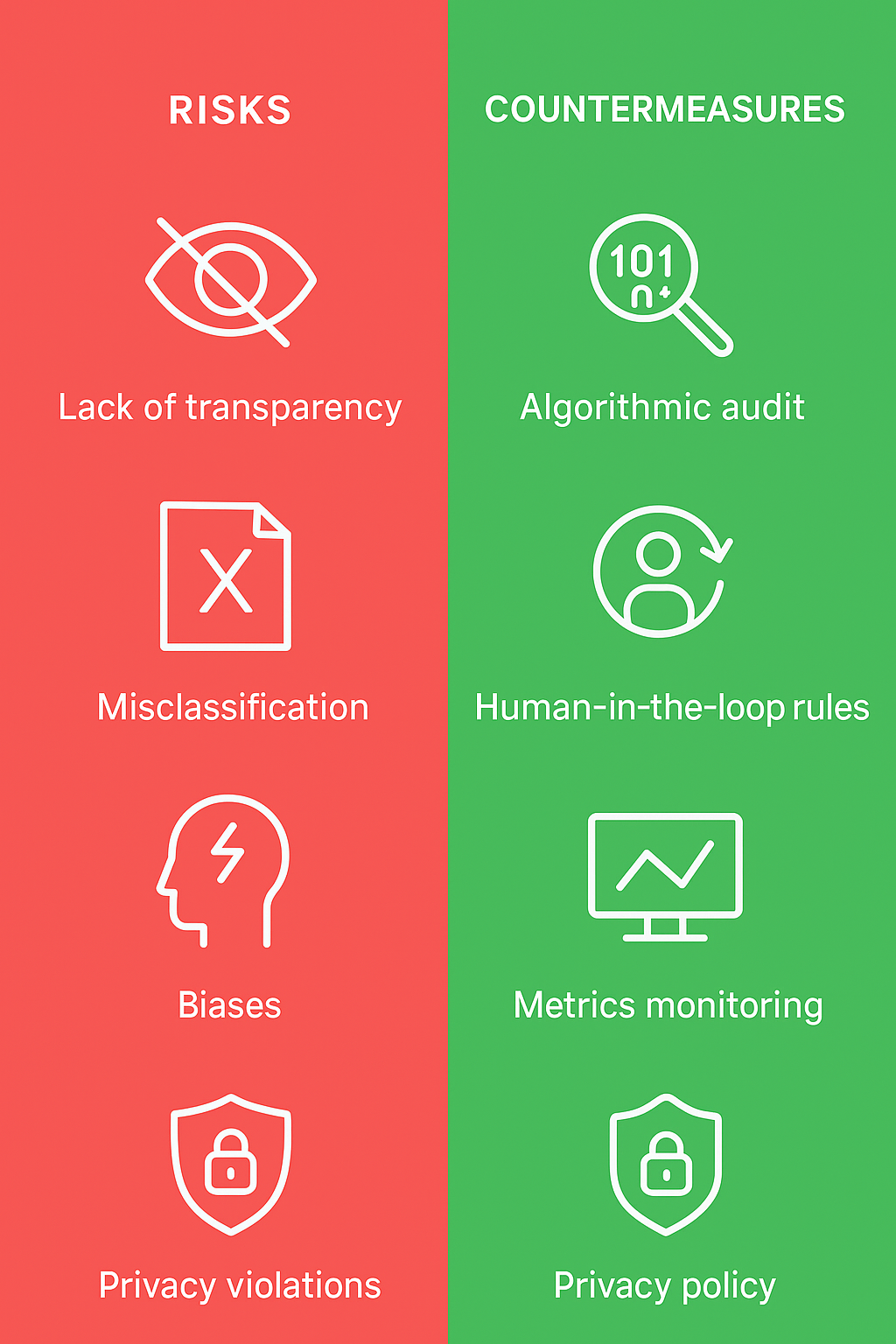
All of the above cases carry challenges related to transparency and accountability. Research shows that AI can make systematic errors and they are harder to trace (Aproco), and lack of transparency of algorithmic decisions increases the risk of compliance violations (Pomorski Thinkletter).
Lumi Zone recommendation: use KPI monitoring, model audits, document decision rules and keep a human in the loop for critical decisions. If you want, we will conduct a shadow automation audit for your company and design a safe, measurable implementation.
7. Conclusion — practical action plan and Lumi Zone offer
If you are worried that "shadow automations" are operating in your company, start with a simple audit plan. Here are the steps the Lumi Zone team will take with you to quickly identify risks and benefits:
- Mapping SaaS tools and integrations — what connects to what and who has access;
- Identifying background automations — scripts, webhooks, publishing automations and cron jobs;
- Risk assessment — data privacy, single points of failure, "black boxes" of decision-making;
- Technical and process recommendations — prioritization, safeguards, human-in-the-loop;
- Implementation and KPI monitoring plan — measurable goals and regular reports.
Lumi Zone offers a full range of services: environment audit and mapping, building transparent workflows in low-code/no-code (e.g., n8n), implementing oversight policies (human-in-the-loop), deploying KPI monitoring and team training. In practice our clients gain real results — significant time savings (20–40% less manual work), improved campaign effectiveness (a few to several percent higher conversion) and a drastic reduction in operational errors (up to 70%).
Want to learn more about the impact of AI and automation on social media? We recommend reading: OOH Magazine oraz Monika Kołodziejczyk.
We'd be happy to help — we invite you to a free consultation or mini-audit (15–30 minutes), during which we will quickly point out priorities for improvement. Schedule a meeting via the contact form or Lumi Zone booking — let's talk about how to secure and optimize your processes.