Case study: AI reduced support workload by 80% – how a small company improved customer service with a chatbot
Small Business Challenges Before AI Implementation
Small and medium-sized enterprises (SMEs) frequently encounter a unique set of challenges in their customer service operations. Unlike larger corporations with extensive resources, SMEs often rely on lean teams to manage all customer interactions. This can lead to significant operational bottlenecks, especially as the business scales or experiences periods of high demand. Common pain points include an inability to handle fluctuating inquiry volumes, resulting in protracted waiting times for customers, and a reactive approach to support rather than proactive engagement. The manual nature of these processes often means customer service teams become overwhelmed, leading to burnout, reduced employee satisfaction, and ultimately, a decline in service quality.
The company in focus for this case study, an anonymized online retailer specializing in niche artisanal products (referred to as "Artisan Goods Co."), perfectly exemplified these issues. With a growing customer base across several regions, Artisan Goods Co. experienced a substantial increase in inbound inquiries. These queries ranged from routine questions about order status, shipping details, and product information to more complex issues requiring personalized attention. Initially, a dedicated team of five customer support agents managed all communications via email and a basic web form. While highly committed, this team found itself increasingly stretched thin. Response times consistently exceeded 24 hours during peak periods, and agents spent a disproportionate amount of their time addressing repetitive questions that could be resolved with readily available information.
This scenario created a classic bottleneck for Artisan Goods Co. The manual problems extended beyond just slow responses; they impacted the business's ability to scale. Onboarding new agents was time-consuming and costly, and even with additional staff, the fundamental issue of addressing high volumes of similar queries persisted. The lack of an efficient system meant that valuable human capital was being underutilized, focusing on trivial tasks rather than complex problem-solving or proactive customer engagement. The company recognized that this approach was unsustainable and began searching for a solution that could enhance their SME customer service without incurring prohibitive costs or requiring a complete overhaul of their existing team structure. Their primary goal was to free up their human agents to focus on high-value interactions, thereby improving both customer satisfaction and internal team efficiency, demonstrating a clear need for scalability in their support operations.
Artisan Goods Co. understood that simply adding more personnel was not a long-term strategy for efficient growth. They needed a strategic intervention to address the root causes of their support challenges. The existing system lacked the flexibility to adapt to varying demand and the capacity to deliver instant, consistent answers. This led to a backlog of inquiries, frustrated customers, and a support team perpetually playing catch-up. The challenge was finding a solution that could integrate seamlessly, provide immediate relief, and offer a path to future scalability, all within the budgetary constraints typical of a small business. Their operational data indicated that over 60% of incoming queries were repetitive and could be answered using existing FAQs or product documentation, signaling a significant opportunity for automation.

Needs Analysis: Why Chatbot Was the Solution
Lumi Zone's engagement with Artisan Goods Co. began with a comprehensive needs analysis, a critical phase designed to understand the core challenges and identify the most impactful automation opportunities. Our process is built on a foundation of detailed inquiry and data-driven insights, ensuring that any proposed solution is precisely tailored to the client's unique operational context. We initiated the process by conducting in-depth interviews with Artisan Goods Co.'s customer service team and management, asking targeted questions about the types of inquiries received, their frequency, the time taken to resolve them, and the perceived pain points for both customers and agents.
Key metrics were meticulously analyzed, including average response times, resolution rates, ticket volume by category, and customer feedback data where available. We examined historical customer interaction logs to identify common patterns and frequently asked questions. This granular examination revealed that approximately 70-80% of Artisan Goods Co.'s incoming support tickets were transactional or informational in nature—questions about order tracking, product specifications, return policies, and basic troubleshooting. These inquiries did not require complex human empathy or nuanced problem-solving, but they consumed a significant portion of the human agents' time, preventing them from addressing more critical customer needs.
During this analytical phase, Lumi Zone assessed various potential solutions. Options considered included hiring additional staff, implementing a more sophisticated CRM system, or deploying an enhanced knowledge base. However, each of these alternatives presented distinct limitations. Hiring more staff would address the immediate capacity issue but would not solve the underlying problem of repetitive tasks consuming human agent time, nor would it offer the same level of scalability or instant response capabilities. A new CRM could centralize data but wouldn't automate the interaction itself. An improved knowledge base would provide information but would still require customers to actively search for answers, rather than receiving proactive, guided assistance.
The strategic decision to implement an AI-powered chatbot emerged as the superior solution for several compelling reasons. Firstly, a chatbot offered instant, 24/7 availability, addressing the long waiting times that plagued Artisan Goods Co. customers. Secondly, an AI chatbot could effectively manage the high volume of repetitive queries, freeing human agents to focus on complex, high-value interactions that genuinely require human intervention and empathy. This approach aligns perfectly with Lumi Zone's mission: to build intelligent systems that eliminate manual tasks and streamline operations, allowing businesses to focus on their core work.
Moreover, the chatbot's ability to consistently deliver accurate information, based on a meticulously trained knowledge base, would ensure uniformity in responses, a critical factor for maintaining brand consistency and customer trust. The potential for chatbot ROI was clear: reduced operational costs by decreasing the need for extensive human support for routine tasks, improved customer satisfaction through faster resolutions, and enhanced scalability to handle future growth without linear increases in staffing. By automating the most common inquiries, Artisan Goods Co. could transform its customer service from a reactive bottleneck to a proactive, efficient, and scalable system. This analytical, strategic approach underscored Lumi Zone's commitment to delivering real solutions tailored to client needs, ensuring that the chosen technology—an AI chatbot—was not just a trend, but a precise answer to identified business challenges.
The strategic decision to implement an AI-powered chatbot emerged as the superior solution for several compelling reasons, offering instant availability and effectively managing high volumes of repetitive queries.

Implementation Process: From Idea to Operation
The implementation of Artisan Goods Co.'s AI chatbot was a structured, multi-phase process meticulously executed by Lumi Zone, emphasizing a personalized, no-template approach. Our methodology ensures that each AI solution is precisely tailored to the client's unique business processes and customer interaction patterns, avoiding generic, off-the-shelf complexities. The journey from conceptualization to a fully operational system involved several critical steps, designed to deliver a stable, effective, and scalable solution.
Configuration and Initial Setup
The first phase involved configuring the chatbot platform. This included setting up the core conversational AI framework, defining user roles, and establishing the foundational data structures. Lumi Zone opted for a low-code approach, leveraging robust tools that allowed for rapid development and flexibility. This ensured that the system could be quickly adapted and iterated upon without extensive custom coding, aligning with our commitment to simplicity and effectiveness.
Model Training and Knowledge Base Integration
Perhaps the most crucial step was the model training. We began by ingesting all of Artisan Goods Co.'s existing customer service data, including FAQs, product manuals, shipping policies, and historical customer support transcripts. This data formed the bedrock of the chatbot's knowledge base. Lumi Zone's experts meticulously structured this information, converting unstructured text into a format suitable for AI comprehension. The AI model was then trained on this comprehensive dataset to understand natural language queries related to Artisan Goods Co.'s specific products and services. This training focused on identifying intent, extracting relevant entities (like order numbers or product names), and generating accurate, contextually appropriate responses. Our approach goes beyond simple keyword matching; we trained the AI to understand nuances in customer language, ensuring it could handle variations in phrasing and colloquialisms.
System Integration
For the chatbot to be truly effective, seamless system integration was paramount. Lumi Zone integrated the AI chatbot with Artisan Goods Co.'s existing e-commerce platform and customer relationship management (CRM) system. This allowed the chatbot to access real-time order information, customer profiles, and product availability directly. For instance, if a customer inquired about an order status, the chatbot could instantly query the e-commerce system, retrieve the tracking information, and provide an immediate, personalized update. This integration was critical for eliminating manual data lookups and ensuring the chatbot could provide actionable, up-to-date information, without creating new silos of data. We employed advanced automation tools like n8n for these integrations, creating robust workflows that connected disparate systems efficiently.
Testing and Refinement
Before full deployment, an intensive testing phase was conducted. This involved internal testing by Lumi Zone's team and beta testing by Artisan Goods Co.'s support agents and a select group of customers. Tests covered a wide range of scenarios, from common inquiries to more complex, multi-turn conversations and edge cases. Feedback from these tests was invaluable, leading to iterative refinements of the AI model's training data, response accuracy, and conversational flow. We focused on ensuring the chatbot maintained Artisan Goods Co.'s brand voice and provided a consistent, helpful user experience. This iterative refinement process is a hallmark of Lumi Zone's approach, guaranteeing that the final system is not just functional but also highly optimized for the client's specific needs.
Lumi Zone's approach to personalization during this phase was key. We didn't just implement a generic chatbot; we crafted an AI agent that understood the unique language, products, and customer journey of Artisan Goods Co. This involved fine-tuning the AI's personality, ensuring it responded with the appropriate tone, and programming it to escalate complex queries seamlessly to human agents when necessary, providing all relevant context for a smooth handover. Every project is meticulously customized, without templates or unnecessary complications, ensuring the AI agent becomes a true extension of the client's business.

Results and Outcomes: 80% Support Workload Reduction
The implementation of Lumi Zone's AI chatbot for Artisan Goods Co. yielded transformative results, demonstrably improving operational efficiency and elevating customer service standards. The most significant outcome was an 80% reduction in human-handled support tickets, a metric that far exceeded initial expectations and provided substantial relief to the overloaded customer service team.
Before the chatbot's deployment, human agents were handling an average of 1,200 support tickets per month. Post-implementation, this number plummeted to approximately 240 tickets per month, allowing the human team to reallocate their efforts from repetitive queries to complex issues requiring empathy, negotiation, or detailed investigation. This direct reduction in workload translates into significant cost savings and a more strategically deployed workforce.
Enhanced Response Times
Another critical success metric was the dramatic reduction in customer response times. Previously, Artisan Goods Co. struggled with average initial response times often exceeding 24 hours, particularly during peak seasons. With the AI chatbot operating 24/7, customers received instant responses to common inquiries. For queries that the chatbot could fully resolve, the resolution time was effectively instantaneous. For those requiring human intervention, the chatbot gathered initial information and provided immediate acknowledgement, significantly reducing the perceived waiting time for customers.
- Average Initial Response Time (Pre-Chatbot): >24 hours
- Average Initial Response Time (Post-Chatbot): <1 minute (for chatbot-handled queries)
Increased Customer Satisfaction
The improvements in response times and round-the-clock availability directly correlated with a noticeable uplift in customer satisfaction. Artisan Goods Co. conducted post-interaction surveys, and the data reflected a positive shift. The customer satisfaction score (CSAT) for chatbot-handled interactions consistently rated higher than for traditional human-agent interactions on routine tasks, primarily due to the speed and accuracy of information provided. Overall customer feedback indicated a greater sense of responsiveness and efficiency from the company.
Furthermore, the chatbot's ability to provide consistent information across all interactions eliminated discrepancies that sometimes arose with multiple human agents, fostering greater trust and reliability in Artisan Goods Co.'s support services.
Operational Efficiency and Automation ROI
The operational efficiency gains were multifaceted. The human support team, no longer burdened by repetitive tasks, could dedicate their time to proactive customer outreach, complex problem-solving, and managing exceptional cases. This shift in focus not only improved the quality of service for high-stakes interactions but also enhanced employee job satisfaction. Agents reported feeling more engaged and valued, as their expertise was now applied to more meaningful work.
The return on investment (ROI) for the chatbot implementation became evident through reduced operational overheads and increased capacity without proportional staffing increases. The automation ROI extended beyond simple cost savings, encompassing improved brand reputation, increased customer loyalty, and the ability to scale support operations effortlessly with business growth.
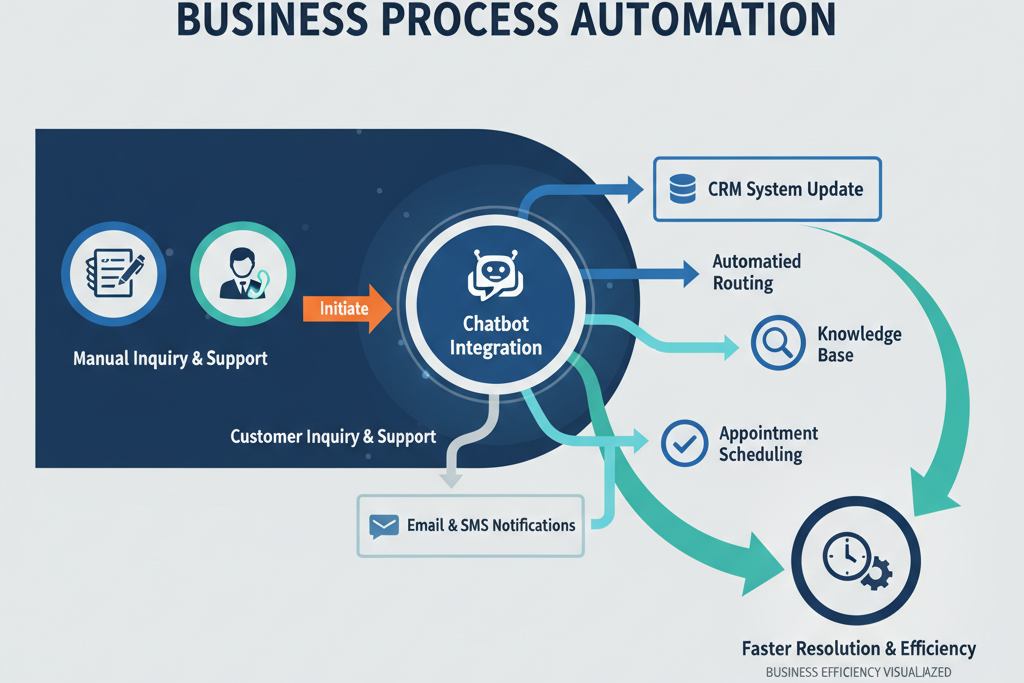
This quantifiable success highlights the power of AI chatbot efficiency when implemented strategically. Artisan Goods Co. not only alleviated its immediate support workload issues but also established a scalable, customer-centric support infrastructure ready for future expansion.
Challenges and Solutions: What We Learned
No advanced AI implementation is without its challenges, and the deployment of the chatbot for Artisan Goods Co. presented several learning opportunities that Lumi Zone addressed proactively. Understanding these obstacles and their resolutions offers valuable insights for other small businesses considering automation.
Initial AI Training Data Gaps
One of the primary challenges encountered during the early stages was the initial incompleteness and occasional inconsistencies in Artisan Goods Co.'s historical data. While extensive, the existing FAQs and customer interaction logs did not cover every conceivable customer query or nuanced phrasing. This led to instances where the chatbot provided less-than-optimal or generic responses to specific questions it hadn't been explicitly trained on.
Solution: Lumi Zone adopted an iterative, feedback-driven approach to model training. We established a continuous learning loop where human agents reviewed chatbot interactions, particularly those requiring escalation. Any questions the chatbot failed to answer or answered incorrectly were used to retrain and refine the AI model. This involved regularly updating the knowledge base with new information and specific phrasing identified from customer queries, transforming initial data gaps into a robust, evolving repository. This practical lesson emphasized that AI optimization is not a one-time setup but an ongoing process.
Integration Complexities with Legacy Systems
Integrating the new AI chatbot with Artisan Goods Co.'s existing e-commerce and CRM systems, while ultimately successful, presented some initial complexities. Older systems often have less straightforward APIs or require specific data formats, which can be a hurdle for seamless data exchange.
Solution: Lumi Zone leveraged its expertise in low-code automation tools like n8n, which provided the flexibility to build custom connectors and workflows without extensive coding. This allowed us to bridge the gap between the modern AI platform and Artisan Goods Co.'s established systems, ensuring real-time data flow for order lookups and customer profile access. This highlighted the importance of choosing integration tools that are adaptable and robust for varied system environments, a key aspect of effective system integration.
The human element remains critical. While AI automates, human oversight and continuous feedback drive perfection.
Managing Customer Expectations
Introducing an AI chatbot can sometimes lead to initial apprehension among customers who are accustomed to human interaction. There was a period where some customers preferred to wait for a human agent, even for simple queries, due to unfamiliarity with AI assistance.
Solution: Artisan Goods Co., guided by Lumi Zone, implemented clear communication strategies. They transparently informed customers that the chatbot was designed to provide instant assistance for common questions, with seamless escalation to human agents for complex matters. The chatbot itself was programmed to clearly identify itself as an AI and offer the option to speak with a human at any point. This managing of expectations and providing an escape hatch significantly improved customer acceptance over time. This practical lesson underscored the need for transparency and user control in AI interactions.
Maintaining a Human Touch
While automation was the goal, Artisan Goods Co. was keen to retain its brand's personal, artisanal feel. The concern was that a chatbot might sound too robotic or impersonal, detracting from the customer experience.
Solution: Lumi Zone meticulously crafted the chatbot's conversational personality to align with Artisan Goods Co.'s brand voice. The responses were designed to be friendly, helpful, and empathetic where appropriate, mimicking the tone of the human agents. Furthermore, for complex or sensitive inquiries, the system was configured for immediate and context-rich handovers to human agents, ensuring that critical interactions always retained a human touch. This ensured that the AI optimization enhanced, rather than diminished, the personalized customer experience.
These challenges and their resolutions underscored that a successful AI implementation is not merely about deploying technology, but about strategic planning, continuous refinement, and a deep understanding of both the technology's capabilities and the human element it serves.

Future: How Chatbot Evolves with the Company
The AI chatbot implemented for Artisan Goods Co. is not a static solution; it is a dynamic system designed for continuous evolution and expansion alongside the company's growth. Lumi Zone's philosophy emphasizes building scalable, future-proof automation solutions that adapt to changing business needs and technological advancements. The plans for the chatbot's development outline a clear roadmap for enhancing its capabilities, integrating new features, and scaling its operations.
New Features and Enhanced Functionality
The immediate future development plans include integrating more proactive capabilities. For example, the chatbot could be enhanced to:
- Proactive Outreach: Send automated, personalized notifications regarding order delays, new product launches, or special promotions based on customer purchase history.
- Multilingual Support: As Artisan Goods Co. explores new international markets, the chatbot will be trained to support multiple languages, ensuring consistent service across diverse customer bases without needing to hire additional, specialized human agents for each language.
- Sentiment Analysis: Implement advanced sentiment analysis to better understand customer mood and urgency during conversations, allowing for more empathetic responses or more rapid escalation to human agents when frustration is detected.
Deeper System Integrations
Future integrations will focus on connecting the chatbot with even more facets of Artisan Goods Co.'s operations. This includes:
- Inventory Management Systems: Allowing the chatbot to provide real-time stock levels and estimated restock dates for out-of-stock items, directly from the inventory system.
- Marketing Automation Platforms: Enabling the chatbot to enroll customers in newsletters, provide product recommendations based on browsing history, or guide them through personalized sales funnels.
- Voice AI Integration: Exploring the possibility of extending the chatbot's capabilities to voice channels, transforming it into an AI agent capable of handling phone inquiries, further reducing manual workload and offering an alternative communication channel.
Scaling with Business Growth
The inherently scalable nature of AI means the chatbot can effortlessly accommodate Artisan Goods Co.'s projected growth. As the company expands its product lines, enters new markets, or experiences increased customer volume, the chatbot's capacity can be scaled simply by expanding its knowledge base and fine-tuning its models, without a linear increase in operational costs associated with human staffing. This ensures that customer support remains efficient and effective, no matter the scale of the business. The automation future for Artisan Goods Co. is one where AI is an integral, evolving partner in every aspect of customer interaction, continuously learning and adapting to provide superior service.
Lumi Zone remains committed to supporting Artisan Goods Co. in this continuous evolution, ensuring that the AI agent grows strategically with the company, always aligned with their business objectives and customer experience goals. The system's ability to evolve and integrate new functionalities reinforces the long-term value of strategic AI automation.
Practical Recommendations for Other SMEs
The success story of Artisan Goods Co. provides a compelling blueprint for other small and medium-sized enterprises considering AI automation. The key conclusions from this case study highlight that AI chatbots are not just for large corporations but offer tangible, transformative benefits for smaller businesses willing to embrace strategic technological integration. Lumi Zone's experience with Artisan Goods Co. reinforces that effective automation can significantly improve efficiency, customer satisfaction, and scalability.
Here are practical recommendations for other SMEs considering chatbot implementation:
- Start with a Clear Needs Analysis: Before implementing any solution, meticulously identify your core customer service pain points. What are the most frequent, repetitive questions? Where are your team's bottlenecks? A detailed needs analysis will guide your automation strategy and ensure you're solving the right problems. Lumi Zone's process of deep inquiry and data analysis is crucial here.
- Prioritize Personalization, Not Just Automation: Avoid generic, template-based solutions. Your chatbot should reflect your brand's voice and unique customer journey. Invest in training the AI model with your specific data to ensure accurate, contextually relevant, and personalized responses. This level of customization is key to maintaining customer trust and satisfaction.
- Plan for Seamless Integration: A chatbot's true power comes from its ability to connect with your existing systems (CRM, e-commerce, inventory). Ensure your chosen solution can integrate effectively to provide real-time, actionable information, eliminating manual lookups and fragmented data. Low-code automation tools can be particularly effective for this.
- Embrace Iterative Development and Continuous Learning: AI optimization is an ongoing process. Be prepared to continuously monitor chatbot performance, gather feedback, and retrain the model. What the chatbot doesn't know today, it can learn tomorrow. This iterative approach ensures the AI system evolves with your business.
- Maintain the Human Touch: While automation reduces workload, the human element remains invaluable for complex, sensitive, or unique customer interactions. Design your chatbot to seamlessly escalate conversations to human agents when necessary, providing all relevant context for a smooth handover. Transparency about AI use and providing an easy "escape hatch" to a human agent builds trust.
- Focus on Scalability: Choose an AI solution that can grow with your business. The ability to handle increased inquiry volumes, expand to new markets, and integrate future features without significant additional investment is a hallmark of a robust automation strategy.