Social Listening 2.0: AI Is Changing the Rules of Internet Monitoring

Introduction — what is Social Listening 2.0?
Social Listening 2.0 is a new generation of internet monitoring in which artificial intelligence not only collects mentions of a brand but understands their tone and context and suggests ready-made responses. Unlike classical listening — based mainly on keywords — solutions based on NLP and machine learning can detect sarcasm, subtle shifts in emotion, and group conversations into thematic clusters, making analysis much deeper and more useful (Hootsuite, Sprinklr).
For brands and marketing or customer support teams this means a shift from reaction to proactivity: rapid detection of crises, automatic response suggestions, prioritization of the most relevant mentions, and better product insights that drive product development. AI also allows monitoring multiple languages and platforms simultaneously, which is crucial for companies operating globally. This enables teams to save time and scale activities without increasing headcount. Automation creates clear priorities — from immediate intervention to long-term product changes.
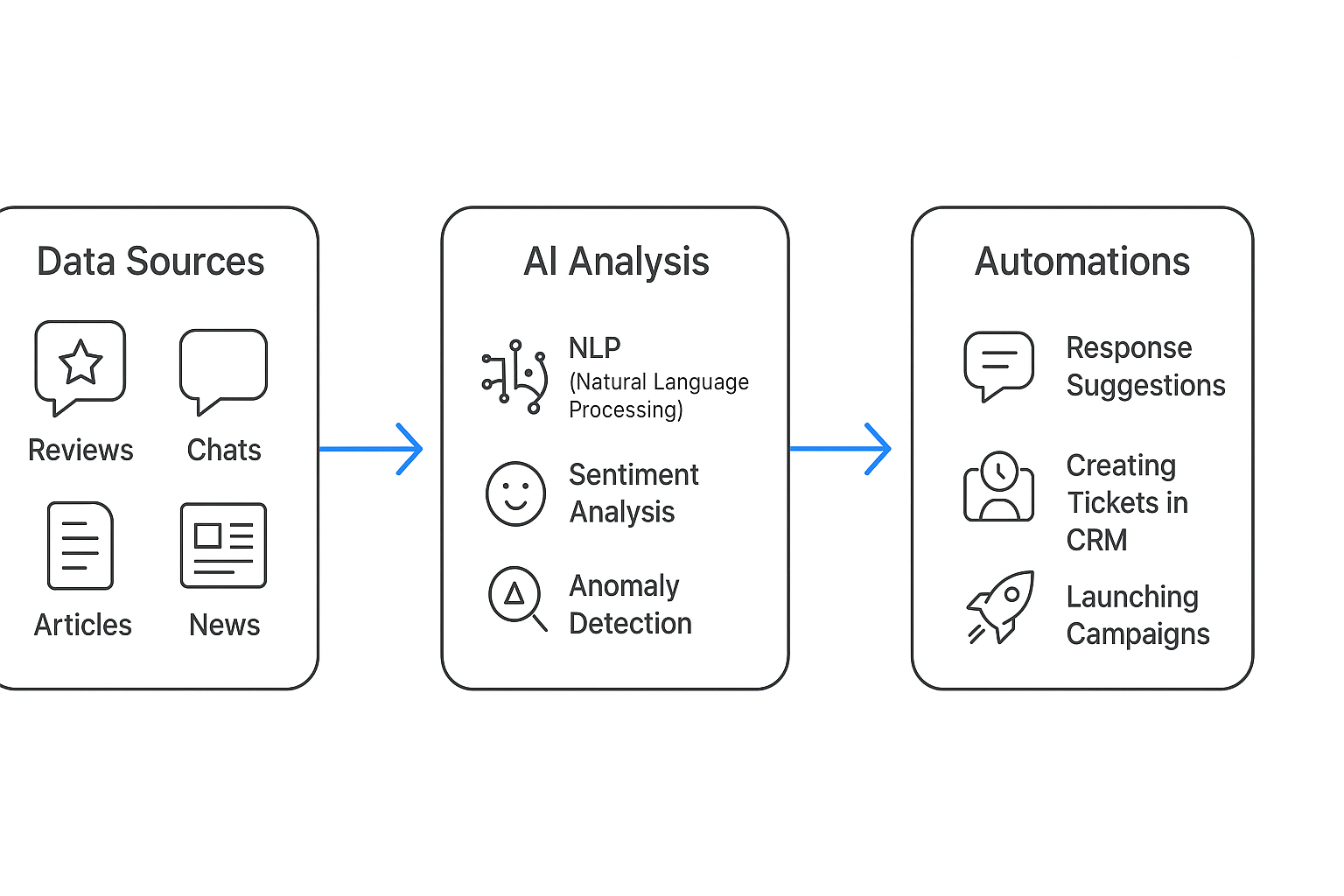
For example — the system can detect in real time a sudden increase in negative mentions, suggest a response template, route the case to the appropriate specialist and open a ticket in the CRM system. Solutions can also aggregate signals about bugs or customer ideas, which speeds up the product roadmap. At Lumi Zone we help implement such solutions (n8n, low‑code/no‑code, integrations) to quickly turn data into actions. Read on to learn about specific tools and implementation steps.
From tracking keywords to understanding context — how AI analyzes the internet
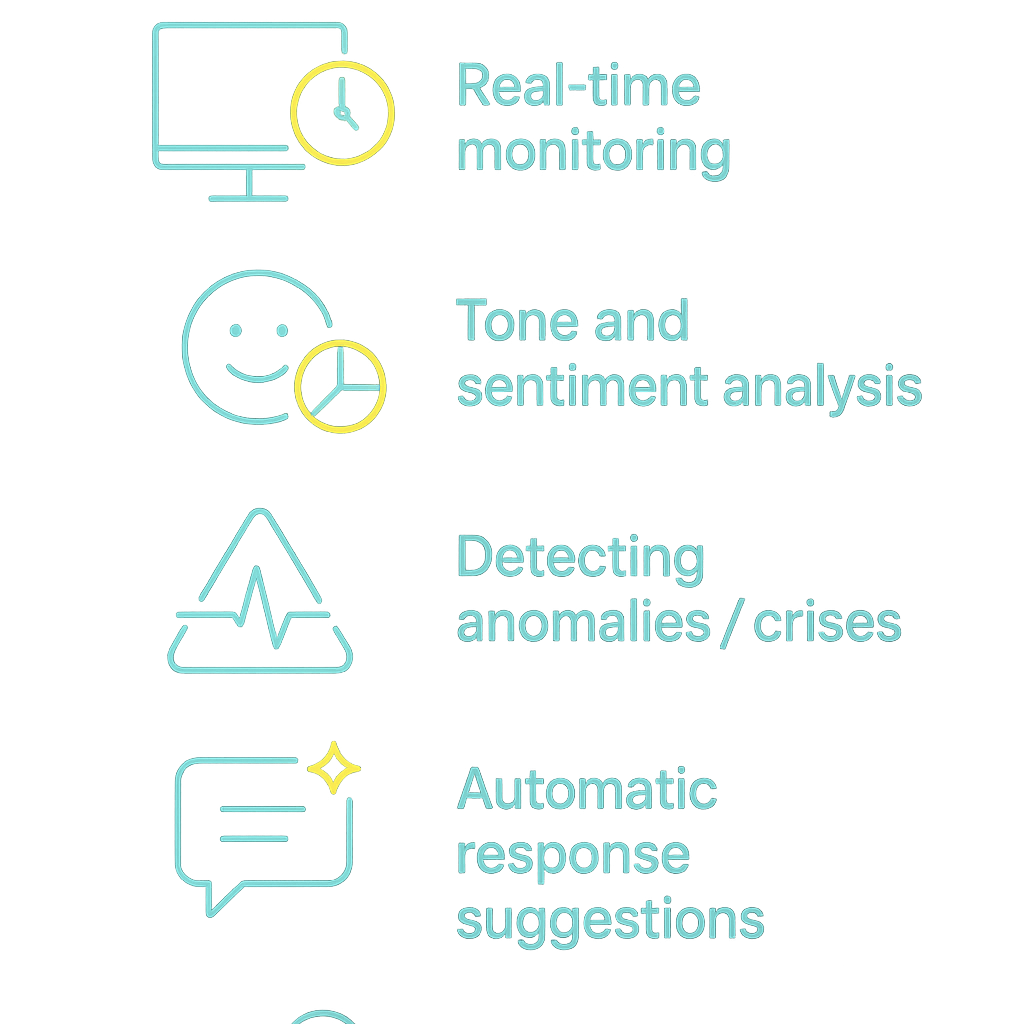
Social Listening 2.0 is a qualitative leap: instead of simply counting mentions, AI understands what is really happening around your brand — the tone of conversations, sudden anomalies, and emerging topics. Below I explain the most important technologies behind this change and show how you can use them in practice.
NLP and tone detection
Natural Language Processing (NLP) analyzes sentences, detects emotions and linguistic nuances. This allows the system to distinguish critical feedback from a joke, and even detect sarcasm or irony — which is crucial, because classic algorithms often misinterpreted such remarks. Tools described by Hootsuite and AgilityPR show that advanced NLP can capture subtle mood shifts in conversations about a product.
Machine learning and trend modeling
ML models learn from historical data to predict the direction of conversations. This allows detection of microtrends before competitors do — e.g., growing interest in a specific product feature in a particular region. This information can be used to quickly change marketing communication or to prioritize product development (source: Palowise, Sprinklr).
Topic clustering and "smart themes"
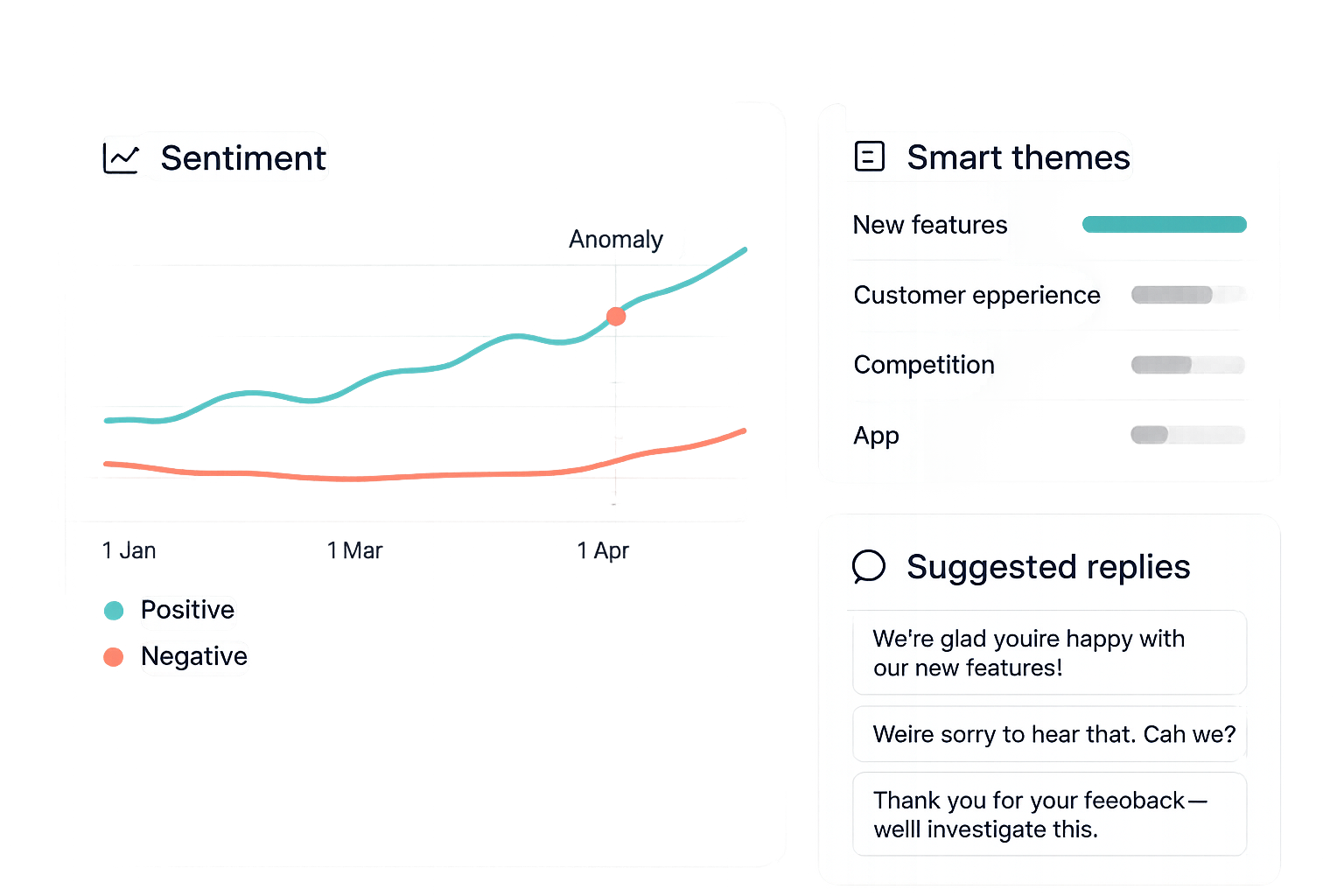
Algorithms group related conversations into thematic clusters — so-called smart themes. Instead of hundreds of individual mentions you see organized areas of discussion: complaints after an update, benefits of a new feature, or influencer discussions. This makes reporting and decision-making easier.
Real-time anomaly detection
AI monitors the pace and tone of conversations and can immediately report unusual events. Example: after deploying a product update the system detects a sudden drop in satisfaction and sends an alert — enabling the support team to react immediately and limit crisis escalation (AgilityPR, Sprinklr).
Multilingual and cross-platform analysis
Modern engines analyze dozens of languages and integrate data from social media, blogs, forums, and news — providing a coherent global picture. This is crucial when you operate in multiple markets and need to compare sentiment across channels.
If you want to implement Social Listening 2.0 in your company, Lumi Zone will help select tools, build models, and automate workflows (n8n, helpdesk and marketing integrations). With us you'll detect problems faster and use trends as a competitive advantage. More: AgilityPR, Hootsuite, Palowise, Sprinklr.
5. Practical implementation guide: How to implement Social Listening 2.0 in your company
Below you will find a concrete, step-by-step implementation plan for Social Listening 2.0 — so that AI tools start to genuinely save time and increase your team's effectiveness. Lumi Zone can take over part of the work: from an audit through a POC to a production rollout. We offer a free audit or proof‑of‑concept so you can evaluate the benefits without risk.
-
1) Setting goals
Start by defining three main goals: improving customer experience (CX), supporting marketing (campaigns, engagement) and R&D (product insights). Each goal requires a different set of alerts and reports — e.g. CX: response time and escalations; marketing: share of voice and engagement; R&D: topics and user needs.
-
2) Choosing metrics
Choose metrics according to your goals. The most important are:
- Sentiment and tone of conversation (score and trend),
- Share of voice versus competitors,
- Growth rate of topics and anomalies (sudden spikes),
- Engagement rate and customer service response time.
-
3) Selecting and integrating tools
Selection criteria: quality of NLP (recognition of sarcasm, nuances), coverage of sources (social, forums, news), API/webhooks, data export capability, security and price. Example vendors: Hootsuite, Palowise, enterprise platforms like Sprinklr, as well as specialist services described by AgilityPR and analyses from Hireawriter.
-
4) Automation configuration
Use integration tools (e.g. n8n) to automate responses and workflows. Example workflows:
- Automatic replying: detection of a positive comment → generation of a personalized response (NLG) → publish as a draft for approval.
- Escalation to the helpdesk: negative sentiment + high engagement → create a ticket in the helpdesk system with full context and conversation history.
- Generating content briefs: detection of a growing topic → automatically create a draft brief for the content team (topics, quotes, suggested CTAs).
-
5) Testing and optimization
Implement iteratively: A/B test different responses, monitor metrics (CSAT, CTR, escalation rate) and fine-tune NLP models (industry-specific vocabularies, classifiers). Also test alert thresholds for anomalies.
-
6) Privacy and compliance
Ensure compliance with GDPR and data retention policies. Anonymize personal data, control access and log processing. For sensitive data use local storage regions and data processing agreements.
Sample 90-day implementation plan
- Days 0–14: Source audit, KPI definition and process mapping (free audit from Lumi Zone).
- Days 15–45: POC (1–2 key channels, NLP configuration, 2 workflows in n8n, A/B tests).
- Days 46–90: Production rollout, team training, monitoring and optimization.
Case suggestions: customer service time savings from automatic escalations, faster crisis detection through anomaly detection, and increased campaign engagement thanks to better-tailored content. Want to see how this would work for you? Contact Lumi Zone — we offer a free audit or proof-of-concept and will help choose the best tools and design workflows.
Summary and call to action
Social Listening 2.0 turns internet monitoring from passive tracking into a proactive system: rapid crisis detection, automated responses and trend forecasting let you react before situations escalate. With AI analyzing sentiment, context and topic clusters you gain real insights into customer moods and make more accurate marketing decisions.
The market for AI listening solutions is growing rapidly — forecasts indicate an increase in value from about USD 1.64 billion in 2023 to USD 5.66 billion in 2028. Companies that quickly adopt such technologies gain a competitive advantage: they shorten response times, automate support and can capitalize on upcoming trends earlier.
Simple, effective next steps:
- Schedule a free 30–60 min audit with Lumi Zone — together we'll analyze your needs, point out priorities and quick improvements.
- Run a 6-week listening automation POC with n8n integration — the pilot project will demonstrate automatic alerts, suggested responses and trend forecasts on live data.
Do you want to turn observations into an advantage? Contact Lumi Zone — request a demo and receive a dedicated implementation plan. You can also find more context and inspiration at: AgilityPR, Sprinklr, Hootsuite.