Personalization Like the Giants - AI Recommends Products in Your Online Store
Introduction: The Era of Personalization in E-commerce
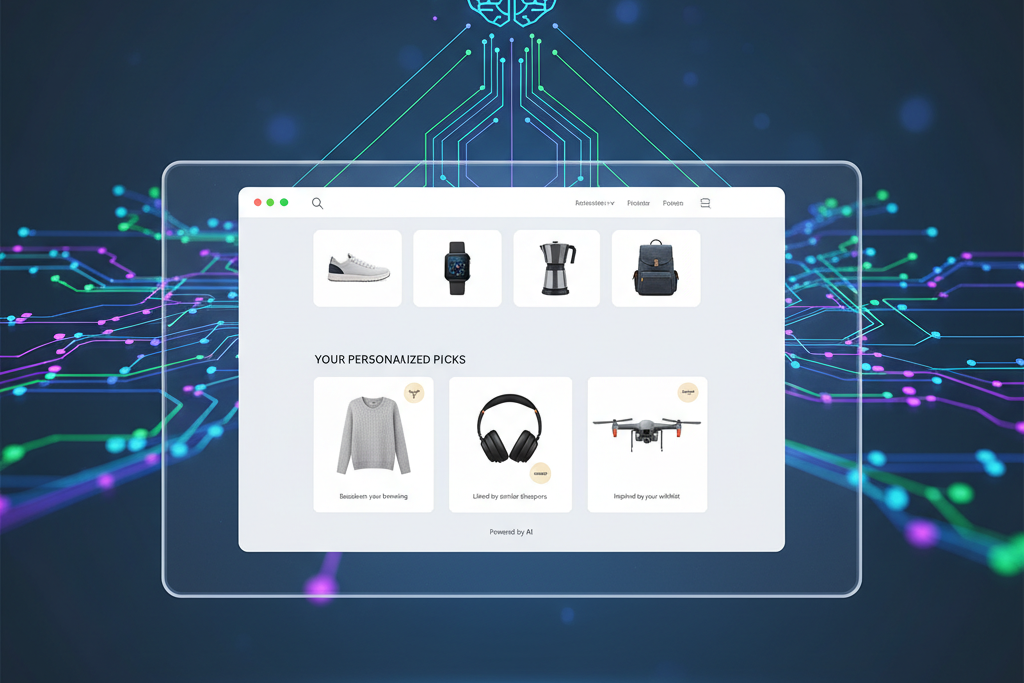
In the dynamic landscape of modern e-commerce, personalization has transitioned from a novel feature to a fundamental pillar of competitiveness. Consumers today expect tailored experiences that anticipate their needs and preferences, mirroring the highly individualized interactions they receive from leading digital platforms. Giants like Amazon, known for their uncanny ability to suggest products you didn't even know you needed, and Netflix, with its precise content recommendations, have set a new standard. Their unparalleled success is largely attributed to sophisticated Artificial Intelligence (AI) systems that continuously learn and adapt to individual user behavior.
For years, such advanced AI capabilities seemed exclusive to multi-billion-dollar corporations. However, the rapid evolution of AI technology has democratized access to these powerful tools. What was once the domain of tech behemoths is now readily available to online stores of all sizes. Implementing AI-driven personalization is no longer a luxury but a strategic imperative for any business aiming to thrive in a crowded digital marketplace.

How Do AI Recommendation Systems Work?
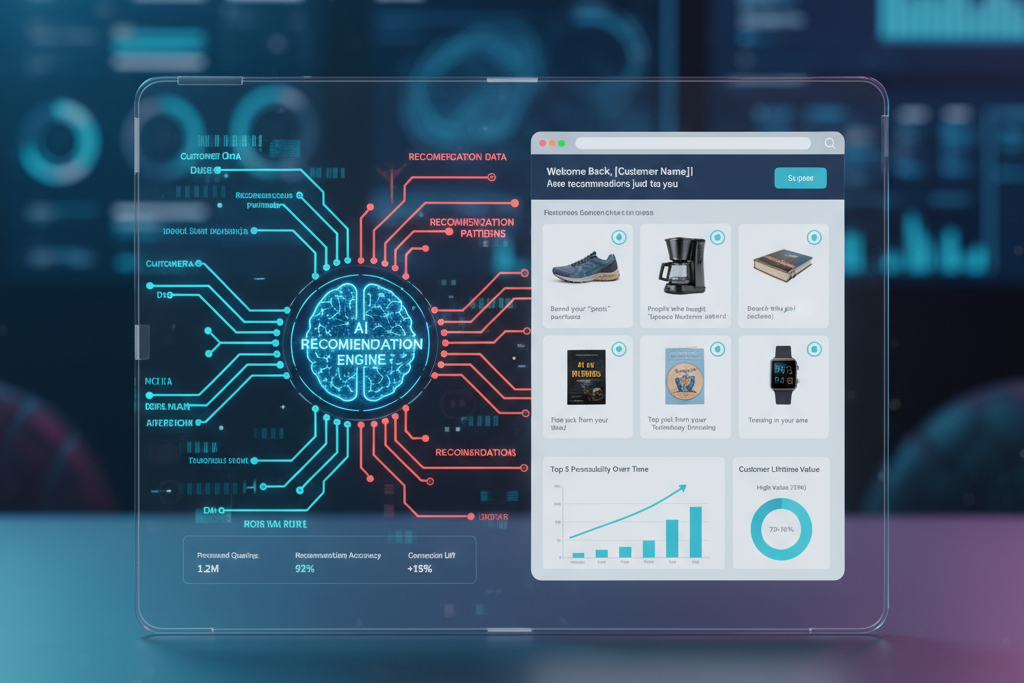
At their core, AI recommendation systems are designed to predict user preferences and suggest items that are most likely to be relevant. This is achieved through complex algorithms and continuous data analysis, making the systems smarter over time. Understanding their underlying mechanisms is key to appreciating their power.
Types of Algorithms Driving Personalization
- Collaborative Filtering: This widely used approach identifies patterns in user behavior by finding similarities between users or items. For example, if User A and User B have similar purchase histories, and User A bought an item that User B hasn't, the system might recommend that item to User B. It operates on the principle that people who agreed in the past will agree in the future, or that similar items are liked by similar users.
- Content-Based Filtering: This method focuses on the attributes of items themselves. If a user has a history of buying blue shirts, a content-based system will recommend other blue shirts or items with similar attributes (e.g., color, style, brand) that the user has shown a preference for. It's essentially matching a user's profile to item characteristics.
- Hybrid Systems: Most advanced recommendation engines today employ a hybrid approach, combining collaborative and content-based filtering. This mitigates the weaknesses of individual methods, leading to more robust and accurate recommendations. For instance, it can overcome the "cold-start problem" (difficulty recommending for new users or new items) that pure collaborative filtering faces.
The Data Analysis and Machine Learning Process
AI systems analyze a multitude of data points to generate recommendations. This includes:
- Purchase History: Past transactions are a strong indicator of future interest.
- Viewed Products: Items browsed, even if not purchased, reveal active interests.
- Time on Page: Longer engagement with certain products suggests higher interest.
- Click-Through Rates: Which recommendations users interact with provides valuable feedback.
- Search Queries: Direct expressions of user intent.
- Demographic Data: While less direct, age, location, or gender can inform general trends (used carefully to avoid bias).
The machine learning process involves training these algorithms on vast datasets. They learn patterns, correlate user actions with item attributes, and continuously refine their predictive models. This iterative process allows the system to adapt to changing trends and individual user preferences in real-time, ensuring that recommendations remain fresh and relevant.
Business Benefits of Implementing AI Recommendations
The strategic implementation of AI recommendation systems offers a tangible return on investment (ROI) for e-commerce businesses. These benefits extend beyond simple sales increases, impacting various facets of the customer experience and operational efficiency.
Key Business Advantages
- 15-30% Conversion Increase: By presenting highly relevant products, AI significantly reduces friction in the purchasing journey. Shoppers are more likely to convert when they find what they're looking for, or discover something new they genuinely desire, without extensive searching.
- Increased Average Basket Value: Recommendation systems excel at suggesting complementary or upgraded products, encouraging customers to add more items to their cart. This can be through "frequently bought together" suggestions or "customers who bought this also bought" prompts.
- Reduced Bounce Rate: When visitors land on a page and immediately see relevant content or product suggestions, they are more engaged and less likely to leave. Personalized homepages or category pages keep users exploring.
- Building Customer Loyalty: A personalized experience makes customers feel understood and valued. This leads to increased satisfaction, repeat purchases, and stronger brand affinity. Loyal customers are also more likely to recommend your store to others.
- Assortment Optimization: By analyzing which products are frequently recommended and purchased together, businesses gain insights into their product catalog's performance. This data can inform merchandising strategies, inventory management, and even future product development.
Studies consistently show that personalized product recommendations can drive a 15-30% increase in conversion rates, directly impacting an online store's bottom line.
Case studies from various industries consistently highlight these gains. For example, a global apparel retailer reported a 20% increase in revenue directly attributable to their AI recommendation engine. Another electronics store observed an 18% uplift in average order value by implementing cross-selling recommendations at the cart stage. These statistics underscore the profound impact AI can have on business growth and profitability.
Customer Journey with AI Personalization
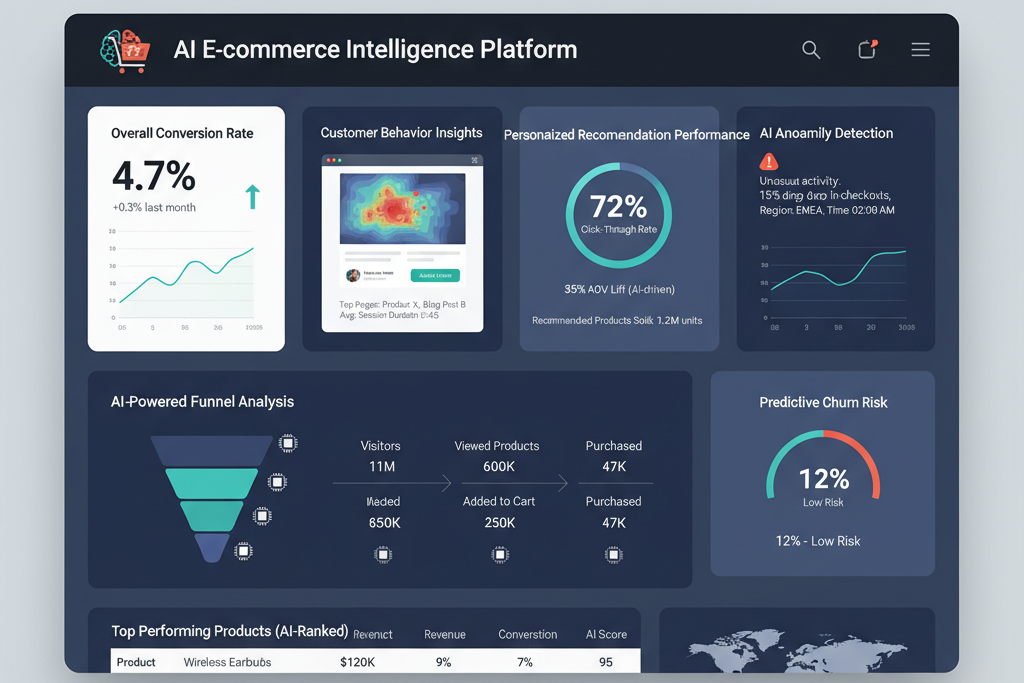
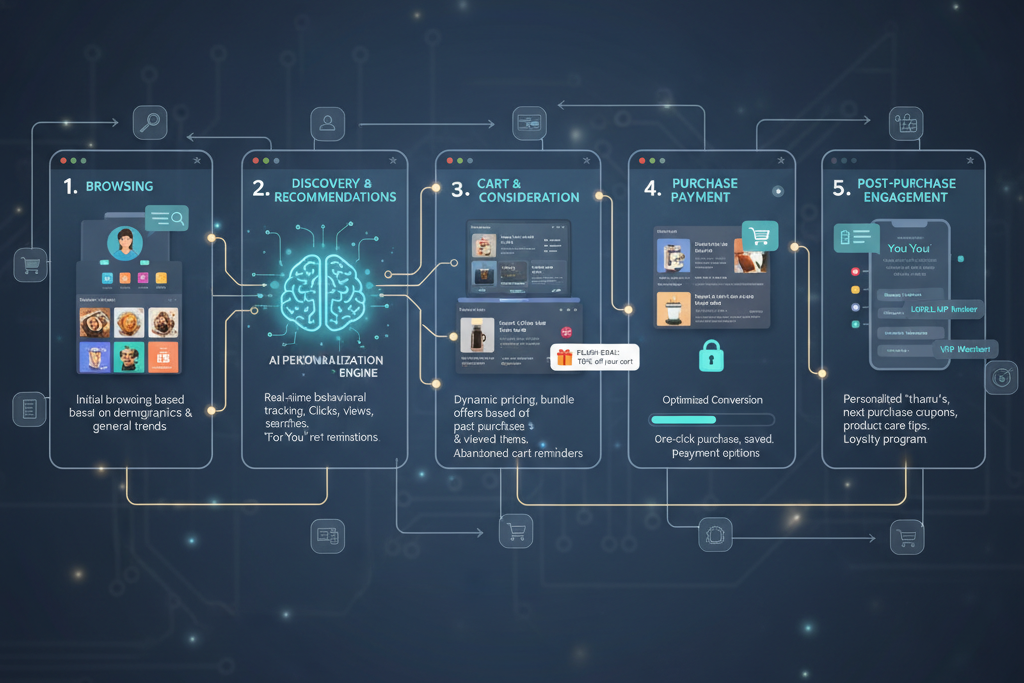
AI-driven personalization seamlessly integrates into every stage of the customer journey, transforming a generic browsing experience into a highly intuitive and engaging interaction. It ensures that customers receive relevant information and product suggestions precisely when they need them.
Key Stages of the Personalized Purchasing Path
- Landing on the Page (Personalized Welcome): From the moment a customer arrives, AI begins to tailor the experience. Based on previous visits, demographic data, or even referrer information, the homepage might display categories, promotions, or products that are most likely to appeal to that specific user. A returning customer might see "Recommended for you" sections prominently displayed, or a banner featuring items related to their last purchase.
- Browsing (Recommendations Based on Behavior): As the customer navigates the store, AI continuously analyzes their real-time behavior. Viewed products, time spent on product pages, items added to wishlists, and even mouse movements contribute to a dynamic profile. This allows the system to present "similar products," "customers also viewed," or "complementary items" on product pages, encouraging further exploration and discovery.
- Cart (Complementary Products and Urgency): The checkout process is a critical point for increasing basket value. AI identifies opportunities for cross-selling and up-selling, suggesting relevant add-ons or upgrades. For example, if a customer adds a camera, AI might recommend lenses, memory cards, or a camera bag. It can also highlight "limited stock" or "popular items" to gently encourage completion of the purchase.
- Post-Purchase (Follow-Up Recommendations): The journey doesn't end with a purchase. AI can be leveraged for post-purchase engagement, recommending related products for future needs, accessories for the purchased item, or content that enhances the customer's use of their new product. Email campaigns can be personalized with "next best buy" suggestions, fostering long-term loyalty and repeat business.
Throughout these stages, AI's ability to predict customer needs is paramount. By analyzing historical data and real-time interactions, the system can infer latent desires and present solutions before the customer even articulates them. This proactive approach not only simplifies the shopping process but also creates a delightful and surprisingly effective user experience, making customers feel truly understood by the brand.
Case Study: Successes of Small and Medium Businesses
While large corporations often highlight their AI achievements, small and medium-sized businesses (SMBs) are equally capable of leveraging these technologies to achieve significant growth. Here are examples of how Polish companies have transformed their operations and customer experiences through AI personalization.
Clothing Store: 25% Conversion Increase
A mid-sized Polish clothing retailer faced the challenge of a high bounce rate and low conversion, particularly from first-time visitors overwhelmed by their extensive catalog. They implemented an AI recommendation system that analyzed real-time browsing behavior, historical purchase data, and seasonal trends. The solution included personalized homepage banners, "shop the look" recommendations on product pages, and smart category filtering. Within six months, the store reported a remarkable 25% increase in conversion rates, as customers found it easier to discover relevant products tailored to their style and preferences.
Electronics Store: 18% Basket Value Increase
An online electronics store struggled to effectively cross-sell accessories and complementary products. Their manual recommendation process was time-consuming and often inaccurate. By integrating an AI recommendation engine, they automated suggestions for "frequently bought together" items and "upgrade options" directly on product pages and at the cart. For example, when a customer added a laptop, the system immediately suggested a compatible mouse, a laptop bag, and an extended warranty. This strategic placement of AI-driven recommendations led to an 18% increase in the average basket value, boosting overall revenue significantly.
One Polish cosmetics store achieved a 40% reduction in bounce rate by implementing AI-powered personalized landing pages and product grids, proving the value of early engagement.
Cosmetics Store: 40% Bounce Rate Reduction
A Polish online cosmetics retailer observed that many visitors left their site quickly without engaging deeply. Their diverse product range, while a strength, also made navigation challenging for new customers. They deployed an AI system that personalized the initial user experience based on basic demographic data (if provided) and immediate browsing actions. This included dynamic banners promoting specific beauty concerns (e.g., "for sensitive skin," "anti-aging solutions") and curated product grids. The result was a dramatic 40% reduction in bounce rate, with visitors staying longer and exploring more products, ultimately increasing engagement and purchase intent.

How to Implement AI System in Your Store?
Implementing an AI recommendation system may seem daunting, but with a structured approach, it's an achievable goal for any online store. The process typically involves several key steps.
5 Key Implementation Steps
- Data Audit and Preparation: The foundation of any effective AI system is clean, comprehensive data. Begin by auditing your existing data sources, including CRM, ERP, and web analytics platforms. Ensure data consistency, identify gaps, and prepare it for ingestion by the AI model. This step often involves data cleansing and structuring.
- Technology Selection: Decide between ready-made SaaS (Software as a Service) solutions or custom development. SaaS platforms offer quick integration, lower upfront costs, and ongoing maintenance. Custom development provides ultimate flexibility and tailor-made solutions but requires more resources and expertise. Factors to consider include budget, desired customization, and internal technical capabilities.
- Integration: This involves connecting the chosen AI system with your e-commerce platform, website, and other relevant data sources. APIs (Application Programming Interfaces) are commonly used for seamless data flow. Integration might include embedding recommendation widgets on product pages, cart pages, or implementing personalized email triggers.
- A/B Testing and Tuning: Once integrated, it's crucial to run A/B tests to measure the impact of your AI recommendations. Compare performance metrics (e.g., conversion rate, average order value) with and without the AI system. Use the insights gained to fine-tune algorithms, recommendation placements, and user interface elements.
- Ongoing Optimization and Monitoring: AI systems are not "set it and forget it." Continuous monitoring of performance metrics, user feedback, and algorithm updates is essential. Regular optimization ensures the system remains effective, adapts to new product lines, and responds to evolving customer preferences.
Costs and Implementation Time
Costs can vary widely based on the chosen solution. SaaS options typically involve monthly subscriptions based on traffic or revenue, ranging from hundreds to several thousands of dollars. Custom development can incur higher initial costs, potentially starting from tens of thousands, but offers long-term flexibility. Implementation time for a SaaS solution can be as short as a few weeks, while custom development projects might take several months, depending on complexity and required integrations.

Future of AI in E-commerce
The trajectory of AI in e-commerce points towards increasingly sophisticated, intuitive, and integrated solutions. The future promises to further blur the lines between human interaction and automated assistance, creating unparalleled shopping experiences.
Key Emerging Trends
- Generative AI in Content Creation: Beyond recommendations, generative AI is poised to revolutionize content. This includes AI-powered product descriptions tailored to individual user interests, personalized marketing copy, and even synthetic media for product visualization (e.g., trying on clothes virtually). This enables hyper-personalization at scale, drastically reducing manual content creation efforts.
- Multimodal Personalization (Voice, Image): The next frontier involves AI understanding and reacting to more than just text and clicks. Voice commerce is growing, and AI will enable personalized recommendations based on natural language queries or even emotional cues detected in voice. Image recognition will allow users to upload a photo of an item they like and receive recommendations for similar products from your catalog.
- Predictive Analytics in Inventory Management: AI's predictive capabilities will extend beyond customer behavior to operational aspects. Advanced predictive analytics will optimize inventory levels, forecast demand with greater accuracy, and automate reordering processes. This minimizes stockouts, reduces overstocking, and enhances supply chain efficiency, directly impacting profitability.
Lumi Zone is actively preparing for these transformative changes. As a modern AI automation agency, we are continually researching and integrating cutting-edge AI technologies, including generative models and multimodal interfaces. Our focus remains on building intelligent systems that simplify complex processes, ensuring our clients are not just ready for the future but are actively shaping it. We are dedicated to delivering stable, effective solutions that leverage these advancements without unnecessary complexity, allowing businesses to truly focus on their core mission.