Order Processing Automation: How AI Independently Updates Statuses and Sends Notifications to Customers
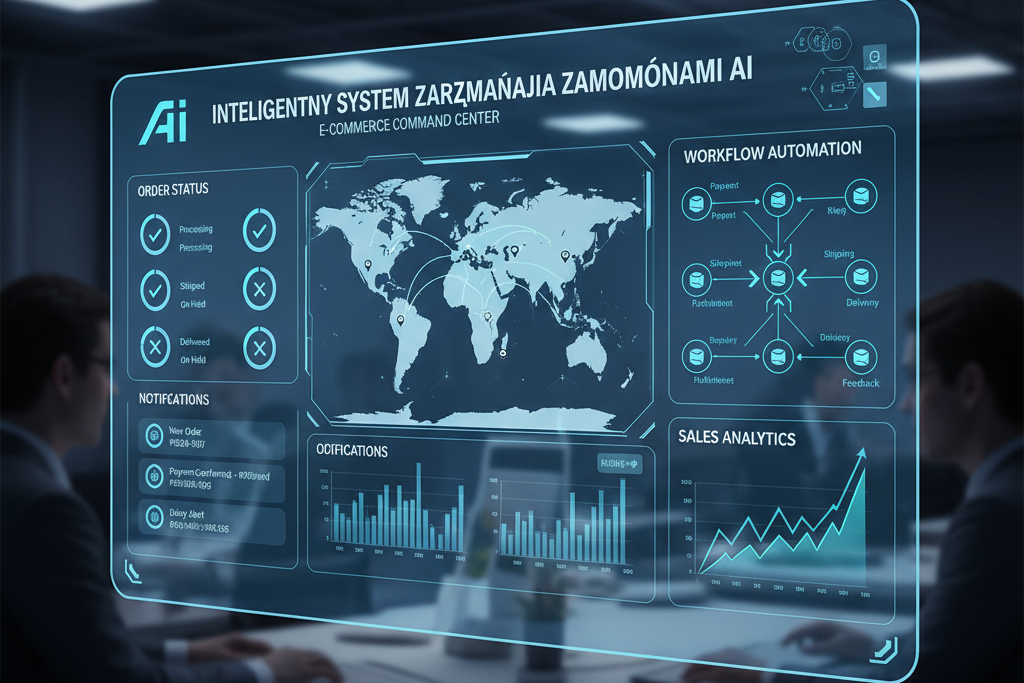
Revolution in Order Management for E-commerce Success
In the dynamic world of e-commerce, efficiently managing customer orders is paramount. However, many businesses grapple with the inherent complexities and inefficiencies of manual order processing. From the moment a customer clicks "buy" to the final delivery, each step – order validation, payment confirmation, inventory allocation, shipment scheduling, and customer communication – often involves manual intervention. This traditional approach is fraught with challenges, consuming valuable time and resources while simultaneously increasing the likelihood of human error.
Typical e-commerce companies face a constant battle against operational bottlenecks. Inaccurate data entry can lead to incorrect shipments or delayed deliveries, directly impacting customer satisfaction. The sheer volume of orders, especially during peak seasons, can overwhelm manual teams, causing backlogs and missed service level agreements. Furthermore, the repetitive nature of these tasks often leads to employee burnout and reduced productivity, diverting focus from strategic initiatives that drive business growth.
Manual order processing is not merely a task; it's a significant drain on resources, often resulting in avoidable errors and delayed customer experiences.
The cumulative effect of these challenges is a substantial financial cost and a tangible erosion of brand reputation. Delayed orders generate customer inquiries, which in turn burden customer service teams, creating a negative feedback loop. The inability to scale operations efficiently stifles growth and innovation, placing businesses at a disadvantage in a competitive market. Recognizing these critical pain points, forward-thinking enterprises are now turning to advanced solutions that promise not just improvement, but a complete revolution in order management: AI-driven automation.
AI in e-commerce offers a powerful antidote to these pervasive problems. By automating the intricate dance of order processing, businesses can eliminate human error, drastically reduce processing times, and reallocate human capital to more value-added activities. This strategic shift transforms order management from a reactive, resource-intensive operation into a proactive, intelligent workflow, positioning companies for unprecedented levels of efficiency and customer satisfaction.

Understanding the Architecture of an Intelligent Order Automation System
An intelligent order automation system, powered by Artificial Intelligence, represents a sophisticated leap beyond basic script-based automation. Its technical operation is designed to mimic and enhance human decision-making across the entire order lifecycle, from initial placement to final delivery notifications. At its core, this system leverages a robust architecture that integrates various modules and external data sources, enabling autonomous and adaptive processing.
The journey begins with order placement, typically via an e-commerce platform. Once an order is confirmed, the automation system immediately ingests this data. This initial data capture acts as the trigger for a predefined, yet flexible, workflow. Unlike rigid, rule-based systems, an AI-driven solution incorporates machine learning algorithms to interpret complex data, identify patterns, and make informed decisions at each subsequent stage.
The system's architecture typically comprises several key components:
- Data Ingestion Layer: Connects to various data sources such as e-commerce platforms (Shopify, WooCommerce), payment gateways (Stripe, PayPal), CRM systems, and ERP solutions. This layer is responsible for real-time data collection and standardization.
- AI Decision Engine: The brain of the operation. This module employs machine learning models to analyze incoming data, predict potential issues (e.g., fraud, inventory shortages), and determine the optimal next steps for each order. For instance, it can cross-reference customer history, payment details, and shipping addresses to flag suspicious transactions for human review, or automatically greenlight low-risk orders.
- Workflow Orchestration Module: Manages the sequence of tasks. This module ensures that once a decision is made by the AI engine, the corresponding action is executed. This could involve updating an order status, notifying the warehouse, or triggering a customer communication.
- Integration Layer (APIs): Facilitates seamless communication with external systems. This layer uses APIs (Application Programming Interfaces) to exchange data with logistics providers, inventory management systems, and marketing automation platforms, ensuring a cohesive and synchronized operational environment.
- Notification Management System: Responsible for crafting and dispatching personalized communications to customers and internal teams across multiple channels.
AI's role in decision-making is critical. Instead of merely executing a pre-programmed "if-then" rule, the AI engine continuously learns from historical data and real-time inputs. For example, if a specific product often experiences stock issues, the AI can proactively alert the inventory team when an order for that item is placed, even before stock levels officially hit a reorder point. This predictive capability minimizes delays and optimizes resource allocation.
Furthermore, the AI can prioritize orders based on various factors such as shipping urgency, customer loyalty, or order value, ensuring critical orders receive expedited processing. By understanding the nuances of each transaction, the intelligent workflow adapts, making real-time adjustments that a static automation system cannot. This dynamic processing capability not only streamlines operations but also significantly enhances overall system resilience and responsiveness, aligning perfectly with Lumi Zone's mission of creating simple, effective, and stable systems tailored to client needs.
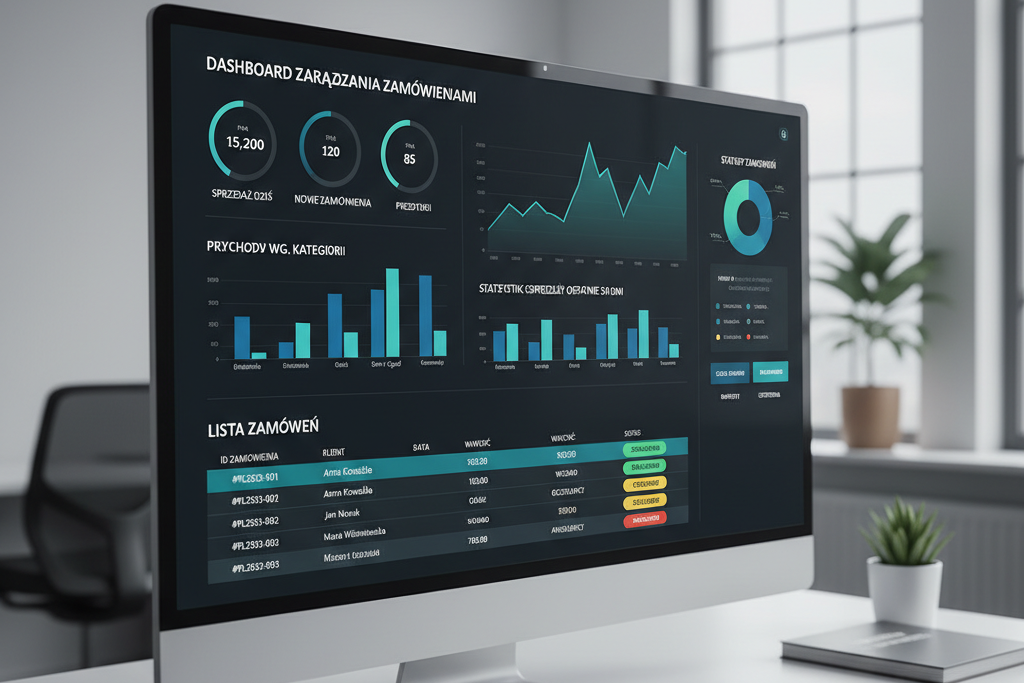
Autonomous Order Status Updates for Real-Time Visibility
One of the most significant advancements offered by AI-powered order processing automation is the capability for automatic, real-time order status updates. This mechanism eliminates the need for manual tracking and data entry, ensuring that both internal teams and customers always have access to the most current information. The AI system integrates with various data sources, acting as a central intelligence hub that processes information and updates the order's lifecycle stage autonomously.
Let's delve into five key order statuses and how an intelligent automation system manages their updates:
-
Order Placed
This is the initial status, triggered immediately upon successful submission of an order through the e-commerce platform. The AI system ingests the order details, validates basic information (e.g., complete address, item availability against initial stock checks), and performs an initial risk assessment for fraud. If all preliminary checks pass, the status is confirmed as "Order Placed." This process is instantaneous, eliminating any lag between customer action and system acknowledgment.
-
Payment Confirmed / Paid
Following "Order Placed," the system awaits confirmation from the payment gateway. The AI continuously monitors the payment processor's API for transaction success or failure. Upon receiving a successful payment notification, the AI engine updates the order status to "Paid." If a payment fails, the system can automatically trigger follow-up actions, such as sending an email to the customer with a link to retry payment or flagging the order for manual review by the finance department, preventing abandoned carts from falling through the cracks.
-
In Progress / Processing
Once payment is confirmed, the order moves to the "In Progress" or "Processing" status. At this stage, the AI system integrates with the Warehouse Management System (WMS) or ERP to initiate fulfillment. This includes checking precise inventory levels, allocating stock to the specific order, generating pick lists for warehouse staff, and preparing shipping labels. The AI can dynamically prioritize orders based on predefined rules, such as express shipping, VIP customer status, or order value, ensuring efficient workflow management within the warehouse environment. Data from inventory systems, such as stock reservation confirmations, automatically drive this status update.
-
Shipped / Out for Delivery
This critical status is updated when the order physically leaves the warehouse and is handed over to the shipping carrier. The AI system achieves this by integrating directly with carrier APIs (e.g., FedEx, UPS, DHL). As soon as the carrier registers the package and provides a tracking number, the AI automatically retrieves this information, updates the order status to "Shipped," and associates the tracking number with the order. This real-time data sync ensures immediate visibility into the shipment's journey, making the tracking information accessible to both the customer and internal teams without manual intervention.
-
Delivered
The final status, "Delivered," is updated when the carrier's API confirms that the package has successfully reached its destination. The AI system continuously monitors carrier updates, and upon confirmation of delivery, it updates the order status. This triggers final customer notifications and can also initiate internal processes such as marking the order as complete in the CRM or triggering a customer feedback request. The precision of this update ensures that customer service queries about delivery status are minimized, and post-delivery processes can be initiated promptly.
AI's ability to seamlessly integrate with diverse systems ensures that every order status update is accurate, timely, and entirely autonomous, providing unparalleled operational clarity.
By leveraging AI for these status updates, businesses gain unparalleled operational efficiency. The system's ability to draw data from payment gateways, inventory systems, WMS, and shipping carrier APIs ensures a single source of truth for every order. This not only drastically reduces manual effort and errors but also provides customers with transparent, up-to-the-minute information, significantly enhancing their overall experience and building trust. Lumi Zone's solutions are built to orchestrate this intricate data flow, delivering stable and reliable automation.
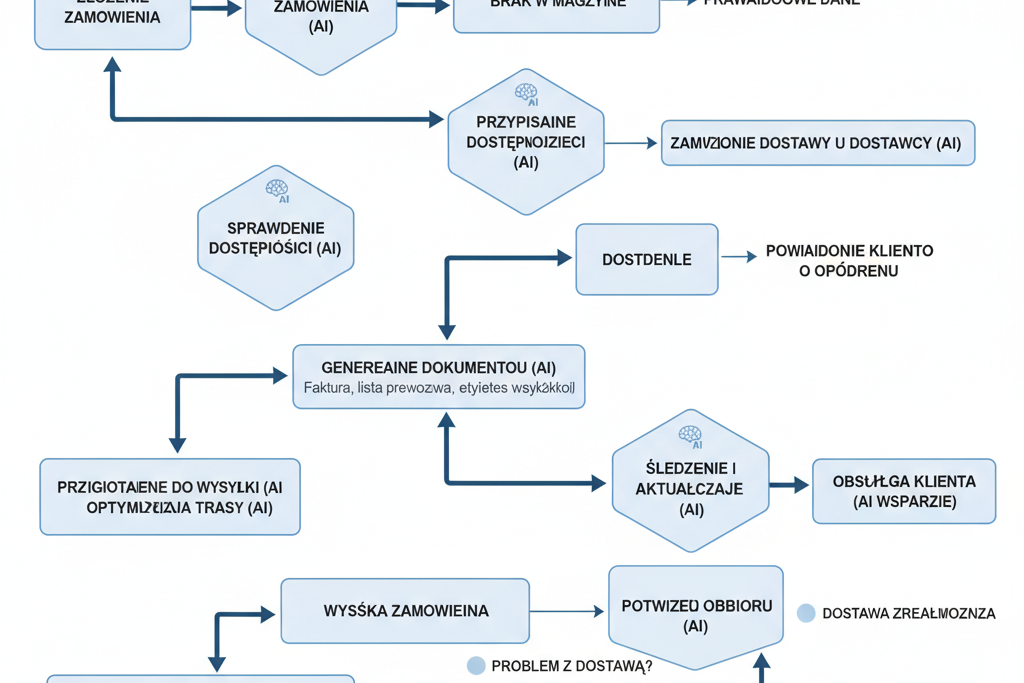
Intelligent Customer Notifications: Personalized Communication at Scale
Beyond internal process efficiency, an AI-powered order automation system revolutionizes customer communication by delivering intelligent, timely, and personalized notifications. This ensures customers are consistently informed throughout their order journey, enhancing transparency and fostering a positive brand experience. The system leverages AI to determine the optimal channel, timing, and content for each notification, moving beyond generic, one-size-fits-all messages.
Here's how intelligent customer notifications work across various channels:
-
Email Notifications
Email remains a primary channel for detailed communication. The AI system generates and dispatches emails for critical milestones. These emails are not merely templated; AI can personalize elements such as product recommendations based on past purchases or browsing history, or even suggest related items for future consideration. For example:
-
Order Confirmation: Sent immediately after "Order Placed."
Example Content: "Hi [Customer Name], thank you for your order! Your order #[Order Number] has been successfully placed and is awaiting payment confirmation. We'll send another update once your payment is processed."
-
Payment Confirmation: Sent after "Paid" status.
Example Content: "Great news, [Customer Name]! Your payment for order #[Order Number] has been confirmed. Your items are now being prepared for shipment. You can track your order status here: [Link to Tracking Page]."
-
Shipping Confirmation: Sent when the order status changes to "Shipped."
Example Content: "Your order #[Order Number] is on its way, [Customer Name]! It was shipped today via [Carrier Name] with tracking number [Tracking Number]. You can follow its journey here: [Tracking Link]. We hope you enjoy your new [Product Name]."
-
Delivery Confirmation: Sent after "Delivered" status.
Example Content: "Good news, [Customer Name]! Your order #[Order Number] has been successfully delivered. We hope you love your purchase! If you have any questions, please reply to this email. Share your experience with #YourBrand."
-
Order Confirmation: Sent immediately after "Order Placed."
-
SMS Notifications
For urgent or brief updates, SMS messages are highly effective due to their high open rates. The AI can be configured to send SMS for time-sensitive alerts or as a secondary channel for critical updates, especially when quick customer action or awareness is needed.
-
Shipping Alert: Sent when the order is "Shipped."
Example Content: "Your Lumi Zone order #[Order Number] has shipped! Track it here: [Shortened Tracking Link]."
-
Delivery Reminder: Sent shortly before "Delivered" status (if carrier provides estimated delivery window).
Example Content: "Heads up! Your Lumi Zone order #[Order Number] is expected to be delivered today. Get ready to receive your items!"
-
Shipping Alert: Sent when the order is "Shipped."
-
Push Notifications (for Mobile Apps)
If the e-commerce business has a mobile application, push notifications offer an immediate and non-intrusive way to engage customers. AI can determine the optimal time to send these based on user behavior patterns or specific geo-location data (e.g., "Your package is 5 miles away").
-
Order Update: Sent for any major status change.
Example Content: "Order #[Order Number] Update: Your package is now Out for Delivery!"
-
Delivery Alert: Sent upon delivery confirmation.
Example Content: "Delivered! Your Lumi Zone order #[Order Number] has arrived. Enjoy!"
-
Order Update: Sent for any major status change.
Personalized notifications, delivered through the right channel at the right time, are not just about informing; they're about building lasting customer relationships and fostering trust.
AI's role in personalization extends beyond simply inserting a customer's name. It analyzes purchase history, preferred communication channels, past interaction data, and even real-time browsing behavior to tailor message content and delivery timing. For instance, if a customer typically opens emails in the evening, the AI can schedule email notifications accordingly. If a customer frequently responds to SMS, it might prioritize that channel for immediate updates. This level of intelligent communication not only reduces customer service inquiries by proactively answering questions but also enhances the overall customer experience, demonstrating that the brand values their individual journey. Lumi Zone specializes in building AI agents and advanced automations that perfect this customer-centric communication, ensuring every message adds value.
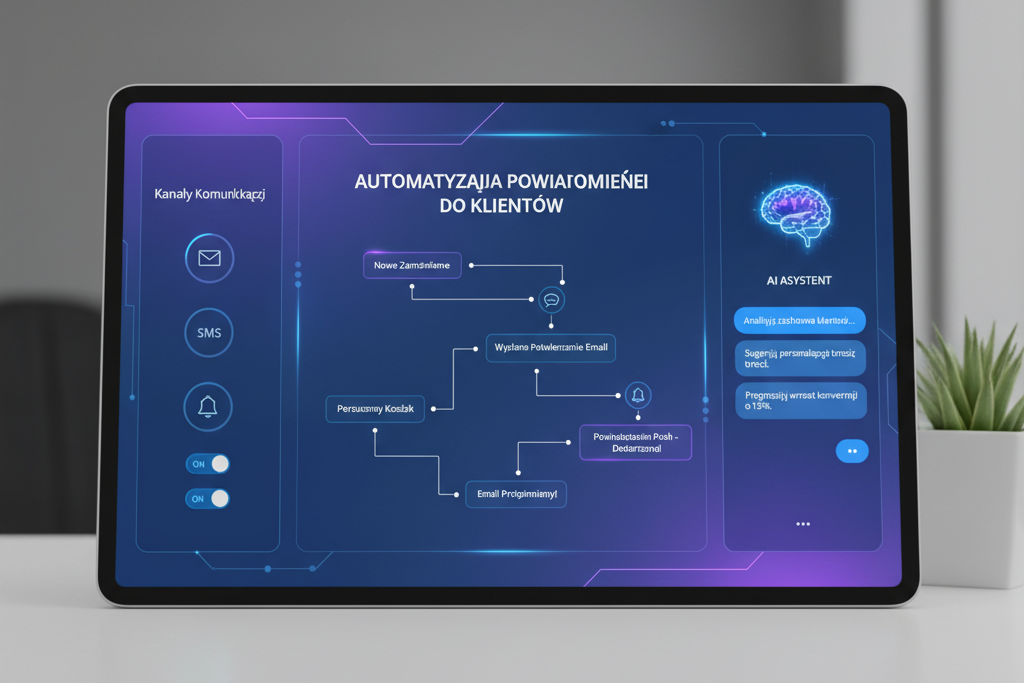
Seamless Integration with Existing Systems for Unifying Operations
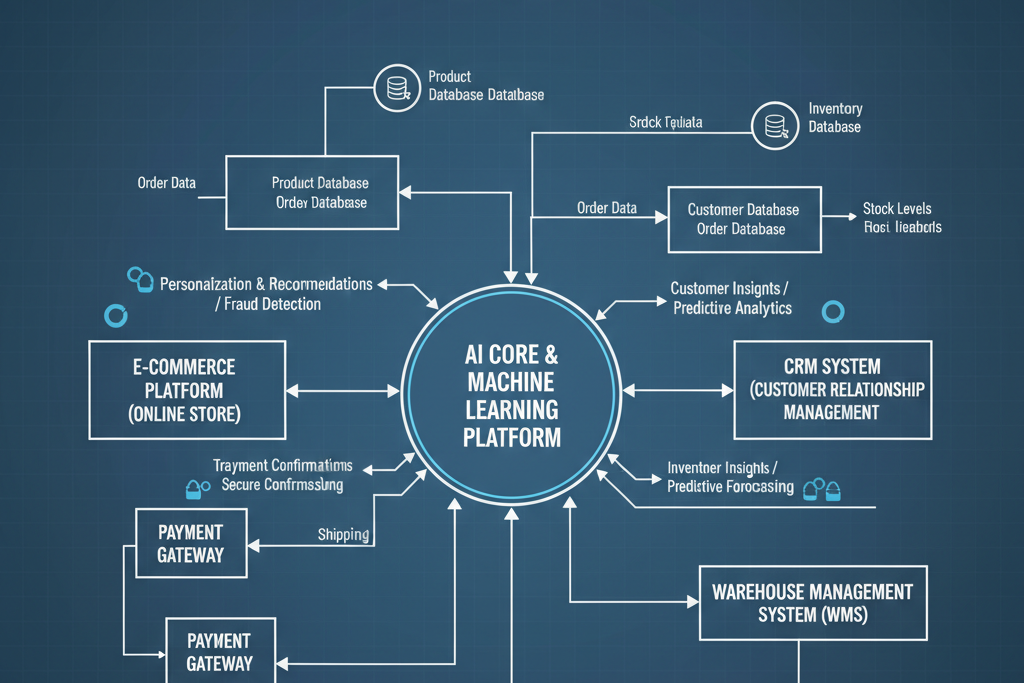
The true power of an AI-powered order processing automation system lies in its ability to seamlessly integrate with a company's existing technology stack. Rather than being a standalone solution, it acts as an intelligent orchestrator, connecting disparate platforms and ensuring a unified flow of data across the entire business ecosystem. This interoperability is crucial for breaking down data silos, optimizing workflows, and maximizing the return on investment from current software infrastructure. Lumi Zone prides itself on building solutions that are not only effective but also perfectly tailored to existing business environments, avoiding unnecessary complications.
An effective order automation system is designed with an API-first approach, enabling robust connections with a wide array of popular business systems:
-
E-commerce Platforms
These are the front-end sales channels where orders originate. The automation system integrates deeply with platforms like:
- Shopify: Real-time order capture, product synchronization, customer data updates.
- WooCommerce: Similar to Shopify, handling order details, payment status, and product information.
- Magento: For larger enterprises, ensuring complex order data and catalog synchronization.
- Custom-built E-commerce Sites: Through tailored API connections, ensuring flexibility for unique business needs.
Integration ensures that as soon as an order is placed, it is immediately recognized and processed by the automation system, initiating the workflow without delay.
-
Payment Gateways
Crucial for confirming transactions and managing financial flows. Integrations include:
- Stripe: For secure and instant payment status updates (successful, failed, refunded).
- PayPal: Managing transaction details and customer payment preferences.
- Square: Often used for both online and in-person transactions, unifying payment data.
- Local Payment Processors: Adapting to regional payment solutions to ensure comprehensive coverage.
The system monitors these gateways for real-time payment confirmations, which are vital triggers for advancing order statuses.
-
Customer Relationship Management (CRM) Systems
Integrations with CRM platforms centralize customer data and enable personalized interactions:
- Salesforce: Syncing order history, customer interactions, and service requests.
- HubSpot: Automating follow-up emails, sales sequences, and segmenting customers based on purchase behavior.
- Zoho CRM: Maintaining a comprehensive view of customer profiles and interactions.
This ensures that customer service teams have immediate access to order details, and marketing efforts can be tailored based on real-time purchase data.
-
Warehouse Management Systems (WMS) / Enterprise Resource Planning (ERP)
Essential for inventory control, fulfillment, and supply chain management:
- SAP: For large-scale inventory, procurement, and financial management.
- Oracle NetSuite: Unifying financials, inventory, and order processing.
- Custom WMS/ERP Solutions: Integrating with proprietary systems to manage stock levels, picking, packing, and shipping.
These integrations automate inventory allocation, generate pick lists, and update stock levels, preventing overselling and ensuring efficient fulfillment.
-
Shipping and Logistics Providers
Connections with carriers are critical for tracking and delivery updates:
- FedEx, UPS, DHL: Automated generation of shipping labels, tracking number assignment, and real-time status updates from dispatch to delivery.
- Local Courier Services: Flexibility to integrate with regional carriers for last-mile delivery.
The automation system pulls tracking information directly from these providers, ensuring accurate "Shipped" and "Delivered" statuses and proactive customer notifications.
The emphasis on solution flexibility means that Lumi Zone does not rely on templates. Instead, we architect specific, robust API connections and leverage low-code platforms like n8n and Bolt.new to build custom integrations that perfectly match the client's unique tech stack. This approach guarantees that the automation system not only fits seamlessly into the existing infrastructure but also scales with the business, providing a stable and future-proof solution without unnecessary complexity or hidden costs. This independence from specific tools or partnerships ensures that the best technology is always chosen for the client's problem.
Tangible Business Benefits of Order Processing Automation
Implementing AI-driven order processing automation delivers a cascade of measurable business benefits that directly impact efficiency, profitability, and customer satisfaction. The strategic shift from manual, error-prone processes to intelligent, autonomous workflows transforms operational capabilities and provides a significant competitive edge. Lumi Zone's objective is to deliver simple, effective, and stable systems that translate directly into these tangible advantages for businesses.
-
Significant Time Savings
By automating repetitive tasks such as data entry, status updates, and notification dispatch, businesses can reclaim thousands of hours annually. For example, a medium-sized e-commerce company processing 500 orders daily might spend an average of 5 minutes per order on manual tasks. Automating 80% of these tasks could save approximately 1,000 hours per month, allowing staff to focus on strategic initiatives like marketing, product development, or complex customer support issues.
-
Drastic Reduction in Human Errors
Manual processes are inherently susceptible to human error, leading to incorrect shipments, wrong addresses, or miscommunication. AI automation virtually eliminates these errors by ensuring data consistency and accuracy across all integrated systems. This can reduce shipping errors by up to 90%, preventing costly returns, reshipments, and customer dissatisfaction.
-
Enhanced Customer Experience (CX)
Customers today expect transparency and real-time updates. Automated notifications, personalized communications, and faster processing times directly translate into a superior customer experience. Orders are processed quicker, tracking information is always current, and proactive communication keeps customers informed. This leads to higher customer satisfaction scores, often increasing by 15-20%, and fosters greater loyalty.
-
Improved Scalability and Flexibility
Manual systems struggle to cope with sudden spikes in order volume, such as during holiday sales or promotional events. An automated system can seamlessly scale to handle fluctuating demand without requiring additional human resources. This allows businesses to grow without proportionally increasing operational costs, supporting up to a 5x increase in order volume without performance degradation.
-
Actionable Data and Analytics
AI automation systems collect vast amounts of data at every stage of the order lifecycle. This data, when analyzed, provides invaluable insights into operational bottlenecks, customer behavior, and fulfillment efficiency. Businesses can gain clearer visibility into key performance indicators (KPIs) like order processing time, delivery success rates, and customer service inquiry patterns, enabling data-driven decisions for continuous improvement.
-
Increased Competitiveness
Businesses that leverage AI automation gain a distinct competitive advantage. Faster order fulfillment, fewer errors, and superior customer service differentiate them in a crowded market. This operational excellence allows companies to respond more agilely to market changes, allocate resources more effectively, and focus on innovation, ultimately leading to greater market share and sustained growth.
Automation isn't just about cutting costs; it's about unlocking strategic potential, enabling businesses to achieve unprecedented levels of efficiency, customer satisfaction, and growth.
The collective impact of these benefits is a robust, efficient, and customer-centric operation that not only saves money but also fuels sustainable growth. Lumi Zone's approach ensures that these intelligent systems are precisely configured to deliver maximum ROI, allowing businesses to truly work smarter, not just harder.

Case Study: Revolutionizing Fulfillment for "SwiftShip Retail"
To illustrate the tangible impact of AI-driven order automation, let's examine the case of "SwiftShip Retail," a rapidly growing online clothing and accessories boutique. Before implementing an intelligent automation system, SwiftShip Retail faced significant challenges stemming from its manual order processing, struggling to keep pace with its expanding customer base.
The Pre-Automation Landscape
SwiftShip Retail was processing an average of 700 orders per day. Their process involved:
- Manual entry of order details from their e-commerce platform into their WMS.
- Daily reconciliation of payments across different gateways.
- Manual generation of shipping labels and tracking numbers.
- Manually sending order status emails using templates.
- Customer service agents frequently spending hours fielding "where is my order?" inquiries.
This labor-intensive approach led to an average order processing time of 48 hours, a 3% error rate in shipments (due to incorrect addresses or product mix-ups), and a significant backlog during peak sales, causing customer frustration and a high abandoned cart rate during busy periods.
The AI Automation Implementation
Lumi Zone partnered with SwiftShip Retail to deploy a comprehensive AI order automation system. The solution integrated their Shopify store, Stripe payment gateway, their existing WMS, and major shipping carriers (UPS, USPS). The core of the system was an AI engine designed to:
- Instantly capture and validate order data.
- Automate payment confirmation and fraud checks.
- Generate pick lists and shipping labels based on real-time inventory and optimal routing.
- Automatically update order statuses and dispatch personalized email and SMS notifications.
Results Before and After Implementation
The results were transformative:
- Order Processing Time: Reduced from 48 hours to less than 4 hours, an astounding 90% improvement. This meant orders placed in the morning were often shipped the same day.
- Error Rate: Decreased from 3% to a negligible 0.2%, virtually eliminating costly reshipments and customer complaints related to incorrect orders.
- Customer Service Inquiries: "Where is my order?" calls and emails dropped by 60%, freeing up customer service agents to handle more complex issues and proactive customer engagement.
- Scalability: SwiftShip Retail successfully managed a 400% increase in order volume during their Black Friday sale without any operational bottlenecks or additional staffing, a feat previously unimaginable.
- Customer Satisfaction: Post-delivery survey scores increased by 18%, directly attributed to faster delivery and transparent communication.
This case study underscores the profound impact of AI order automation. SwiftShip Retail not only streamlined its operations but also significantly elevated its customer experience and gained the agility needed to sustain rapid growth. Lumi Zone's independent, tailored approach ensured SwiftShip Retail received a solution perfectly aligned with their unique operational needs, delivering measurable and lasting success.

Initiating Your Journey with Order Processing Automation
Embarking on the path to AI-driven order processing automation might seem daunting, but with a structured approach, it can be a smooth and highly rewarding transition. Lumi Zone specializes in guiding businesses through this process, building simple, effective, and stable systems without unnecessary complication. Here are five practical steps to successfully implement order automation in your business:
-
Conduct a Comprehensive Process Audit
Before automating, you must understand your current processes inside out. Map out every step of your existing order fulfillment workflow, from initial customer interaction to post-delivery feedback. Identify all manual touchpoints, data entry points, communication gaps, and potential bottlenecks. This audit should highlight where time is wasted, errors occur most frequently, and where human intervention is absolutely critical versus where it can be eliminated. This foundational step ensures that the automation solution addresses your specific pain points effectively.
-
Define Clear Objectives and Key Performance Indicators (KPIs)
What do you hope to achieve with automation? Define clear, measurable goals, such as reducing average order processing time by 50%, decreasing shipping errors by 80%, or improving customer satisfaction scores by 15%. Establish baseline KPIs from your process audit. These objectives will guide the development and implementation of your automation system and provide a framework for measuring its success post-launch.
-
Select the Right Automation Partner and Technology Stack
Choosing the right partner is crucial. Look for a partner like Lumi Zone that prioritizes understanding your unique business needs and builds custom solutions rather than applying generic templates. Evaluate their expertise in AI, low-code platforms (like n8n, Bolt.new), and system integrations. Discuss which existing systems (e-commerce, CRM, ERP, payment gateways) need to be integrated and ensure the proposed technology stack is flexible, scalable, and compatible with your long-term vision. This independent approach ensures the best tools are chosen for your specific problem.
-
Implement in Phased Stages and Test Rigorously
Avoid a "big bang" approach. Instead, implement the automation system in manageable, phased stages. Start with a smaller, less complex segment of your order process (e.g., automating order confirmation emails) or a specific product line. This allows for thorough testing and refinement before rolling out to the entire operation. Rigorous testing is paramount to identify and resolve any integration issues or workflow glitches, ensuring stability and accuracy before full deployment.
-
Monitor, Optimize, and Iterate Continuously
Automation is not a one-time project; it's an ongoing process of refinement. Once implemented, continuously monitor your defined KPIs. Collect feedback from internal teams and customers. Use the analytics generated by the automation system to identify areas for further optimization or expansion. The AI engine itself can learn and improve over time, making iterative adjustments based on new data. This continuous optimization ensures your automation solution remains highly effective and adapts to evolving business needs.
By following these steps, your business can effectively harness the power of AI to transform order processing, achieve significant operational efficiencies, and deliver an unparalleled customer experience, positioning you for sustained growth and success in the digital marketplace. Lumi Zone is ready to be your partner in building these intelligent systems, allowing your team to focus on what truly matters for your business.