Leads on Autopilot: How AI Manages Follow-ups and Increases Sales in SMEs

Why Follow-ups Are Key to Sales Success
In the dynamic landscape of small and medium-sized enterprises (SMEs), effective lead management stands as a critical differentiator for sustained growth. However, a startling reality often undermines even the most promising sales efforts: a significant percentage of potential sales are lost not due to product deficiencies or market competition, but simply from inadequate follow-up. Research consistently indicates that a vast majority of sales require multiple points of contact before conversion—often five or more interactions. Yet, many SMEs, burdened by limited resources and manual processes, struggle to maintain this crucial engagement.
The cost of neglecting follow-ups is multifaceted. Beyond the immediate loss of a potential sale, it encompasses wasted marketing spend on lead generation, diminished brand perception, and an overall inefficiency that cripples scaling efforts. For SMEs, where every lead represents a substantial investment of time and capital, allowing prospects to slip through the cracks due to missed calls, delayed emails, or generic responses is an unsustainable practice. Manual lead management is not merely an inconvenience; it is a direct impediment to maximizing revenue and fostering robust customer relationships.
The challenge intensifies as businesses grow. A small team might manage a handful of leads manually, but as lead volume expands, the system quickly breaks down. The promise of "leads on autopilot" is not a futuristic fantasy but a present-day necessity, offering a strategic pathway to transform how SMEs approach sales. By embracing intelligent automation, businesses can ensure that every lead receives timely, personalized attention, fundamentally shifting the paradigm from reactive lead handling to proactive, conversion-focused engagement. This article explores how Artificial intelligence (AI) is revolutionizing follow-up processes, enabling SMEs to optimize their sales pipelines, enhance efficiency, and ultimately, drive significant revenue growth.

Why Manual Follow-ups Kill SME Efficiency
The conventional approach to lead follow-ups in many SMEs is characterized by a reliance on manual processes, which, while seemingly straightforward, introduce profound inefficiencies and hidden costs. Sales teams often find themselves mired in repetitive, administrative tasks that divert valuable time away from actual selling activities. This includes copying data from one system to another, setting calendar reminders, manually drafting emails, and making countless phone calls, often without a cohesive strategy or personalized touch. Such tasks are not only time-consuming but also prone to human error, leading to missed appointments, forgotten follow-ups, and ultimately, lost sales opportunities.
Consider a typical scenario in a growing SME: A sales representative might spend several hours each week simply organizing their lead list, identifying who to contact next, and attempting to recall previous interactions. This fragmented approach means valuable context can be lost, leading to generic communication that fails to resonate with the prospect's specific needs. When a lead is manually transferred between departments or agents, critical information can be overlooked, forcing the customer to repeat themselves—a common frustration that erodes trust and interest.
Manual lead management is not merely an inconvenience; it is a direct impediment to maximizing revenue and fostering robust customer relationships.
The financial implications of these inefficiencies are substantial. The cost of acquiring a lead can be considerable, whether through marketing campaigns, networking, or referrals. When these leads are not nurtured effectively through consistent and timely follow-ups, that initial investment yields little to no return. Moreover, the opportunity cost of sales representatives spending time on administrative duties instead of actively engaging with high-potential prospects translates directly into lower conversion rates and stalled revenue growth. For an SME operating on lean margins, these accumulated losses can be detrimental to long-term viability and expansion.
The lack of a centralized, automated system for tracking interactions means that crucial insights are often trapped in individual inboxes or spreadsheets. This makes it challenging to analyze what strategies are working, identify bottlenecks in the sales pipeline, or provide consistent customer experiences across the board. In essence, manual follow-ups create a sales environment that is reactive, inconsistent, and inherently limited by human capacity, making it a significant bottleneck for SME efficiency and growth.

How AI Automates Lead Management
The transformative power of Artificial Intelligence in lead management lies in its ability to execute complex, multi-stage follow-up processes with precision, speed, and scale that manual efforts simply cannot match. AI-driven systems take over the mundane, repetitive tasks, freeing human sales teams to focus on high-value interactions that require empathy, negotiation, and strategic thinking. This automation extends across several critical areas, fundamentally reshaping the lead nurturing lifecycle.
One of the foundational aspects of AI automation is **automatic lead assignment to salespeople**. Traditional methods often involve a sales manager manually distributing leads, which can be slow, subjective, and inefficient. AI-powered CRM systems, however, can analyze incoming leads based on predefined criteria such as geographic location, industry, company size, stated interest, or even past interaction history. Using algorithms, the system instantly matches the lead with the most suitable sales representative, considering factors like their current workload, expertise, and historical success rates with similar leads. This ensures that every lead lands in the right hands quickly, maximizing the chances of a successful engagement.
Another pivotal mechanism is the implementation of **intelligent follow-up sequences**. Instead of generic, one-size-fits-all emails, AI platforms can craft dynamic, multi-channel sequences (email, SMS, in-app messages, call reminders) tailored to the lead's behavior and stage in the sales funnel. If a lead opens an email but doesn't click a link, the AI might trigger a follow-up email with different content or a relevant resource. If they visit a specific product page on the website, the system can automatically send information related to that product. These sequences are not rigid; they adapt in real-time based on the prospect’s engagement, ensuring that communication is always timely and contextually relevant.
**Personalization of communication at scale** is where AI truly shines. While a human sales rep can personalize a few emails, AI can do it for thousands. By leveraging data points from various sources—CRM, website analytics, social media, past purchases—AI can dynamically insert personalized content into messages. This goes beyond merely addressing a prospect by their first name; it involves referencing their specific pain points, industry challenges, previous queries, or even their company's recent news. This level of personalization makes each interaction feel authentic and relevant, significantly increasing engagement rates and making prospects feel valued, even as the volume of communications remains high.
AI-driven systems take over the mundane, repetitive tasks, freeing human sales teams to focus on high-value interactions.
Finally, seamless **integration with existing systems** is crucial for AI automation to be effective. A robust AI lead management system doesn't operate in a vacuum. It integrates with an SME's existing CRM (e.g., Salesforce, HubSpot), marketing automation platforms, customer service tools, and even communication platforms like Slack or Microsoft Teams. This ensures a unified view of the customer journey, preventing data silos and allowing information to flow freely across departments. Such integration means that when a lead progresses to a certain stage, the AI can automatically update the CRM, notify the sales rep, or even trigger a task for the customer success team, creating a cohesive and efficient operational workflow. Lumi Zone specializes in building custom integrations and AI agents to connect disparate systems and streamline these processes without relying on templates.
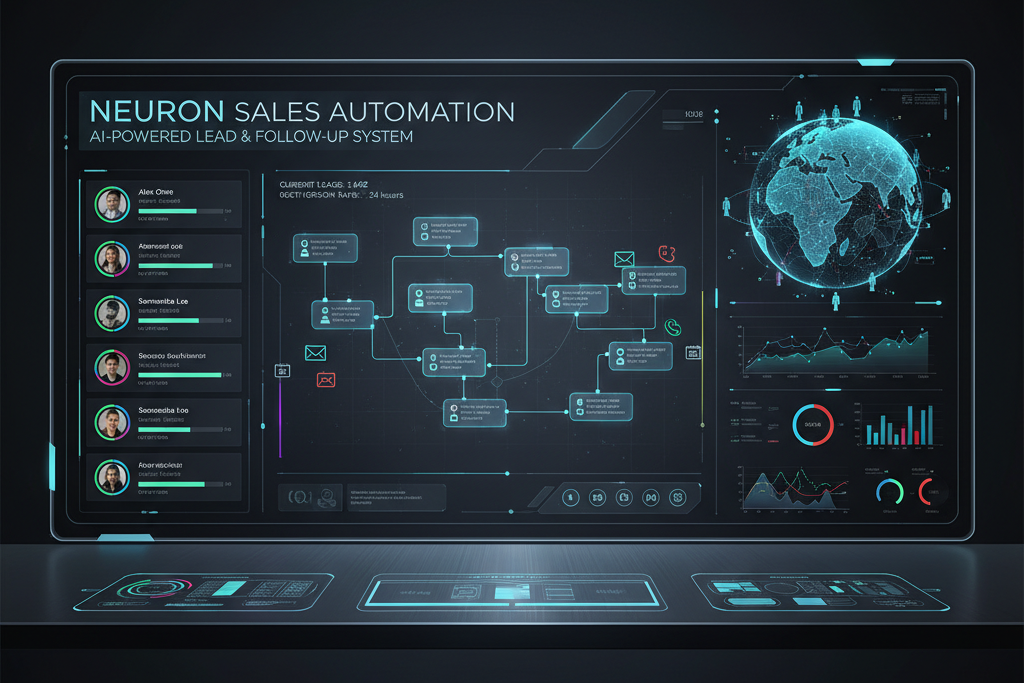
5 Key Benefits of Follow-up Automation for SMEs
Adopting AI-driven follow-up automation offers a suite of compelling benefits for SMEs, translating directly into enhanced performance, reduced costs, and a stronger competitive edge. These advantages move beyond mere convenience, impacting core business metrics and fostering sustainable growth.
1. Up to 40% Increase in Lead Conversion
One of the most significant benefits is the direct impact on lead conversion rates. AI ensures timely, consistent, and personalized follow-ups, which are critical factors in moving leads through the sales funnel. By responding to inquiries within minutes, nurturing leads with relevant content based on their engagement, and sending perfectly timed reminders, AI systems drastically improve the chances of converting a prospect into a paying customer. Traditional manual methods often lead to delays, generic communication, and missed opportunities, all of which depress conversion rates. With AI, SMEs can expect to see an average increase of 20-40% in their lead conversion rates, turning more interested prospects into tangible sales.
2. Up to 70% Time Savings for the Team
The automation of repetitive tasks like data entry, scheduling, email drafting, and lead assignment frees up an immense amount of time for sales and marketing teams. Instead of spending hours each day on administrative overhead, sales representatives can dedicate their energy to high-value activities such as strategic communication, complex problem-solving, and closing deals. This reallocation of time not only boosts productivity but also improves job satisfaction. For SMEs, where every team member wears multiple hats, a 70% reduction in time spent on manual follow-up tasks can be revolutionary, allowing teams to focus on growth initiatives rather than operational minutiae.
3. Better Customer Service Quality
AI-driven follow-ups are inherently more consistent and less prone to human error, leading to a higher quality of customer interaction. Prospects receive timely responses, relevant information, and feel genuinely understood through personalized messaging. This consistency builds trust and demonstrates professionalism. Furthermore, by integrating follow-up data into a central CRM, any team member can access a complete history of interactions, ensuring that customer service remains seamless even if a different representative handles the next touchpoint. This proactive and personalized approach significantly enhances the overall customer experience, fostering loyalty and positive brand perception.
4. Enhanced Process Scalability
As an SME grows, managing an increasing volume of leads becomes a major bottleneck with manual systems. AI automation eliminates this constraint. The system can handle thousands of leads with the same efficiency and personalization as it handles dozens, without requiring proportional increases in staff. This scalability is crucial for businesses with fluctuating lead volumes or ambitious growth targets. It allows SMEs to expand their market reach, launch new products, or handle seasonal spikes in demand without compromising the quality of their lead nurturing efforts, providing a stable foundation for future expansion.
5. Reduction of Operational Costs
While there is an initial investment in implementing AI automation, the long-term cost savings are substantial. By reducing the need for extensive manual labor, SMEs can optimize their staffing levels or reallocate human resources to more strategic roles. The increased conversion rates mean a better return on marketing investment, as fewer leads are wasted. Fewer errors translate to less time spent on rectifying mistakes. Furthermore, AI systems often optimize resource allocation, ensuring that marketing spend and sales efforts are directed towards the most promising leads. These combined efficiencies lead to a measurable reduction in overall operational costs, making AI automation a highly cost-effective solution for forward-thinking SMEs.

How to Implement Automation System in SMEs - Practical Guide
Implementing an AI-driven automation system for lead follow-ups might seem daunting, but a structured, step-by-step approach can simplify the process for SMEs. The goal is to integrate these intelligent tools seamlessly into existing workflows, ensuring maximum efficiency and minimal disruption.
Step 1: Analysis of Current Processes
Before implementing any new system, it is crucial to thoroughly understand your existing lead management processes. Document every step, from lead acquisition to conversion and beyond. Identify pain points: where do leads drop off? Which tasks are most time-consuming? Where are human errors most common? What data is currently collected, and what data is missing? This analysis will provide a baseline for improvement and help define the specific goals for your automation project. This initial phase is about gaining clarity on your current state to effectively design your future, automated state.
Step 2: Selection of Appropriate Tools
The market offers a vast array of CRM and marketing automation platforms with varying degrees of AI capabilities. For SMEs, the key is to choose tools that are scalable, flexible, and integrate well with your current tech stack. Consider features like advanced lead scoring, personalized email sequencing, automated lead assignment, and analytics dashboards. Evaluate vendors based on their ability to customize solutions to your unique business needs, as a one-size-fits-all approach rarely yields optimal results. Lumi Zone, for instance, focuses on building custom AI agents and integrations using low-code platforms like n8n and Bolt.new, ensuring solutions are precisely tailored without unnecessary complexity or hidden costs.
Step 3: Automation Configuration
Once tools are selected, the configuration phase begins. This involves setting up the automation rules, designing follow-up sequences, defining lead scoring criteria, and establishing triggers for different actions. For example, if a lead downloads a specific whitepaper, the system should automatically add them to a sequence of emails related to that topic. If they don't open an email after two days, a different follow-up might be scheduled. This phase requires careful planning to map out the entire customer journey and automate interactions at each touchpoint. It's about translating your sales strategy into actionable, automated workflows.
Step 4: Team Training
Technology is only as effective as the people using it. Comprehensive training for your sales, marketing, and customer service teams is essential. Ensure they understand how the new system works, its benefits, and their new roles within an automated environment. Training should cover how to interpret AI insights, manage automated communications, and intervene effectively when human interaction is required. Emphasize that AI is a tool to augment, not replace, their efforts, allowing them to focus on more strategic and personal engagement. Address any concerns about job displacement by highlighting the shift towards higher-value activities.
Step 5: Monitoring and Optimization
Implementation is not a one-time event; it's an ongoing process. Continuously monitor the performance of your automated follow-up sequences. Track key metrics such as open rates, click-through rates, conversion rates, and response times. Use the data collected by the AI system to identify areas for improvement. A/B test different email subject lines, call-to-action buttons, or sequence timings. The goal is to refine and optimize your automation strategies based on real-world results, ensuring that your system continuously adapts and performs at its peak. Regular reviews and adjustments are vital for maximizing the return on your automation investment.

Case Study: How Lumi Zone Helped Companies Automate Sales
Lumi Zone specializes in delivering bespoke AI automation solutions that empower SMEs to overcome operational challenges and achieve significant growth. Our independent approach, focusing solely on client needs without external biases, has led to tangible successes across diverse industries. Here are a few examples of how Lumi Zone has transformed sales processes for its clients:
Example 1: Service Company – 45% Conversion Increase
A B2B service provider was struggling with a high volume of inbound leads but low conversion rates due to inconsistent follow-ups. Their sales team was overwhelmed, leading to delays and missed opportunities. Lumi Zone implemented an AI-driven system that automatically qualified leads, assigned them to the most relevant sales agent based on predefined criteria, and initiated personalized follow-up sequences. The system used natural language processing to analyze lead inquiries and tailor email content, ensuring relevance and engagement. Within six months, the company reported a remarkable 45% increase in lead conversion rates, attributed directly to the consistency and personalization offered by the automated system. The sales team, freed from administrative burden, could dedicate more time to closing complex deals.
Example 2: E-commerce – Automation of 500 Monthly Follow-ups
An expanding e-commerce business faced challenges in managing post-purchase follow-ups, abandoned cart reminders, and re-engagement campaigns for inactive customers. Manually handling hundreds of these interactions monthly was unsustainable and prone to errors. Lumi Zone developed an n8n-powered automation workflow that integrated with their e-commerce platform and CRM. This system automated over 500 monthly follow-ups, including personalized product recommendations, feedback requests, and loyalty program promotions. The automation not only saved the marketing team dozens of hours each week but also resulted in a 15% increase in repeat purchases and a noticeable reduction in abandoned cart recovery time, directly impacting their bottom line.
Example 3: B2B – 60% Reduction in Management Time
A B2B software company with a complex sales cycle found its sales managers spending excessive time manually tracking lead progress, assigning tasks, and ensuring follow-up compliance. This bureaucratic overhead diverted attention from strategic leadership. Lumi Zone implemented a custom CRM and AI agent solution that automated lead status updates, assigned follow-up tasks based on predefined rules, and provided real-time performance analytics to managers. The system also integrated with their communication tools to automatically nudge sales reps about overdue tasks. The result was a 60% reduction in the time sales managers spent on administrative management, allowing them to focus on coaching their teams, refining sales strategies, and securing larger accounts. This efficiency gain significantly boosted overall sales team productivity and morale.
The Future of Sales in SMEs with AI
The journey from manual, error-prone lead management to an AI-driven, automated sales pipeline represents a fundamental shift for SMEs. As detailed throughout this article, the benefits are clear and profound: significantly higher lead conversion rates, substantial time savings for your team, superior customer service, unparalleled process scalability, and a tangible reduction in operational costs. These advantages are not merely incremental improvements; they are foundational pillars for sustained business growth and competitive resilience in an increasingly digital marketplace.
The future of sales for SMEs is intrinsically linked with the intelligent application of AI. It's a future where every lead is nurtured effectively, every opportunity is maximized, and your team is empowered to focus on strategic interactions rather than repetitive tasks. Digital transformation, powered by AI, is no longer an option but a strategic imperative for businesses aiming to thrive. By embracing automation, SMEs can not only keep pace with larger competitors but also carve out unique advantages through agility and precision.
