Your First Chatbot in Your Company – 24/7 Customer Service Without Hiring New Employees
Introduction: Why Chatbots Are Revolutionizing Customer Service in Small Businesses
In today's competitive landscape, customer service is often the differentiating factor between businesses that thrive and those that struggle. For small businesses, providing exceptional, round-the-clock support can seem like an insurmountable challenge, constrained by budget and staffing limitations. This is precisely where chatbots, powered by cutting-edge AI, are stepping in to revolutionize the paradigm.
A chatbot is more than just an automated answering machine; it's a digital assistant capable of understanding, processing, and responding to customer inquiries in real-time. For small businesses, this translates into unprecedented opportunities for customer service automation, transforming how they interact with clients. Imagine a scenario where every customer interaction, regardless of the hour, is met with an immediate, helpful response. This eliminates wait times, reduces frustration, and ensures that potential sales or critical support needs are never missed.
Implementing a chatbot means extending your customer service capabilities far beyond the traditional 9-to-5 workday. It’s about providing seamless, efficient support 24 hours a day, seven days a week, without the overhead of additional human resources. This strategic shift not only enhances the customer experience but also frees up your existing team to focus on more complex, high-value tasks that require human empathy and problem-solving skills. The era of intelligent customer service, driven by AI, is here, offering small businesses a powerful tool to elevate their operational efficiency and maintain a competitive edge.
Statistics and Facts: Why You Should Invest in a Chatbot Now
The decision to invest in new technology often hinges on tangible evidence of its effectiveness and return on investment (ROI). For chatbots, the data overwhelmingly supports their integration into modern business strategies, particularly for customer service automation. Businesses of all sizes are recognizing the substantial benefits, from cost savings to enhanced customer satisfaction. The following statistics provide a compelling argument for why now is the opportune moment to consider a chatbot for your operations.
A significant body of research indicates that chatbots are not just a futuristic gimmick but a proven tool for business growth. For instance, studies show that approximately 57% of companies declare a high ROI with minimal investments in chatbots. This highlights their efficiency in delivering substantial value without requiring extensive capital outlay, making them an accessible solution for small businesses looking to optimize their resources.
The operational efficiency gains are equally impressive. Chatbots are capable of handling a substantial portion of customer interactions, with data suggesting they can manage up to 40% of all customer inquiries. This frees human agents to focus on more complex issues, leading to a more streamlined and effective support ecosystem. Furthermore, the speed at which chatbots operate drastically improves response times. An overwhelming 90% of companies report a significant improvement in complaint resolution speed after implementing chatbot solutions, transforming customer frustration into positive experiences.
Investing in chatbots today is not merely an upgrade; it's a strategic imperative that delivers an average ROI of 1,275%, transforming operational efficiency and customer engagement.
The financial impact of chatbots is also profound. The average chatbot ROI is about 1,275%, a figure that underscores their ability to generate immense value through cost reduction and increased efficiency. This impressive return on investment is a testament to their capacity to automate repetitive tasks, reduce staffing overheads, and improve overall operational metrics.
Beyond internal benefits, customer preference also plays a crucial role. A substantial 68% of consumers prefer interacting with chatbots due to quick responses. In an age where instant gratification is often expected, chatbots meet this demand by providing immediate answers and solutions, enhancing the overall customer experience and fostering loyalty. These facts underscore that integrating a chatbot is not just about adopting new technology; it's about making a strategic decision that offers tangible benefits, a strong ROI, and aligns with evolving customer expectations.
5 Key Benefits of Implementing a Chatbot in a Small Business
For small businesses aiming to scale their customer service and operational efficiency without incurring prohibitive costs, chatbots present a compelling solution. The benefits extend far beyond simple automation, touching on critical areas like customer satisfaction, cost reduction, and continuous availability. Understanding these specific advantages can help business owners make an informed decision about integrating AI into their operations.
1. 24/7 Customer Service Without Additional Costs
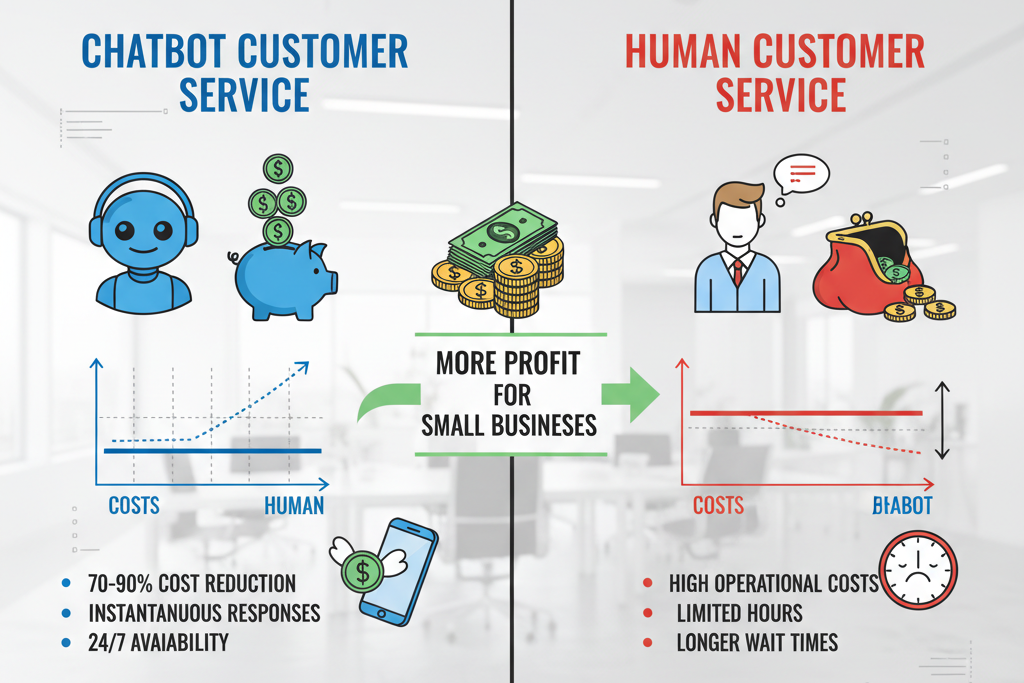
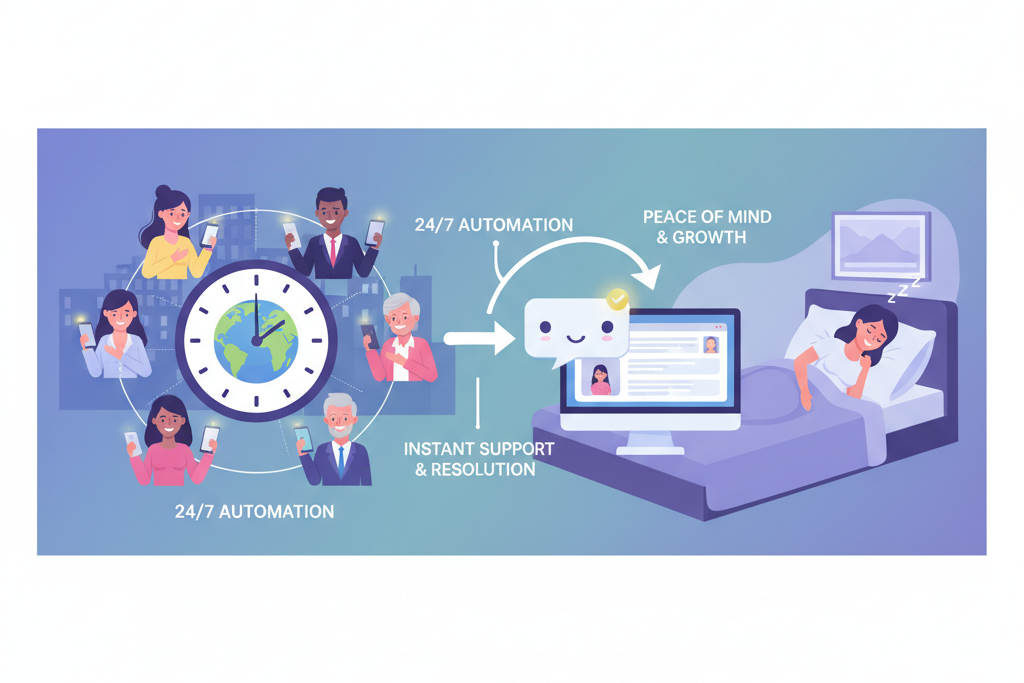
One of the most significant advantages of a chatbot is its ability to provide uninterrupted service. Unlike human employees, chatbots do not require breaks, sleep, or adhere to traditional working hours. This means your customers can get their questions answered, resolve issues, or obtain product information at any time, day or night, irrespective of time zones. This always-on availability significantly enhances customer convenience and satisfaction, ensuring that your business is always accessible. Crucially, this level of service is achieved without the added expense of hiring and training an expanded customer service team for night shifts or weekends.
2. 30% Reduction in Customer Service Costs
The financial implications of integrating a chatbot are substantial. By automating routine inquiries and repetitive tasks, chatbots can drastically reduce the workload on your human customer service agents. This often translates to a 30% reduction in overall customer service costs, stemming from decreased staffing needs, reduced training expenditures, and lower operational overheads. The efficiency gained allows businesses to allocate resources more effectively, focusing on growth and innovation rather than repetitive support functions.
3. Faster Problem Resolution (Even 80% Faster Responses)
In today's fast-paced world, customers expect immediate responses. Chatbots excel in this area, providing instant replies to common questions and guiding users through troubleshooting steps without any delay. This capability can lead to problem resolution that is up to 80% faster compared to traditional methods where customers might have to wait on hold or for an email response. Rapid resolution not only improves customer satisfaction but also prevents minor issues from escalating into major complaints, preserving your brand's reputation.
Imagine your customer service working tirelessly, 24/7, reducing costs by 30%, and resolving issues up to 80% faster—this is the tangible impact a well-implemented chatbot brings to your small business.
4. Automation of Repetitive Tasks
Many customer service interactions involve answering the same questions repeatedly. Chatbots are perfectly suited to handle these repetitive tasks, such as providing information on opening hours, product specifications, shipping policies, or basic troubleshooting. By automating these common queries, human agents are freed from monotonous work, allowing them to dedicate their time and expertise to more complex, nuanced, or critical customer issues that truly require human intervention. This optimization of tasks leads to increased efficiency and higher job satisfaction for your team.
5. Increased Customer Satisfaction
Ultimately, all the aforementioned benefits converge to one critical outcome: increased customer satisfaction. Timely responses, 24/7 availability, faster problem resolution, and access to accurate information all contribute to a positive customer experience. When customers feel valued and supported, their loyalty to your brand strengthens, leading to repeat business and positive word-of-mouth referrals. A chatbot, therefore, becomes a powerful tool not just for efficiency, but for fostering enduring customer relationships.
Step by Step: How to Implement a Chatbot in a Small Business
Implementing a chatbot in your small business might seem daunting, but by following a structured, step-by-step approach, you can ensure a smooth and effective deployment. This guide breaks down the process into manageable stages, from initial planning to ongoing monitoring, helping you leverage AI for enhanced customer service and operational efficiency.
1. Analysis of Needs and Business Goals
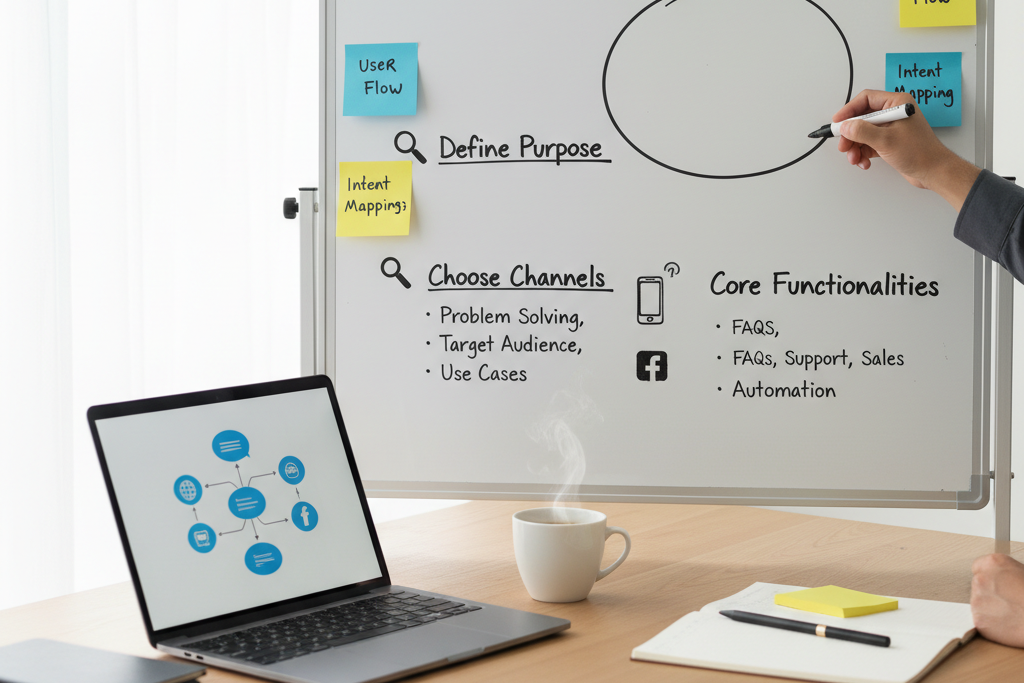
Before selecting a platform or designing conversational flows, it is crucial to thoroughly analyze your business needs and define clear goals. What specific problems are you trying to solve with a chatbot? Are you aiming to reduce customer service call volumes, provide 24/7 support, automate lead generation, or streamline FAQ responses? Identify the key pain points in your current customer interactions. Document the most frequent customer queries, peak service hours, and areas where human agents spend excessive time on repetitive tasks. Understanding these core requirements will guide every subsequent step and ensure your chatbot delivers tangible value.
2. Choosing the Right Chatbot Platform
The market offers a wide array of chatbot platforms, each with different features, pricing models, and levels of complexity. For a small business, key considerations include ease of use, integration capabilities with existing systems (e.g., CRM, e-commerce platforms), scalability, and budget. Some popular options range from simple rule-based builders to more advanced AI-driven platforms that leverage natural language processing (NLP). Evaluate platforms based on their ability to meet your identified needs, their support resources, and whether they offer low-code or no-code solutions that can be managed internally without extensive technical expertise.
3. Preparing Knowledge Base and FAQ
The intelligence of your chatbot is directly tied to the quality and comprehensiveness of its knowledge base. This step involves compiling all the information your chatbot will need to answer customer questions accurately. Gather existing FAQs, product details, service descriptions, policies, and troubleshooting guides. Organize this content in a structured, easily retrievable format. For each question, prepare clear, concise, and helpful answers. Consider various phrasing options for the same question that customers might use, as this will improve the chatbot's ability to understand and respond appropriately.
4. Configuration and Testing
Once your knowledge base is prepared and your platform chosen, it's time to configure the chatbot. This involves defining conversational flows, setting up decision trees for different scenarios, and integrating it with your website or messaging channels. Crucially, rigorous testing is paramount. Conduct extensive internal testing, simulating various customer interactions, including common questions, edge cases, and even intentionally ambiguous queries. Pay close attention to response accuracy, flow logic, and the overall user experience. Beta testing with a small group of actual customers can also provide invaluable feedback for refinement before a full launch.
5. Implementation and Monitoring
With thorough testing complete, you can now deploy your chatbot to your target channels. This might involve embedding it on your website, integrating it with social media platforms, or deploying it within a messaging app. However, implementation is not the end of the process; it's just the beginning. Continuously monitor the chatbot's performance using analytics provided by the platform. Track metrics such as resolution rates, common unanswered questions, user satisfaction scores, and areas where users abandon conversations. Use this data to identify areas for improvement, refine the knowledge base, update conversational flows, and ensure your chatbot remains an effective and valuable asset for your business.
What Questions Should Your Chatbot Handle?
Defining the scope and functionalities of your chatbot is critical to its success. A well-designed chatbot doesn't try to do everything; it focuses on handling common, repetitive, and time-consuming inquiries, freeing up human agents for more complex tasks. By strategically outlining the types of questions your chatbot should address, you can maximize its efficiency and impact on your small business operations.
Here are several key areas and examples of questions that your chatbot should be equipped to handle:
- Questions about opening hours: These are frequently asked and easily answerable queries that consume valuable human agent time.
- "What are your business hours today?"
- "Are you open on Sundays?"
- "What time do you close on weekdays?"
- Product/service information: Providing instant access to basic product specifications, service details, and pricing is a core function for a sales-oriented chatbot.
- "Tell me about your [specific product/service]."
- "What's the price of [item]?"
- "Do you offer [specific service]?"
- "What features does [product] have?"
- Order status: Customers frequently inquire about their purchases. A chatbot can quickly access and relay this information, reducing anxiety and support requests.
- "Where is my order?"
- "What is the status of order number [X]?"
- "How can I track my package?"
- Complaint procedures: While complex complaints may require human intervention, chatbots can provide initial guidance on the process, managing expectations and directing customers.
- "How do I submit a complaint?"
- "What is your return policy?"
- "Can I get a refund for [product]?"
- "What is the warranty for [item]?"
- Frequently asked questions (FAQ): Any question that appears repeatedly in your customer service logs is an ideal candidate for chatbot automation.
- "How do I reset my password?"
- "What payment methods do you accept?"
- "Do you ship internationally?"
- "How do I contact customer support?"
- "What is your privacy policy?"
By focusing on these practical scenarios, your chatbot can serve as an invaluable first point of contact, resolving a high volume of routine queries. This not only enhances customer satisfaction through immediate responses but also allows your human team to concentrate on complex, nuanced, or sensitive interactions, thereby optimizing overall efficiency and improving the quality of service your small business provides.

How Lumi Zone Helps Small Businesses Implement Chatbots
Implementing an effective chatbot solution requires more than just picking a platform; it demands a deep understanding of business processes, customer needs, and the nuances of AI automation. This is where Lumi Zone, an innovative AI automation agency, provides unparalleled support and expertise for small businesses seeking to leverage chatbots for 24/7 customer service and operational efficiency.
Lumi Zone operates with an individual approach to each client. We understand that every small business has unique challenges, goals, and existing infrastructure. Unlike agencies that push generic templates, we delve into your specific operational flow, identifying the precise pain points that a chatbot can alleviate. This bespoke strategy ensures that the AI agent we build is perfectly aligned with your business objectives, maximizing its utility and ROI.
Our commitment to transparency means there are no templates and hidden costs. Lumi Zone builds real solutions, tailored from the ground up to fit your business. This independent approach means we are not tied to specific vendors or platforms; instead, we select the technologies that best solve your client's problem, ensuring optimal performance and cost-effectiveness. Whether it's an AI agent for chat or phone, advanced n8n automations, CRM systems, web applications in Bolt.new, or full AI-powered integrations, our solutions are clean, efficient, and built for your unique needs.
Lumi Zone provides full implementation support, guiding you through every stage from initial analysis to deployment and ongoing optimization. Our team ensures seamless integration with existing systems, minimizing disruption to your current operations. We take the complexity out of AI adoption, allowing your team to focus on their core competencies while we handle the technical intricacies. Our goal is to create stable and effective systems that allow companies to focus on their real work, while automation handles the rest.
Furthermore, our expertise extends to integration with existing systems. A standalone chatbot offers limited value. Lumi Zone ensures your new AI agent communicates effectively with your CRM, e-commerce platform, or other crucial business tools, creating a cohesive and powerful automation ecosystem. This integrated approach ensures data flow is seamless, improving accuracy and providing a unified view of customer interactions across all touchpoints.
Common Concerns and How to Address Them
Despite the evident benefits, many small business owners harbor legitimate concerns about integrating chatbots into their operations. Addressing these potential doubts head-on is crucial for a successful and confident adoption of AI-driven customer service solutions.
Will Chatbots Replace Employees?
This is perhaps the most frequent concern. The reality is that chatbots are designed to augment, not replace, human employees. They excel at handling repetitive, routine tasks, answering FAQs, and providing instant information. This frees up your human team to focus on more complex problem-solving, empathetic interactions, relationship building, and strategic tasks that require human judgment and emotional intelligence. Instead of eliminating jobs, chatbots often elevate the role of human agents, allowing them to engage in more fulfilling and impactful work.
Customer Data Security
Data security and privacy are paramount. Reputable chatbot platforms and implementation partners adhere to stringent data protection regulations (like GDPR and CCPA). When choosing a platform or provider, investigate their security protocols, data encryption practices, and compliance certifications. Ensure that any personal or sensitive information handled by the chatbot is protected with industry-standard security measures. Lumi Zone, for example, prioritizes robust security frameworks to safeguard client and customer data.
Maintenance Costs
While the initial setup involves an investment, ongoing maintenance costs for chatbots are generally low compared to the savings they generate. Maintenance primarily involves updating the knowledge base, refining conversational flows based on user feedback, and occasionally upgrading the platform. Many modern chatbot solutions offer intuitive interfaces for non-technical users to manage content, reducing the need for continuous IT support. The cost-efficiency of 24/7 service and reduced human agent workload typically far outweighs the maintenance expenses.
Effectiveness in Handling Complex Questions
It's true that chatbots are most effective with well-defined, routine questions. However, advanced AI chatbots, especially those leveraging natural language processing (NLP), are increasingly sophisticated in understanding context and intent. For truly complex or sensitive inquiries, the chatbot's role is to identify the need and seamlessly hand off the conversation to a human agent, often providing the agent with a summary of the interaction so far. This ensures that customers always receive appropriate support, even when the issue is beyond the chatbot's immediate capabilities, maintaining a positive customer experience.