Automation as a Strategy: A New Work Culture in Companies

Introduction
Are you tired of manual, repetitive processes that consume the team's time and block growth? In many companies, everyday life is a constant struggle for efficiency: manual data exports, manual publications, manual approvals — and with them errors and employee overload.
The thesis of this article is clear: automation as a strategy — that is, automation as a new work culture, not merely a tool — allows companies to transform the way they plan, execute and optimize their activities.
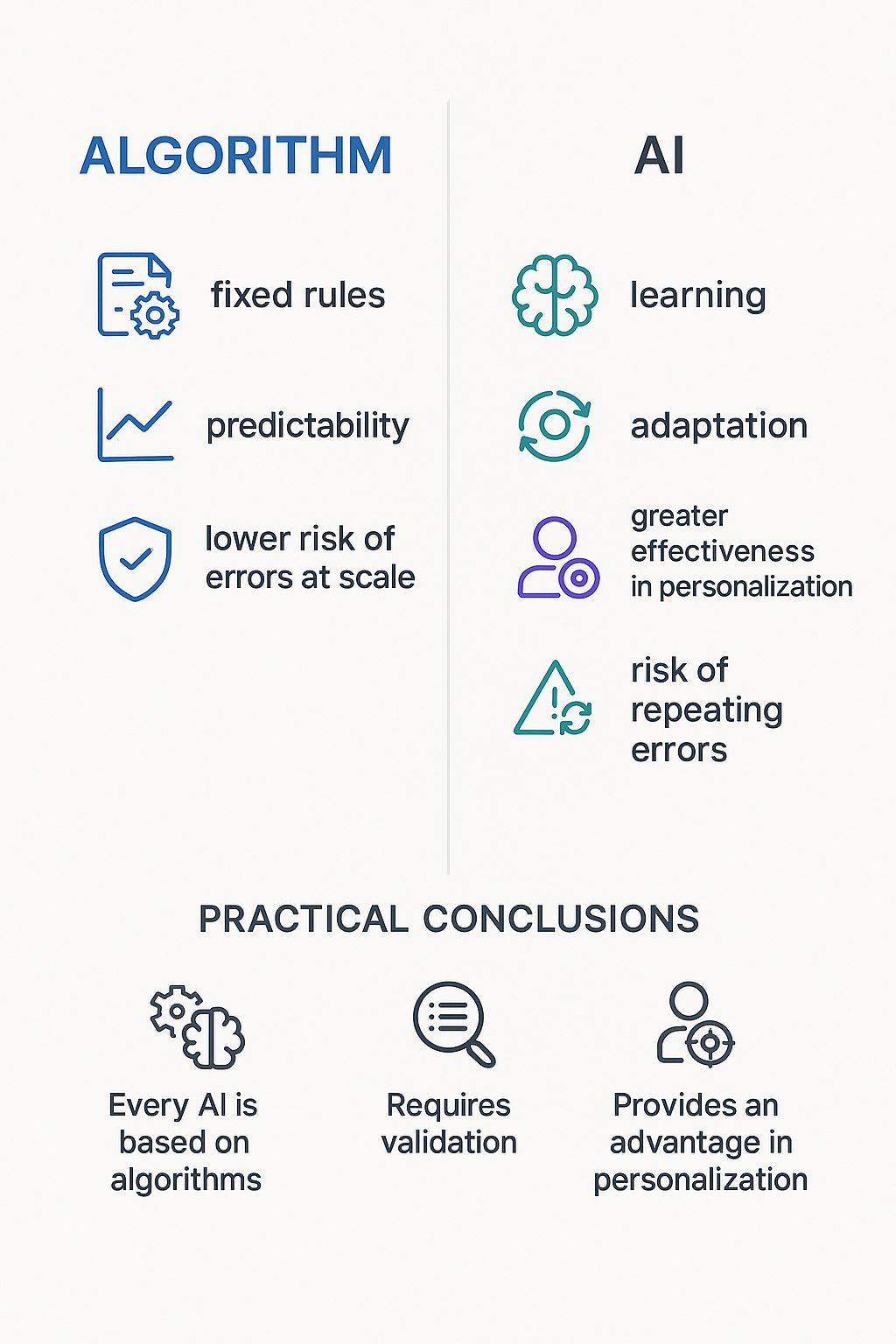
Briefly on concepts: algorithms are sets of clearly defined rules and steps that solve specific tasks, whereas artificial intelligence (AI) refers to systems capable of learning and modifying behavior based on large datasets. AI uses advanced algorithms and learning models, but it does not understand context like a human — therefore it requires constant supervision and validation: AI errors can repeat at scale, as described, among others, in the analysis available on aproco.io.
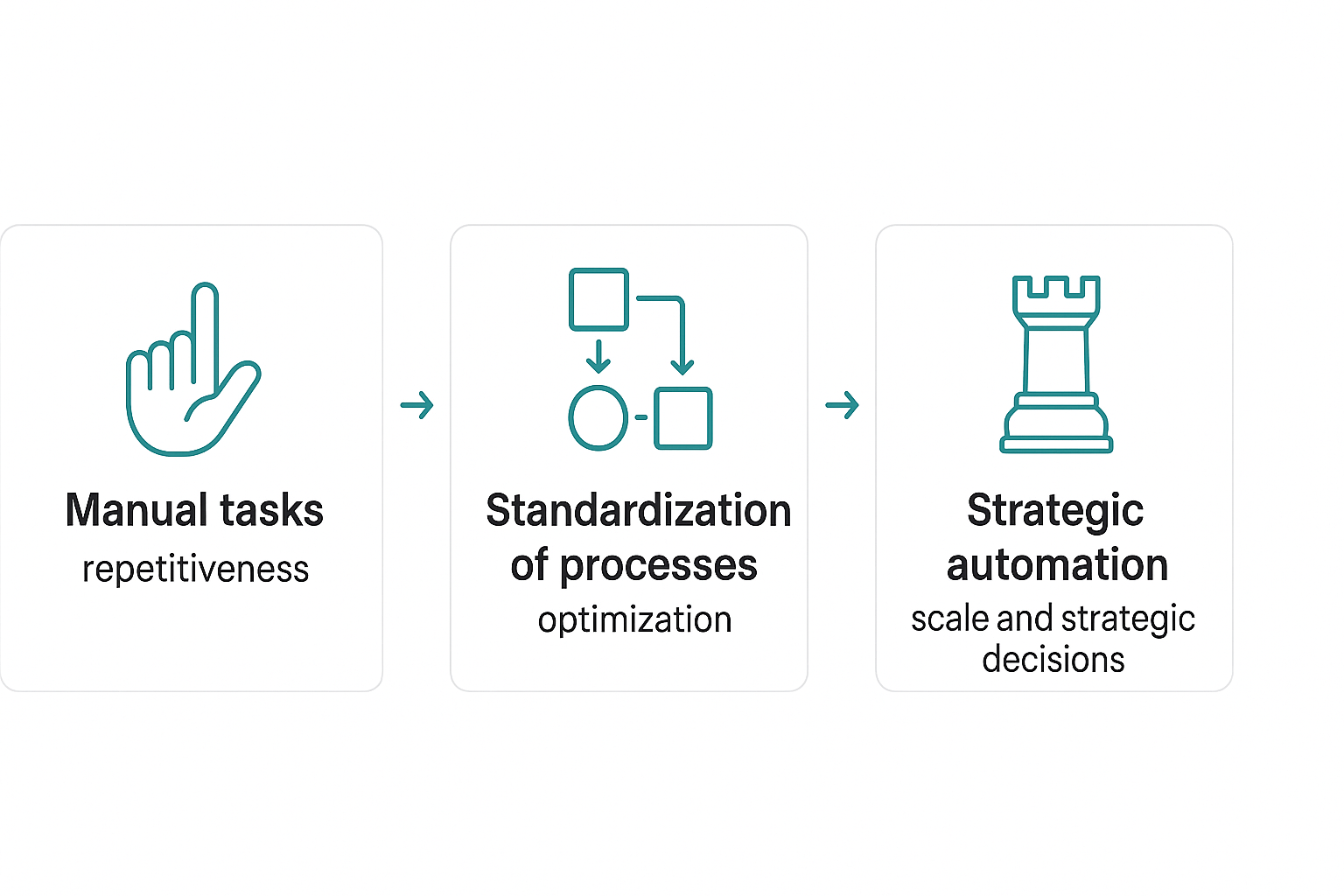
In practice, automation changes a company's mindset: instead of performing tasks, teams manage processes. The employee's role shifts from executor to designer and supervisor of systems. This is a natural evolution of skills that raises the value of work.
In the following sections we will show practical tips, concrete implementation examples and tools — especially in the area of social media, where AI significantly improves personalization and content moderation (OOH Magazine). I invite you to continue reading — Lumi Zone will help you move from theory to practice, using low-code and no-code solutions.
3. Why automation must be a strategy, not just a tool
Implementing a single tool that automates a task is often a quick fix rather than a lasting change in the way of working. As an SME owner, manager, or marketing team leader you must distinguish a "point" solution from strategic automation. The difference affects hidden costs, ease of scaling, and quality of integration with existing processes — and in the long run determines whether savings will be sustainable.
1) Tool vs. strategy — what you should know
- Hidden costs: many point solutions require separate licenses, integrations, and maintenance. The apparent "free" becomes costs for support and manual work.
- Scalability: a solution created for one process often cannot be easily extended. A strategy allows modular planning and reuse of components.
- Integration: the lack of a consistent architecture leads to data silos and duplicated work. Instead of a central model you have patched-together solutions that are harder to monitor and optimize.
2) Main benefits of strategic automation
- Time and cost savings by eliminating repetitive tasks and better allocating resources.
- Process predictability — consistent SLAs, fewer exceptions, and faster response to issues.
- Better decisions driven by data — a central integration layer enables comparisons, reporting, and automated recommendations.
3) Risks of a tool-driven approach
An ad-hoc approach often leads to fragmentation, lack of maintenance, and growing technical debt. Additionally, AI-based automations can make so-called “scale errors” — when a model, not validated across different cases, repeats an error in hundreds or thousands of interactions. It's worth reading analyses on this topic: Aproco and Dymek.
4) A practical framework for strategic thinking
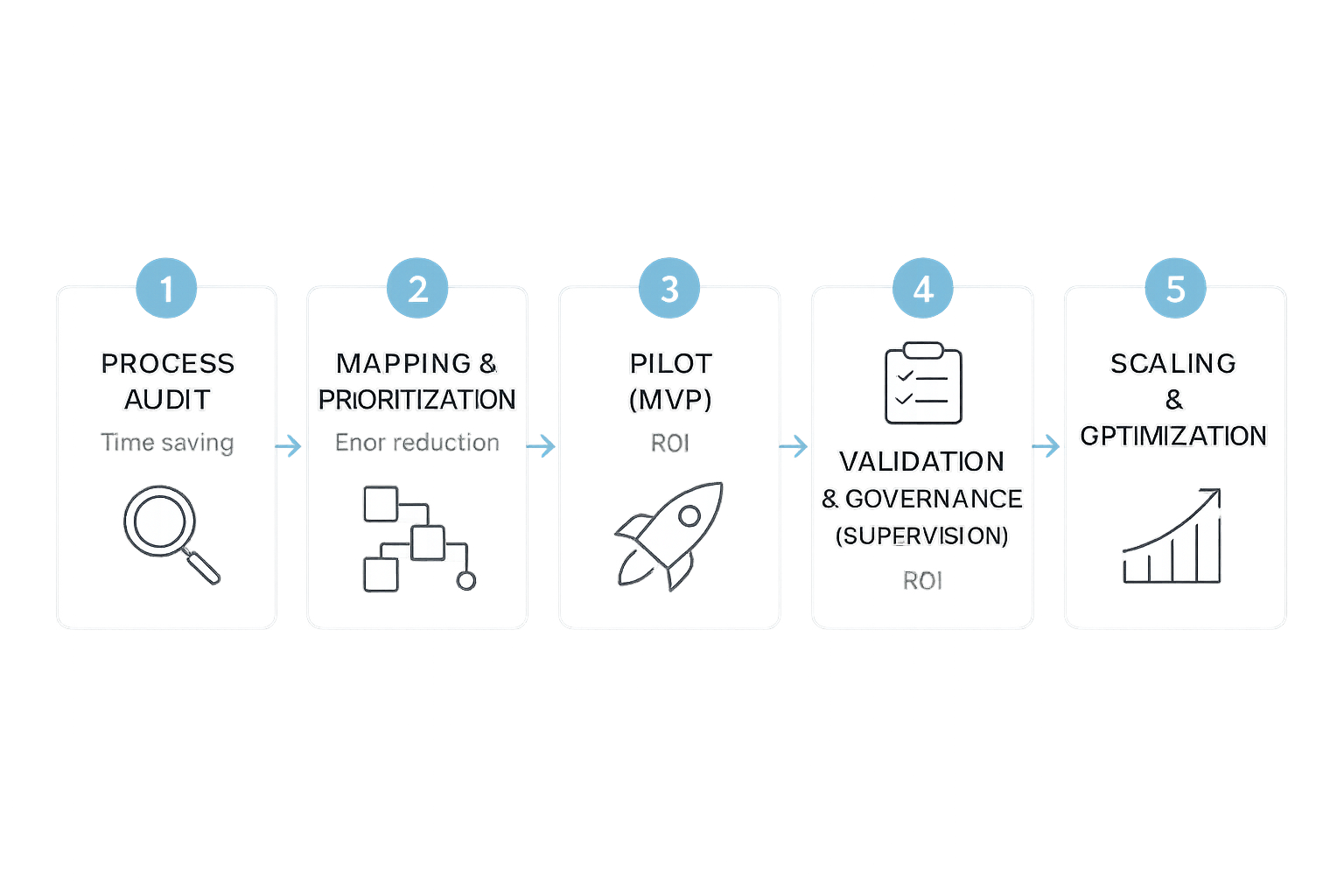
- Process audit: map what you do today and how much it costs.
- Impact map: determine which processes have the biggest effect on revenue, costs, and customer satisfaction.
- Use-case prioritization: quick wins vs. long-term projects.
- Pilot plan: narrow scope, measurable KPIs, iterations, and validation of results.
- KPI and governance: success metrics, procedures for human oversight of AI, and maintenance plan.
5) Examples in marketing and customer service
- Email campaign automation: dynamic sequences, A/B testing, and centralized reports.
- Social media publishing schedules: planning, timing optimization, and performance analysis (AI supports content creation — see Monika Kołodziejczyk's analysis).
- Chatbots with oversight: automated replies + escalation to a human for atypical cases.
Low-code/no-code technologies and tools like n8n make it easier to implement such a strategy — they allow quick prototyping of integrations while keeping order and scalability. If you want, Lumi Zone will conduct an audit, design an impact map, and run a pilot with clear KPIs so that automation becomes a real business advantage.
Sources and further reading: Aproco, Dymek, Monika Kołodziejczyk.
AI i automatyzacja w social media — praktyczne zastosowania, korzyści i zagrożenia
AI significantly changes the way we conduct communication on social media. Research and analyses indicate that artificial intelligence supports content creation, personalization, moderation, chatbots and trend analysis — as described in articles on OOH Magazine, Monika Kołodziejczyk and a critical look at the impact of algorithms in Holistic.News. These are real opportunities — but also real risks: AI learns from data, does not understand context and can reproduce mistakes at scale. Therefore it is crucial to combine automation with clear rules for human oversight.
Specifically: examples of automation that work
- Automatic scheduling and optimization of publishing time — the system analyzes the activity of your target audience and publishes when the likelihood of engagement is highest.
- Generating post variants (A/B) — AI creates content variants (headlines, CTAs, images) which you then test to choose the best-converting format.
- Automatic comment moderation — filtering spam, abusive content and escalating sensitive situations to a moderator.
- Chatbot supporting lead generation — lead qualification, initial segmentation and forwarding valuable contacts to the CRM.
- Sentiment analysis and topic selection — monitoring opinions, finding rising topics and suggesting which content to prepare.
Success metrics — what to measure to draw conclusions
- CTR (click-through rate) — are the contents attracting clicks?
- Engagement rate — likes, comments, shares as a measure of content resonance.
- Customer service response time — how quickly the chatbot or team closes cases.
- Lead acquisition cost (CAC) — whether automation reduces the cost of contacting a potential customer.
- Number of moderation errors — false positives/negatives in automatic moderation.
Practical implementation tips
- Choose 1–2 use cases (e.g. scheduling + chatbot) and build an MVP — quick, measurable results will help justify further investments.
- Measure from the start — set KPIs (CTR, handling time, CAC) and compare before/after.
- Combine AI with human oversight — define escalation rules, approve new content templates and monitor automation errors.
- Use low-code/no-code tools and integrations (e.g. n8n) — they allow quickly connecting systems, creating workflows and accelerating deployment without a large IT department.
- Test and iterate — A/B tests, team and user feedback and regular model retraining improve effectiveness.
- Remember ethics and compliance — disclosure of AI use, data protection and transparent moderation policies build customer trust.
Case study (schematic)
A small e‑commerce brand implemented automatic post scheduling, a chatbot for initial lead qualification and automatic comment moderation. Results after 3 months:
- Reduction of the marketing team’s working time by 40% (from 25 to 15 hours per week).
- Increase in engagement by 25% thanks to optimized posting times and A/B tests.
- Decrease in lead acquisition cost by 15% thanks to automated qualification by the chatbot.
- The moderation error rate was kept below 2% thanks to escalation rules to a moderator.
This is a typical example: automation frees the team from routine tasks and allows them to focus on strategy, while improving KPIs.
If you want to test similar solutions in your company, Lumi Zone will help design an MVP, integrate low-code/no-code tools (including n8n) and implement quality control so that automation delivers a real return on investment.
Conclusion and offer — how Lumi Zone helps change work culture with automation
Automation is not just tools — it’s a strategy and a new mindset. In this article I showed that it’s worth treating automation as a strategic element: from organizing processes, through a clear separation of algorithms and AI systems, to practical applications in social media, where automation speeds up publishing, personalizes communication, and improves content moderation. Also remember the risks — AI can learn mistakes and replicate them at scale, so control and validation of actions are essential (you can read more about AI limitations here: Why AI makes mistakes, and about AI applications in social media here: AI and social media).
What Lumi Zone will do for you
- Process audit — we identify manual, repetitive tasks and measure potential time savings.
- Automation strategy design — an action plan with priorities, ROI, and control checkpoints.
- Low-code/no-code implementations — fast automations without long development (e.g., tools like Make, Zapier).
- n8n integrations — flexible system connections and creation of complex data flows.
- Marketing automation — publishing content on social media, managing email campaigns, scheduling, segmentation, and chatbots for customer support.
Collaboration models
- Audit + pilot (4–6 weeks) — quick tests on a selected process, measurable results and recommendations for further implementation.
- Monthly operational support — continuous optimization, monitoring and adjustments (SLA, KPI reports).
- Training packages — team workshops: tool operation, best practices for AI oversight, and creating playbooks.
Next step and proposed KPIs to discuss
I suggest a short, free 30-minute meeting/mini-audit during which we will discuss specific KPIs, e.g.:
- % of time saved on manual tasks
- number of automated processes and hours saved monthly
- engagement rate / CTR for automated posts
- open rate and conversion of email campaigns
- average response time to messages (chatbot vs. manual)
- cost per lead and sales conversion
You can choose to: schedule a 30‑minute consultation / mini-audit or download our implementation checklist and supplementary materials (case studies, guides). Contact Lumi Zone via the contact form on our website or write to kontakt@lumizone.pl. We can start with a small pilot — quickly, at low cost, and with clear success metrics.