End of Manual Data Entry – How AI Integrations Automatically Synchronize CRM and Documents

Introduction: The Era of Data Flow Automation
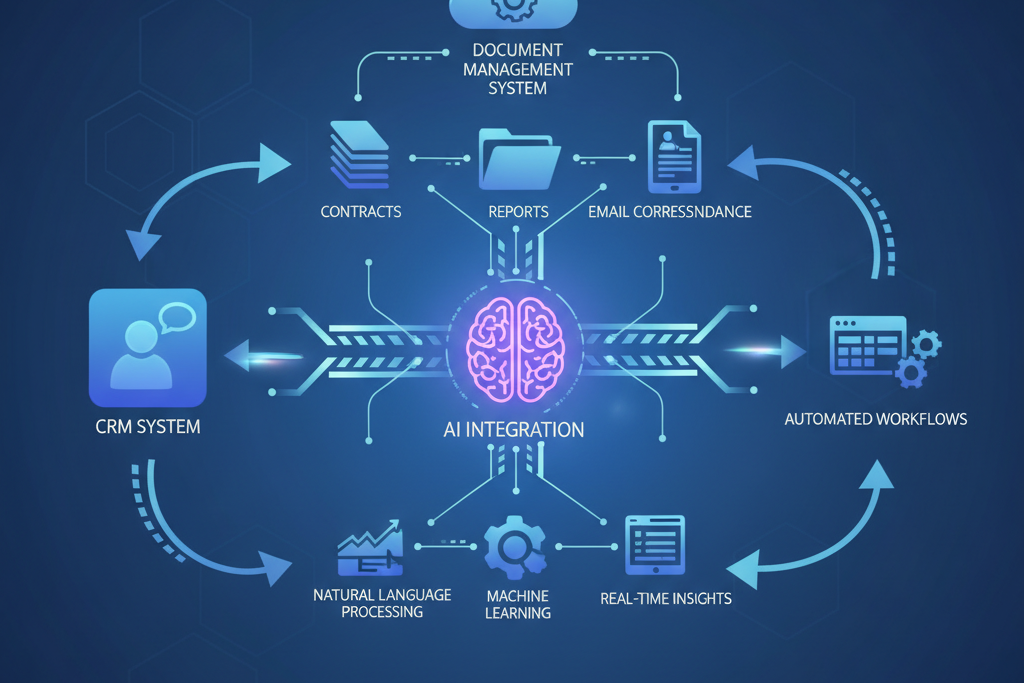
In today's fast-paced business environment, the efficiency of data management directly correlates with operational success. Yet, many organizations remain entangled in the intricate web of manual data entry and synchronization, a practice that not only consumes valuable time but also introduces a significant margin for error. The challenge is pervasive: disparate systems, from Customer Relationship Management (CRM) platforms to document management solutions, often operate in silos, requiring human intervention to transfer and update information between them. This traditional approach to data handling is no longer sustainable, hindering growth and diverting critical resources from strategic initiatives.
The scale of this problem is substantial. Businesses routinely allocate countless employee hours to tasks such as inputting sales leads into a CRM, updating customer records across multiple platforms, or manually reconciling invoices with accounting software. This repetitive, often tedious, work is not only prone to human error but also represents a hidden cost in terms of employee wages and missed opportunities. Each manual transfer of data is a potential point of failure, leading to inconsistencies, outdated information, and ultimately, poor decision-making. The cumulative effect of these inefficiencies can be staggering, impacting everything from customer service quality to financial reporting accuracy.
The solution lies in embracing sophisticated data automation and system integration, particularly through the intelligent application of AI. By leveraging artificial intelligence, businesses can move beyond simple automation scripts to create intelligent systems that understand, process, and synchronize data autonomously. This shift marks the true end of manual data entry, paving the way for seamless data flow, enhanced accuracy, and a significant reduction in operational overhead. The era of intelligent data flow automation is not a futuristic concept; it is a present reality, offering a tangible pathway to smarter, more efficient business operations.
This article will delve into the profound impact of manual data entry on business performance, illustrate the advanced mechanisms of AI-driven integration, explore practical applications across various departments, and outline the measurable benefits of adopting these transformative technologies. We will also provide a practical guide for implementation and look towards the future of automation, offering a comprehensive view on how companies can transition from labor-intensive processes to intelligent, automated data synchronization.
Problem: Why Manual Data Entry Costs Companies Millions
The continued reliance on manual data entry is a silent drain on corporate resources, often underestimated in its true financial impact. While the immediate cost of an employee performing data input is visible, the ripple effects throughout an organization accumulate into substantial losses. Understanding these specific costs is crucial for justifying the investment in automated solutions. Here are five primary ways manual data entry costs companies millions:
1. Excessive Employee Time and Wages
The most direct cost of manual data entry is the significant amount of employee time it consumes. Skilled professionals, who could be focusing on strategic tasks, are often bogged down by repetitive data transfer. A sales representative manually updating CRM records after every client interaction, a finance clerk inputting invoice details, or a human resources specialist transcribing applicant information all represent hours diverted from more productive activities. These hours translate directly into substantial wage costs, often for tasks that provide minimal value, effectively paying employees to perform robotic functions.
2. High Incidence of Data Entry Errors
Human error is an inevitable component of any manual process, and data entry is particularly susceptible. Typos, misinterpretations, or simple omissions can lead to incorrect customer information, faulty financial records, or flawed inventory counts. These errors are not just minor inconveniences; they can have severe consequences, including incorrect billing, shipping to the wrong address, compliance failures, or inaccurate business intelligence. Correcting these errors requires additional time and resources, further compounding the initial cost and potentially damaging customer relationships or regulatory standing.
Manual data entry is a silent drain on corporate resources, often underestimated in its true financial impact, accumulating into substantial losses through wasted time, errors, and missed opportunities.
3. Operational Delays and Reduced Responsiveness
The time required for manual data entry introduces inherent delays into business processes. If a sales lead takes hours to be manually entered into the CRM, the sales team's response time is significantly impacted, potentially allowing competitors to act first. Similarly, manual invoice processing can delay payments, affecting cash flow and supplier relationships. These operational bottlenecks can slow down the entire business cycle, making the organization less agile and responsive to market changes or customer needs. In a competitive landscape, speed and efficiency are paramount.
4. Lost Business Opportunities
Perhaps one of the most insidious costs of manual data entry is the loss of business opportunities. Inconsistent or outdated data prevents effective lead nurturing, targeted marketing, and personalized customer service. If a customer's purchasing history isn't immediately available to a sales agent, they might miss an upselling opportunity. If marketing campaigns are based on stale data, their effectiveness plummets. Furthermore, the delays caused by manual processes can mean missing critical windows for new market entries, product launches, or responding to evolving customer demands. The inability to quickly access and leverage accurate data directly translates into missed revenue.
5. Training and Retraining Costs
While often overlooked, the continuous need to train and retrain employees for data entry tasks represents another significant cost. New hires must be onboarded and taught specific data entry protocols, which can be time-consuming and resource-intensive. Moreover, if systems change or processes evolve, retraining becomes necessary. This constant investment in teaching repetitive tasks could otherwise be directed towards developing higher-value skills within the workforce, fostering innovation, and enhancing employee satisfaction by eliminating monotonous work.
By understanding these multifaceted costs, businesses can clearly articulate the return on investment for adopting AI-driven automation solutions, transforming what appears to be a necessary chore into a strategic opportunity for efficiency and growth.

How AI Integrations Work: Technology in Service of Automation
The shift from manual data entry to automated synchronization is facilitated by a suite of advanced technologies, with AI integrations at their core. These mechanisms enable disparate systems to communicate seamlessly, understand data context, and execute actions without human intervention. The power of AI lies in its ability to go beyond simple rules-based automation, allowing for more intelligent processing, adaptation, and decision-making. Here are four key mechanisms driving this technological revolution:
1. API Integrations: The Foundation of Connectivity
Application Programming Interfaces (APIs) serve as the fundamental building blocks for communication between software applications. An API defines the methods and data formats that applications can use to request and exchange information. In the context of AI integrations, APIs allow a CRM to send customer data to an accounting system, or an e-commerce platform to push order details to an inventory management system. AI enhances traditional API integrations by orchestrating complex data flows, validating data for consistency, and even enriching data by drawing insights from various sources before transfer. For example, an AI could use an API to pull customer sentiment from social media and update their profile in the CRM, adding a layer of intelligence to standard data transfer.
2. n8n Automations: Visual Workflow Orchestration
n8n is an open-source workflow automation tool that empowers businesses to connect applications and automate processes through a visual interface. It acts as a powerful middleware, enabling the creation of custom workflows without extensive coding knowledge. Users can define triggers (e.g., a new entry in a spreadsheet), set conditions, and specify actions across hundreds of integrated services. AI augments n8n by providing intelligent decision points within workflows. For instance, an AI agent could analyze the content of an incoming email, categorize it, extract key information using Natural Language Processing (NLP), and then trigger a specific n8n workflow to update a CRM, create a task in a project management tool, or generate a personalized response, all automatically. This combination provides both flexibility and intelligence to automation.
3. AI Agents: Intelligent Task Execution
AI agents are autonomous software entities designed to perform specific tasks or sets of tasks by interacting with other systems and data. These agents can range from simple chatbots that retrieve information to sophisticated decision-making systems that execute complex business processes. In data synchronization, AI agents can monitor data sources for changes, extract relevant information, interpret its meaning, and then update target systems accordingly. For example, an AI agent could continuously scan incoming documents (like invoices or contracts), use Optical Character Recognition (OCR) to read the text, understand the context (e.g., identifying vendor, amount, due date), and then automatically input this data into an ERP system or a document management system, flagging any discrepancies for human review. These agents learn over time, improving their accuracy and efficiency.
4. Low-Code Platforms: Accelerating Development and Deployment
Low-code platforms provide a development environment that allows users to create applications and automated workflows with minimal manual coding. Instead, they rely on graphical user interfaces with drag-and-drop components, pre-built templates, and visual modelers. This approach significantly speeds up the development and deployment of integration solutions, making automation accessible to a broader range of users, including business analysts who may not have deep programming expertise. When combined with AI capabilities, low-code platforms allow businesses to rapidly build intelligent integrations that automate data synchronization, create custom dashboards for monitoring data flow, or develop portals for secure data access. This democratization of development means that tailored automation solutions can be deployed quickly and iteratively refined to meet evolving business needs.
Together, these technologies form a powerful ecosystem that redefines how businesses manage and utilize their data, moving towards a future where data flows effortlessly and intelligently between all systems.
Practical Applications: 5 Areas Where Automation Changes the Game
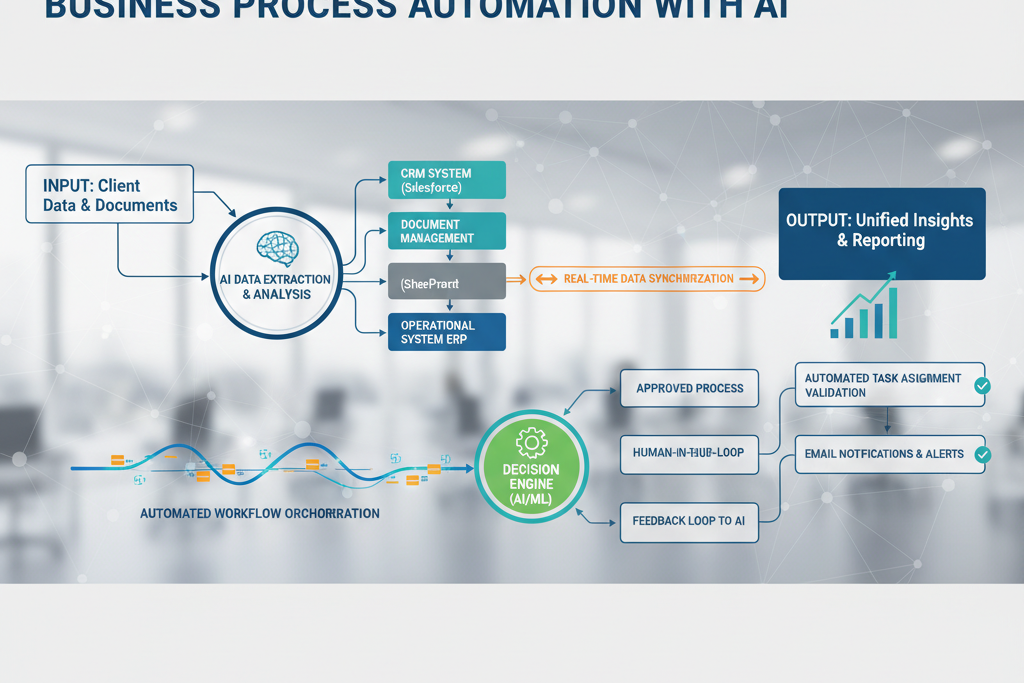
The theoretical benefits of AI integrations and automation translate into tangible improvements across various operational areas within a company. By eliminating manual data entry, businesses can streamline critical processes, enhance accuracy, and free up personnel for higher-value activities. Here are five specific areas where automation is fundamentally changing the game:
1. CRM-Sales Synchronization: Real-time Customer Insights
Manual synchronization between CRM systems and sales tools is notoriously time-consuming and prone to errors. AI integrations revolutionize this by providing real-time, bidirectional data flow. When a sales representative updates a client's contact information in their sales engagement platform, the CRM automatically reflects that change. Conversely, new leads captured from a website form instantly appear in the sales pipeline within the CRM, triggering automated follow-up sequences. This ensures that sales teams always work with the most current customer data, improving personalization, reducing duplicate efforts, and enabling faster, more informed decision-making throughout the sales cycle. Moreover, AI can enrich CRM data by analyzing external sources like company news or social media, providing sales teams with deeper insights for engagement.
2. Invoice Automation: Streamlined Financial Operations
Processing invoices manually is a labor-intensive task fraught with potential for delays and errors. AI-powered invoice automation transforms this process. When a vendor sends an invoice, AI with Optical Character Recognition (OCR) extracts key information such as vendor name, invoice number, line items, amounts, and due dates. This data is then automatically validated against purchase orders or contracts and seamlessly pushed into the accounting or Enterprise Resource Planning (ERP) system. The system can then initiate payment workflows, reconcile accounts, and flag any discrepancies for review. This not only accelerates payment cycles but also significantly reduces human error, improves audit trails, and provides real-time visibility into financial liabilities.
3. Document Updates and Management: Dynamic Information Flow
Managing and updating a multitude of documents, from contracts to product specifications, often involves manual version control and information transfer. AI integrations ensure that documents are living entities, dynamically updated across systems. For instance, if a project milestone is updated in a project management tool, an AI agent can automatically update related fields in a project contract stored in a document management system. Similarly, changes to product descriptions in a PIM (Product Information Management) system can automatically update marketing collateral or e-commerce listings. This eliminates discrepancies, ensures compliance, and provides all stakeholders with access to the most current version of critical information, drastically reducing the risk associated with outdated documentation.
4. E-commerce Integration: Seamless Order Fulfillment and Inventory Control
For e-commerce businesses, manual data transfer between online stores, inventory systems, and shipping platforms is a major bottleneck. AI integrations create a seamless ecosystem. When a customer places an order on an e-commerce platform, the order details are immediately sent to the inventory management system to update stock levels and to the warehouse management system for fulfillment. Shipping labels are automatically generated, and customers receive real-time tracking updates. If an item goes out of stock, the AI can automatically update the website, preventing overselling. This level of integration ensures faster order processing, accurate inventory counts, reduced shipping errors, and a superior customer experience, which are critical for success in the competitive online retail space.
5. Automated Reporting and Business Intelligence: Actionable Insights
Manually compiling data from various sources to generate reports is time-consuming and often results in outdated information by the time the report is complete. AI integrations automate the entire reporting process. Data from sales, marketing, finance, and operations systems are continuously synchronized and fed into business intelligence (BI) dashboards. AI can then analyze this aggregated data, identify trends, predict future outcomes, and even generate natural language summaries of key findings. This provides decision-makers with real-time, actionable insights, allowing for quicker adjustments to strategies, proactive problem-solving, and a deeper understanding of overall business performance, moving from retrospective reporting to predictive analytics.

Business Benefits: From Time Savings to Competitive Advantage
The implementation of AI integrations to automate data synchronization goes far beyond merely eliminating manual tasks; it fundamentally transforms business operations, delivering a cascade of measurable benefits. These advantages not only optimize internal processes but also enhance market position and foster sustainable growth. Here are six key benefits that businesses can expect:
1. Significant Time Savings (70-80% on Data Entry Tasks)
One of the most immediate and profound benefits of AI automation is the dramatic reduction in time spent on manual data entry. By automating repetitive tasks, companies can save anywhere from 70% to 80% of the time previously dedicated to these activities. This frees up employees from tedious, low-value work, allowing them to focus on more strategic, creative, and customer-centric initiatives. The cumulative effect of these time savings across an organization can be immense, leading to substantial increases in overall productivity and operational efficiency.
2. Drastic Error Reduction and Improved Data Accuracy
Human error is an inherent risk in manual data entry. AI integrations virtually eliminate this risk by performing data transfers with unparalleled precision. Automated systems follow predefined rules and validation checks, ensuring that data is consistent and accurate across all integrated platforms. This drastic reduction in errors leads to more reliable business intelligence, fewer operational mishaps, enhanced compliance, and greater trust in the data that underpins critical business decisions. Accurate data is the bedrock of effective strategy.
3. Faster Decisions Through Real-time Data Access
In a dynamic market, timely decisions are critical. Manual data synchronization often leads to information delays, meaning decisions are based on outdated or incomplete data. AI integrations ensure that data flows in real-time between systems, providing stakeholders with immediate access to the most current information. This real-time visibility empowers leaders to make faster, more informed decisions, react quickly to market changes, identify emerging trends, and seize opportunities before competitors.
4. Enhanced Customer Service and Satisfaction
Accurate and readily accessible customer data is the cornerstone of exceptional customer service. With AI integrations, customer service representatives have instant access to a unified view of customer interactions, purchase history, preferences, and support tickets, regardless of which system the data originated from. This enables personalized and efficient support, faster resolution of issues, and a proactive approach to customer engagement. The result is improved customer satisfaction, stronger customer loyalty, and a positive brand reputation.
By automating repetitive tasks, companies can save anywhere from 70% to 80% of the time previously dedicated to manual data entry, unleashing a cascade of benefits from enhanced productivity to a stronger competitive edge.
5. Scalability and Business Growth
Manual processes are inherently difficult to scale. As a business grows, the volume of data increases exponentially, requiring a proportional increase in headcount for data entry, which is unsustainable. AI integrations offer inherent scalability. Automated systems can handle vast amounts of data without significant additional resources, allowing businesses to expand operations, enter new markets, or increase customer volume seamlessly. This foundational scalability supports sustainable business growth without being constrained by data management bottlenecks.
6. Sustainable Competitive Advantage
Ultimately, the combination of time savings, error reduction, faster decision-making, improved customer service, and scalability translates into a significant competitive advantage. Businesses that embrace AI data automation can operate more efficiently, respond more quickly to market demands, deliver superior customer experiences, and allocate resources more strategically than those still relying on manual methods. This efficiency and agility enable them to innovate faster, optimize costs, and capture greater market share, positioning them as leaders in their respective industries.

Lumi Zone Case Study: Real Implementations for Polish Companies
Lumi Zone specializes in delivering tailored AI automation solutions, meticulously designed to meet the unique operational demands of businesses. Our approach focuses on building simple, effective, and stable systems that drive tangible results. Here, we present three case studies highlighting real implementations for Polish companies across different industries, demonstrating the impactful results of eliminating manual data entry.
1. E-commerce Logistics Optimization for a Retailer
A rapidly growing Polish e-commerce retailer faced significant challenges with manual order processing and inventory synchronization. Each order required manual input into their ERP system, stock adjustments across multiple online marketplaces, and separate generation of shipping labels. This led to delays, frequent overselling, and customer dissatisfaction. Lumi Zone implemented an AI-powered n8n automation system that integrated their Shopify store, local ERP, and several shipping providers. When an order was placed, the system automatically:
- Extracted order details from Shopify.
- Updated inventory in the ERP and across all linked marketplaces in real-time.
- Generated a shipping label with the chosen carrier.
- Sent order confirmations and tracking numbers to customers.
Measurable Results: The company achieved a 95% reduction in manual order processing time, virtually eliminated overselling incidents, and saw a 30% increase in customer satisfaction scores due to faster delivery and accurate updates. This allowed their team to focus on strategic marketing and product development instead of clerical tasks.
2. Streamlining Client Onboarding for a B2B Services Provider
A B2B consulting firm struggled with a complex and time-consuming client onboarding process. Each new client required data input into their CRM, project management software, billing system, and a shared document repository. This manual effort often led to delays in project initiation and inconsistent client records. Lumi Zone developed an AI agent integrated with a low-code platform. Upon a new client signing a contract (digitally signed document), the AI agent would:
- Extract key client information from the contract using advanced OCR and NLP.
- Automatically create a new client record in the CRM with all relevant details.
- Generate a project brief in their project management system.
- Set up initial billing parameters in the accounting software.
- Organize all client-related documents in a secure, version-controlled repository.
Measurable Results: The client onboarding time was reduced by 80%, from an average of 3 days to less than half a day. This significantly improved client satisfaction by enabling quicker project starts and ensured data consistency across all platforms, reducing administrative overhead by 60%.
3. Production Data Synchronization for a Manufacturing Plant
A medium-sized Polish manufacturing company faced inefficiencies in synchronizing production data from their shop floor (e.g., machine output, defect rates) with their central ERP system and quality control databases. Manual data collection and input led to delays in identifying production bottlenecks and reactive quality management. Lumi Zone implemented an AI-driven solution leveraging existing IoT sensors on machinery and API integrations. The system automatically:
- Collected real-time production metrics from machine sensors.
- Processed and analyzed the data using AI to identify anomalies or potential issues.
- Synchronized critical production figures (e.g., units produced, scrap rate) with the ERP system.
- Updated quality control databases with real-time defect information.
- Generated automated alerts for production managers in case of deviations.
Measurable Results: The company achieved a 40% reduction in production line downtime due to proactive identification of issues. Data accuracy for production reporting improved to nearly 100%, leading to better inventory planning and a 15% decrease in material waste. This transformed their quality control from reactive to predictive.
These case studies underscore Lumi Zone's commitment to delivering real, measurable value through intelligent automation, empowering Polish businesses to work smarter and achieve their strategic goals.

How to Start: 5 Steps to Implement Automation in Your Company
Implementing AI-driven automation may seem like a complex undertaking, but by following a structured, step-by-step approach, any company can successfully integrate these powerful tools. This methodical process ensures that automation efforts are aligned with business objectives, deliver tangible results, and achieve long-term sustainability. Here are five essential steps to guide your company towards automation:
1. Conduct a Thorough Process Audit
Before automating, it is crucial to understand which processes require automation and why. Begin by conducting a comprehensive audit of your current operational workflows. Identify tasks that are repetitive, time-consuming, prone to human error, involve data transfer between multiple systems, or act as bottlenecks. Document these processes in detail, mapping out data flows, identifying all involved systems, and calculating the time and resources currently expended. This audit will help prioritize automation opportunities and provide a baseline for measuring success. Look for processes where manual data entry is a significant component.
2. Select the Right Tools and Technologies
Based on your process audit, select the most appropriate AI integration and automation tools. This might involve API integration platforms, low-code development environments, AI agents, or workflow orchestrators like n8n. Consider factors such as compatibility with your existing systems, scalability, ease of use, security features, and cost-effectiveness. It's often beneficial to partner with experts like Lumi Zone, who can provide independent advice on the best-fit technologies without being tied to specific vendors, ensuring the solution truly meets your unique business needs rather than forcing a template.
3. Implement a Pilot Project
Instead of attempting a company-wide overhaul, start with a focused pilot project. Choose a single, well-defined process identified in your audit that offers a clear and measurable impact if automated. This could be something like automating CRM lead entry or invoice processing. A pilot allows your team to gain experience with the new technology, test the integration, identify potential challenges, and refine the workflow in a controlled environment. The success of a pilot project builds internal confidence and provides concrete evidence of the value of automation before a broader rollout.
4. Provide Comprehensive Team Training
Automation does not eliminate the need for human input; it changes its nature. Employees who previously performed manual data entry will need to adapt to new roles focused on monitoring automated systems, handling exceptions, and leveraging the freed-up time for more strategic work. Provide comprehensive training to all affected teams on how to interact with the new automated systems, understand their outputs, troubleshoot minor issues, and utilize their new capacity effectively. Emphasize the benefits of automation for their daily work and the company as a whole to foster acceptance and collaboration.
5. Establish Monitoring and Continuous Optimization
Implementation is not the final step. Automated systems require continuous monitoring to ensure they are functioning as intended, maintaining data accuracy, and adapting to any changes in source systems or business requirements. Establish key performance indicators (KPIs) to track the efficiency, accuracy, and return on investment of your automated processes. Regularly review system performance, gather feedback from users, and identify opportunities for further optimization or expansion. Automation is an ongoing journey of continuous improvement, ensuring that your systems remain efficient and effective as your business evolves.

Future of Automation: Trends and Technology Development
The landscape of automation is constantly evolving, driven by rapid advancements in artificial intelligence and connectivity. While current AI integrations are already transforming businesses, the future promises even more sophisticated and pervasive automation, pushing the boundaries of efficiency and intelligence. Here are three key trends shaping the future of automation:
1. AI Predictive Analytics and Proactive Automation
The next frontier in AI automation involves moving beyond reactive task execution to proactive, predictive capabilities. Future AI systems will not only automate data synchronization but also analyze vast datasets to anticipate future needs and potential issues. For instance, an AI could predict customer churn based on historical data and automatically trigger a personalized retention campaign in the CRM. In manufacturing, predictive maintenance AI will monitor machine performance, forecast equipment failure, and automatically schedule maintenance or order replacement parts before a breakdown occurs. This shift enables businesses to operate with foresight, optimizing resource allocation and preventing problems before they escalate, transforming reactive processes into proactive strategies.
2. Enhanced IoT Integration for Real-time Physical-Digital Synchronization
The Internet of Things (IoT) is generating unprecedented volumes of real-time data from physical devices and environments. Future automation will see even deeper integration between AI systems and IoT networks, enabling seamless synchronization between the physical and digital worlds. Imagine smart warehouses where inventory levels are automatically updated in the ERP system as items are moved, temperature sensors trigger environmental control systems based on product requirements, and delivery drones automatically update tracking information in a logistics platform. This enhanced IoT integration will create fully interconnected operational ecosystems, providing granular real-time visibility and control over physical assets and processes, leading to hyper-efficient operations and dynamic supply chains.
3. End-to-End Autonomous Automation and Hyperautomation
The ultimate vision for the future of automation is end-to-end autonomous processes, often referred to as hyperautomation. This involves orchestrating multiple AI technologies, machine learning, robotic process automation (RPA), and intelligent business process management (iBPM) to automate entire business functions from start to finish with minimal human intervention. For example, a complete customer service journey could be handled autonomously, from initial inquiry (AI chatbot), to issue resolution (AI agent accessing knowledge bases and external systems), to follow-up (automated email), and even sentiment analysis for continuous improvement. These self-optimizing systems will learn and adapt, continuously improving their performance, making human roles more focused on strategic oversight, innovation, and handling truly exceptional cases that require nuanced human judgment.
These trends point towards a future where intelligent automation is not just a tool for efficiency but a fundamental driver of business strategy, enabling unprecedented levels of agility, insight, and operational excellence.

Summary: Why You Can't Afford Manual Data Entry
The continued reliance on manual data entry is no longer a viable option for businesses aiming for efficiency, accuracy, and competitive advantage. The costs associated with manual processes—including wasted employee time, pervasive errors, operational delays, lost business opportunities, and recurring training expenses—far outweigh any perceived savings. In today's dynamic market, these inefficiencies translate directly into reduced profitability and hindered growth.
AI integrations offer a definitive solution, transforming how companies manage their critical data. By leveraging advanced technologies such as API integrations, n8n automations, intelligent AI agents, and accessible low-code platforms, businesses can achieve seamless, real-time synchronization across all their systems—from CRM and sales tools to invoicing, document management, e-commerce, and sophisticated reporting. The benefits are clear and measurable: substantial time savings, drastic error reduction, faster and more informed decision-making, enhanced customer service, and the crucial scalability needed for sustainable growth. Ultimately, AI-driven automation provides a powerful, sustainable competitive advantage, enabling businesses to work smarter, not harder.
Embracing AI automation is no longer an optional upgrade; it is a strategic imperative for any company looking to thrive in the modern economic landscape. If your organization is ready to eliminate manual data entry and unlock its full potential, Lumi Zone offers tailored, no-template solutions designed to fit your unique business needs, without hidden costs or vendor lock-in. Let's build smart systems that allow your team to focus on what truly matters.