Cold Leads Hot Results – AI Automatically Qualifies Clients So Salespeople Waste Less Time
The Problem with Traditional Lead Qualification
Manual lead qualification remains a significant bottleneck for sales organizations worldwide. Research indicates that approximately 75% of sales teams allocate excessive hours to the laborious task of manually searching for and assessing potential leads. This process consumes valuable time that could otherwise be dedicated to engaging qualified prospects and closing deals.
Consider a typical salesperson's day: it often begins with reviewing hundreds of raw leads, sifting through databases, and manually cross-referencing information to assess potential fit and interest. This involves navigating spreadsheets, CRM entries, and various communication channels, all to identify which leads might warrant further attention. The sheer volume of data, coupled with the repetitive nature of the task, frequently leads to decreased efficiency and increased operational costs.
The inefficiencies of manual qualification are further underscored by conversion statistics. Traditional lead generation methods often yield an average response rate of merely 1.2%. This low figure highlights the substantial time waste inherent in pursuing a large volume of unqualified or poorly matched leads. Sales professionals invest countless hours in outreach, follow-ups, and initial conversations with prospects who ultimately do not align with their ideal customer profile, leading to frustration and missed revenue opportunities.
75% of sales teams lose hours on manual lead searching, diverting critical resources from high-value activities.
The core problem lies in the human capacity to process and analyze vast datasets quickly and accurately. Manual qualification is prone to human error, subjective biases, and is inherently time-consuming, preventing sales teams from focusing on their primary objective: selling. The challenge, therefore, is to transform these time-consuming tasks into an automated, data-driven process that precisely identifies hot leads while minimizing manual intervention. This is where AI-driven solutions offer a transformative approach, promising to optimize sales workflows and significantly enhance overall productivity by eliminating the need for extensive manual qualification.

How AI Automatic Lead Qualification Works
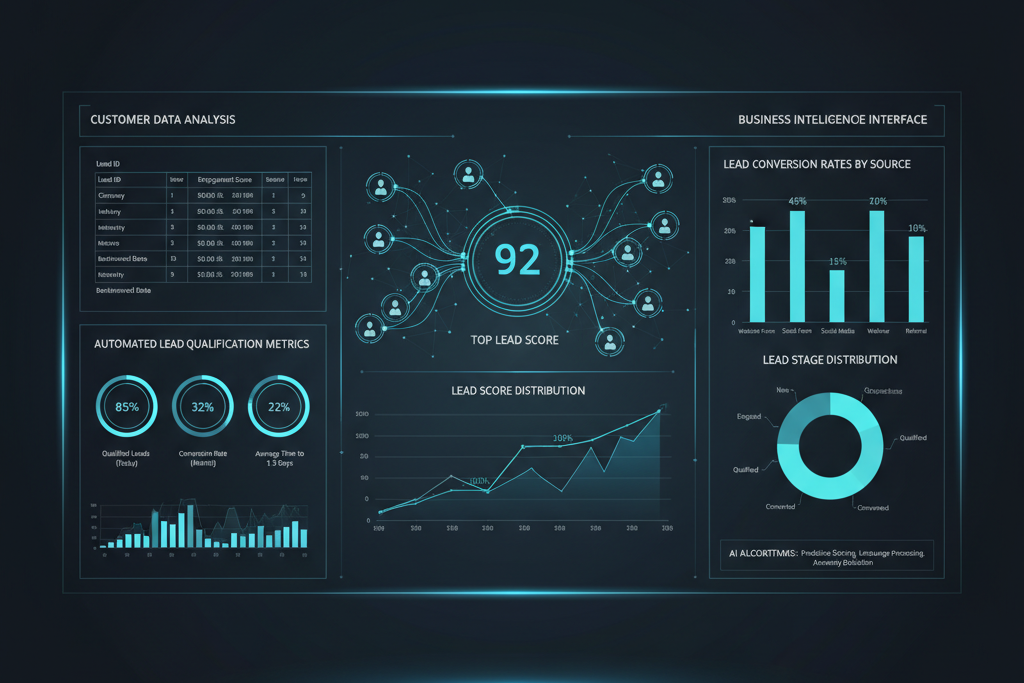
AI automatic lead qualification systems represent a paradigm shift in how sales teams identify and prioritize prospects. At its core, the system operates through sophisticated AI algorithms designed to analyze vast amounts of data points, subsequently assigning a lead score to each potential client. This lead scoring process is not merely a superficial ranking; it is a deep, predictive analysis based on historical data and real-time interactions, determining the likelihood of a lead converting into a customer.
The AI continuously learns and refines its criteria, ensuring that its predictions become increasingly accurate over time. It sifts through diverse data sources, identifying patterns and correlations that human analysts might overlook. This automated analysis allows for a consistent and objective evaluation of every lead, moving beyond subjective interpretations.
Five key assessment factors typically drive the AI's qualification process:
- Website Behavior: The AI monitors user interactions on a company's website, including pages visited, time spent on specific content, downloads, and navigation paths. High engagement with product or pricing pages, for instance, signals higher interest.
- Company Data: For B2B contexts, the system integrates and analyzes firmographic data such as industry, company size, revenue, and growth rates. This ensures alignment with the ideal customer profile.
- Social Media Activity: Publicly available social media engagement, professional networking activity, and mentions related to relevant topics can provide insights into a lead's interests and pain points.
- Purchase History: For existing customers or returning leads, past purchase patterns, product usage, and subscription data are critical indicators of future buying behavior and potential for upsells or cross-sells.
- Demographics: Relevant demographic data, depending on the target market, helps segment leads and tailor outreach strategies. This could include job title, location, or seniority.
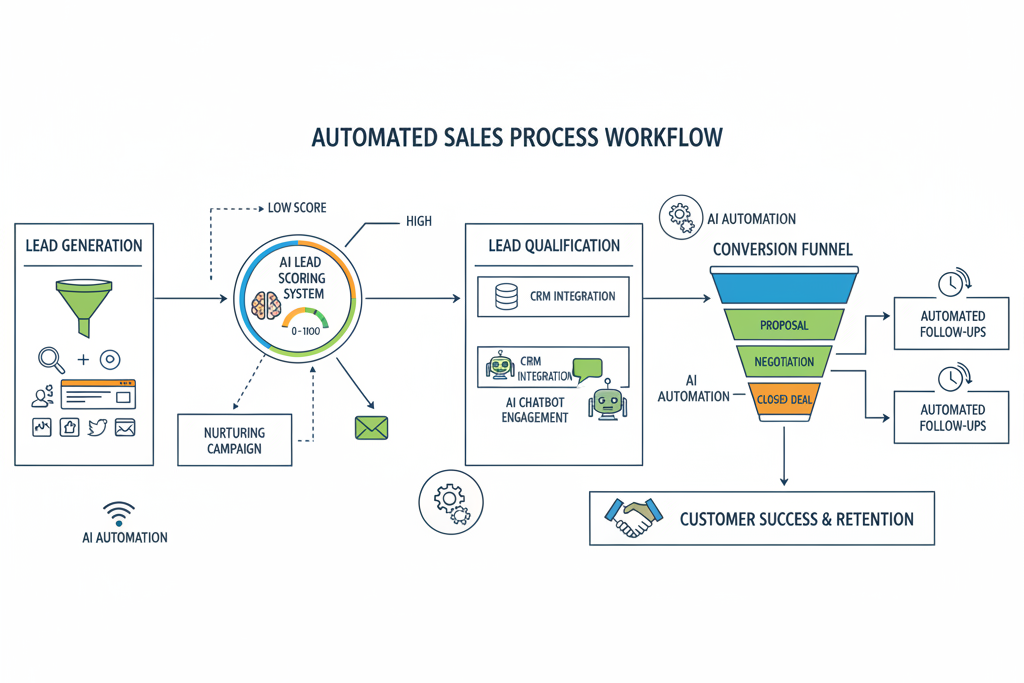
The distinction between "cold" and "hot" leads takes on a precise, data-driven meaning within an AI context. A cold lead, in this system, is a prospect with a low lead score, indicating minimal engagement, weak profile alignment, or no identifiable intent signals. Conversely, a hot lead possesses a high lead score, characterized by strong engagement metrics, clear alignment with the ideal customer profile, and often, explicit intent signals like requesting a demo or downloading a solution brief. The AI dynamically updates these scores, allowing salespeople to instantly identify which leads require immediate attention.
A crucial aspect of an AI lead qualification system is its ability to learn from conversion history. Every time a lead either converts into a customer or fails to do so, the system processes this outcome. It analyzes the specific data points and signals present for those leads, adjusting its algorithms to better predict future conversions. This continuous feedback loop ensures that the AI's predictive analysis becomes increasingly refined, making its lead scoring more accurate over time and consistently improving the quality of leads passed to the sales team.
Specific Benefits for Companies - Numbers and Case Studies
The implementation of AI automatic lead qualification systems delivers tangible, measurable benefits across various business functions, translating directly into improved ROI and heightened operational efficiency. Companies leveraging AI for lead generation consistently report significant improvements, with statistics indicating an average of 20% sales growth attributed to these advanced systems.
Consider the case of a Polish logistics company that struggled with the laborious process of manually qualifying potential business clients. Before AI integration, their sales team spent an average of three days per week sifting through leads and conducting initial assessments. After implementing an AI-powered lead qualification system, their qualification time was drastically reduced from three days to a mere two hours. This efficiency gain allowed their sales representatives to reallocate substantial time to direct sales activities, nurturing relationships, and closing deals, rather than administrative pre-screening.
AI implementation reduced lead qualification time from 3 days to 2 hours for a Polish company, significantly boosting sales productivity.
The transformative impact of AI extends beyond mere time savings, encompassing a range of specific benefits:
- 60% Time Savings for Salespeople: By automating the initial screening and scoring of leads, AI frees up sales professionals from mundane tasks, allowing them to focus on high-value interactions that require human expertise and empathy.
- 35% Conversion Increase: AI's precise identification of hot leads means sales teams engage with prospects who are genuinely interested and more likely to convert. This targeted approach significantly elevates conversion rates compared to traditional methods.
- 30% Cost Reduction: The elimination of manual effort, reduced wasted marketing spend on unqualified leads, and optimized resource allocation contribute to substantial operational cost savings.
- Better Targeting: AI's ability to analyze intricate data patterns ensures that marketing and sales efforts are precisely targeted at the most receptive audiences, leading to more effective campaigns and higher engagement.
- Faster Responses: With real-time lead scoring and immediate flagging of high-priority prospects, sales teams can respond to hot leads much faster, capitalizing on interest while it's at its peak and increasing the likelihood of conversion.
Furthermore, the utility of AI extends to customer service interactions. AI-driven systems can automate up to 40% of customer service interactions, particularly for routine inquiries, FAQs, and initial support triage. This not only enhances customer satisfaction through quicker responses but also frees customer service representatives to handle more complex issues, further optimizing overall operational efficiency and providing a seamless experience from initial contact to post-sales support.

How to Implement AI System in Your Company - Practical Guide
Implementing an AI lead qualification system requires a structured approach to ensure seamless integration and maximum impact. A practical guide to successful AI implementation involves several critical steps:
- Process Audit: Begin with a thorough audit of your current lead generation, qualification, and sales processes. Identify bottlenecks, manual pain points, and areas where data is fragmented or underutilized. This audit informs the requirements for your AI system.
- Tool Selection: Based on your audit, select AI tools that align with your specific needs, budget, and existing technology stack. Consider factors like scalability, integration capabilities, and the sophistication of their lead scoring algorithms. Lumi Zone specializes in helping clients navigate this selection process, identifying the optimal technologies that best solve individual business problems, without being tied to specific vendors or commissions.
- CRM Integration: For AI to be effective, it must integrate seamlessly with your existing Customer Relationship Management (CRM) system. This ensures that lead scores, qualification data, and prospect interactions are synchronized in real-time, providing a unified view for your sales team. Examples of popular CRM systems include Salesforce, HubSpot, Zoho CRM, and Microsoft Dynamics 365, all of which can be effectively integrated with AI solutions.
- Team Training: Comprehensive training for your sales and marketing teams is paramount. Educate them on how the AI system works, how to interpret lead scores, and how their workflow will change. Emphasize that AI is a support tool designed to augment their capabilities, not replace them.
- Results Monitoring: Post-implementation, continuously monitor key metrics to assess the system's performance. This iterative process allows for adjustments and optimizations to maximize efficiency and ROI.
Lumi Zone provides expert assistance throughout this entire implementation journey, acting as a fully independent agency. We build intelligent AI and low-code systems tailored to eliminate manual tasks and streamline operations. Our approach ensures that each project is customized to the client's business, avoiding templates, unnecessary complexity, and hidden costs. We select technologies solely based on their ability to solve the client's specific problems, delivering simple, effective, and stable systems.
Key metrics to monitor include:
- Lead Velocity Rate: Measures the growth rate of qualified leads over time.
- Conversion Rate: Tracks the percentage of qualified leads that become paying customers.
- Sales Cycle Time: Evaluates how long it takes to convert a lead into a customer, aiming for reduction.
- Salesperson Productivity: Assesses the output and efficiency of individual sales team members after AI integration.
Successful integration with popular CRM systems ensures that your sales team can access AI-qualified leads directly within their familiar environment, enabling faster action and more informed decision-making. This synergy between AI and existing infrastructure is crucial for realizing the full potential of sales automation.
The Future of AI in Sales - What Awaits Us
The trajectory of AI in sales points towards an increasingly integrated and sophisticated future, fundamentally reshaping how businesses interact with prospects and manage their sales cycles. Current forecasts indicate a rapid adoption rate, with approximately 68% of B2B marketers already incorporating AI into their strategies. This widespread acceptance is merely the beginning, as AI's capabilities continue to expand and mature.
Upcoming trends suggest a future where AI plays an even more profound role across the entire sales spectrum. We can anticipate advancements such as AI in negotiations, where intelligent agents might assist sales professionals in real-time with optimal pricing strategies, objection handling, and deal structuring based on predictive analytics and historical success rates. Predictive pricing, an area where AI models analyze market conditions, customer demand, and competitor data to recommend dynamic pricing, will become a standard tool for maximizing revenue.
Moreover, the automation of entire sales cycles is on the horizon. While full human replacement is unlikely, AI will increasingly handle repetitive tasks from initial lead generation and qualification through nurturing, scheduling, and even some aspects of follow-up. This automation will free sales professionals to focus on relationship building, complex problem-solving, and strategic decision-making – areas where human intuition and emotional intelligence remain irreplaceable.
A crucial aspect of this future vision is that AI will support, not replace, salespeople. Rather than displacing human roles, AI is poised to act as an intelligent co-pilot, empowering sales teams with unprecedented insights, efficiency, and predictive capabilities. It will provide the data-driven foundation upon which human creativity and persuasion can thrive, leading to more successful outcomes and a more satisfying sales experience for both the professional and the client.
The ultimate vision for the future is one where AI and human intuition collaborate seamlessly. AI will manage the data, identify patterns, and automate the mundane, while salespeople will leverage these tools to forge stronger connections, close more complex deals, and deliver exceptional value. This symbiotic relationship promises a more intelligent, efficient, and human-centric approach to sales, allowing businesses to stay competitive and agile in an evolving market landscape.